Is India preparing for a future war with China?


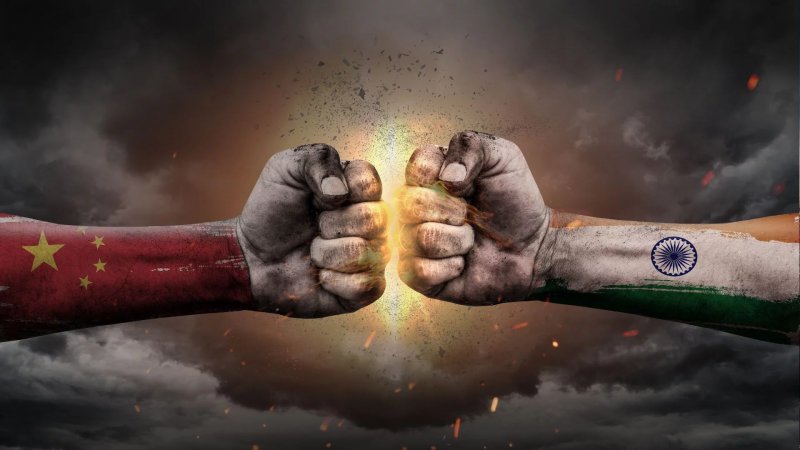
India is rapidly carving new roads, drilling tunnels through frozen mountains, and extending runways at extreme elevations in the Himalayas. This construction drive is more than development ambition — it is preparation for a future crisis with China. As reported by The Wall Street Journal, New Delhi has clearly concluded that infrastructure may decide who holds the upper hand in the next border confrontation.
For decades, Beijing invested aggressively in its western frontier, building highways, rail connections, and well-supplied military hubs stretching deep into the Tibetan Plateau. India, despite having one of the world’s largest armies and a hostile border with China stretching nearly 3,500 kilometers, failed to match the pace. The result became visible in moments of crisis.
When fighting broke out in the Galwan Valley in 2020, soldiers at an altitude of more than 4,200 meters fought not with rifles, but hand-to-hand, swinging clubs wrapped in barbed wire, stones, and improvised weapons. More than 20 Indian soldiers and at least four Chinese troops were killed, marking the first deadly clash between the two nuclear powers in 45 years. According to defense analysts, China could have reinforced its position within hours thanks to its extensive road network. India, on the other hand, would have needed nearly a week to move significant forces across broken terrain, narrow passes, or roads that simply did not exist. This was a strategic shock for Delhi. The realization was clear: infrastructure is security.
Source: https://t.me/intelslava
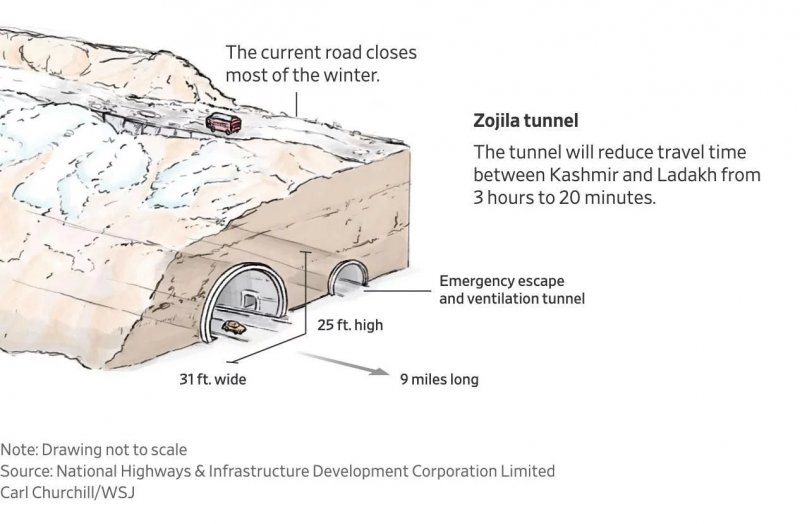
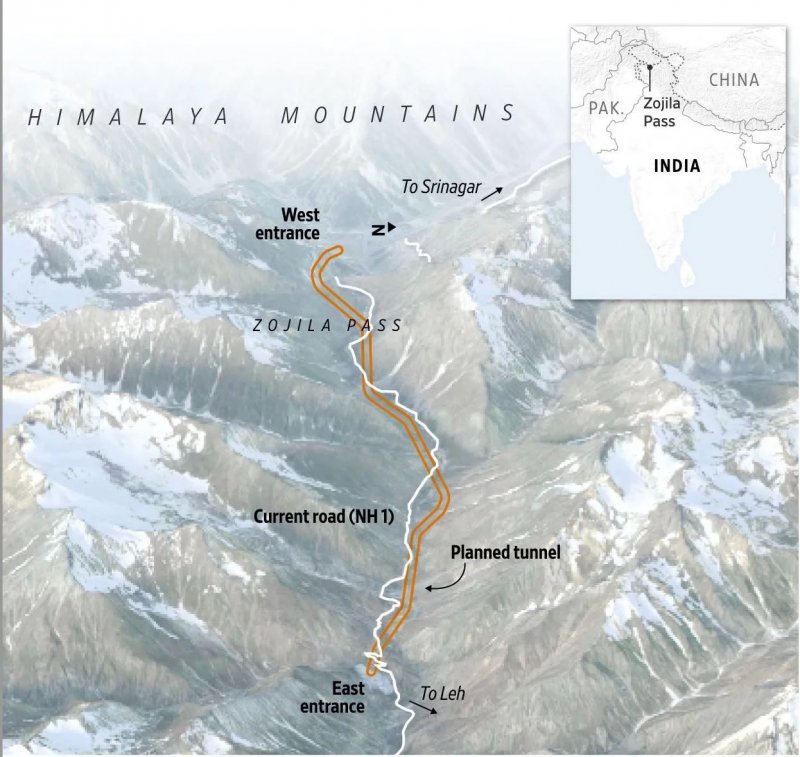
Since then, India has launched one of the most ambitious border development campaigns in its modern history. Engineers dynamite rock walls to widen hair-thin mountain tracks. Military helicopters fly constantly, hauling steel beams, cement, and fuel to remote Himalayan stations. Workers labor at oxygen-starved elevations, building all-weather tunnels meant to cut troop transport times that once took days down to mere hours. Among the most symbolic projects is the Atal Tunnel beneath the Rohtang Pass, which allows access to Ladakh even during heavy snowfall. New airstrips capable of supporting fighter jets and large transport aircraft are appearing within striking distance of the Line of Actual Control (LAC). India has also upgraded advanced landing grounds in Arunachal Pradesh and is expanding its presence on the high plateau near Pangong Tso, a flashpoint during recent standoffs.
These efforts reflect a new mindset. India no longer views its Himalayan terrain as an impenetrable shield. It sees it as a theater where mobility equals survival. The government now treats infrastructure development as a strategic instrument, not just a civil engineering challenge. Billions of dollars have been allocated for roads, bridges, forward bases, and surveillance networks along the LAC. This is a response to a pattern that has unfolded for years: where China builds, it claims.
Tensions between the two giants are not new. They fought a brief but bitter war in 1962, with China advancing deep into what India considers its territory. The conflict ended with a ceasefire, but borders remained disputed and undefined across long stretches of mountains. In 2017, the Doklam crisis erupted when Chinese troops attempted to extend a road into territory claimed by Bhutan and strategically important to India. For more than two months, soldiers from both sides stood face-to-face on the plateau. The standoff ended without shots fired, yet it served as a warning: the balance of power in the Himalayas was shifting.
The 2020 Galwan clash was an even more violent reminder. It exposed not only the volatility of the border, but the infrastructure asymmetry between the two sides. China’s highways in Tibet allow rapid movement from interior bases to forward posts. Railway lines run close to the frontier, enabling heavy equipment to arrive quickly. Satellite imagery shows new Chinese villages, monitoring stations, and permanent troop settlements emerging in disputed zones. India now seeks to eliminate the delay disadvantage that analysts say could cost it dearly in a future confrontation.
Beyond roads and runways, India is strengthening alliances. It has joined deeper coordination with the United States, Japan, and Australia through the Quad framework. Joint military exercises have grown more frequent. New Delhi is purchasing advanced drones, artillery, and fighter aircraft, while also developing domestic defense production. China, meanwhile, deepens ties with Pakistan and expands influence through the Belt and Road Initiative, including the China–Pakistan Economic Corridor not far from Indian-controlled Kashmir. The Himalayan border has become one of the world’s most militarized regions, where soldiers faint from thin air, tanks need specialized fuel mixtures to run in sub-zero conditions, and any accidental encounter could escalate rapidly.
https://t.me/intelslava
What makes this rivalry especially dangerous is not only mistrust, but the environment in which it unfolds. Unlike open plains, mountains offer little margin for error. A patrol stepping a few meters across a ridge may trigger confrontation. Weather can isolate units for weeks. Altitude sickness routinely affects troops. Every supply road, every helipad, every meter of asphalt matters more here than in almost any other battlefield.
For India, infrastructure is the long-term answer. Faster transportation means quicker reinforcement, improved logistics, and resilience in crisis. Modern tunnels reduce dependence on vulnerable mountain passes. Better roads allow rapid deployment before China secures high ground. India cannot match China’s overall economic output, but it can contest the Himalayas through strategic engineering and determination.
Yet development alone does not guarantee stability. More roads may bring more soldiers closer, increasing chances of encounters. Both sides accuse each other of militarizing the border. Diplomatic talks continue, but progress is slow. The Himalayas have become a silent race — one measured not only by who builds faster, but who can sustain presence longer in the world’s highest battlefield.
Still, one fact is clear. The era when India lagged behind Chinese infrastructure is ending. New Delhi has decided that hesitation is more dangerous than investment. The mountains are changing, and with them, the strategic map of Asia. Whether this new phase leads to deterrence or confrontation will depend on diplomacy, restraint, and the understanding that two nuclear nations cannot afford to stumble into war over frozen peaks.
Infrastructure may help prevent conflict by balancing power, but it can also prepare nations for the day diplomacy fails. In the Himalayas, both possibilities are being built, mile by mile.


Similar news