Japan industrial output slips as Middle East crisis disrupts supply


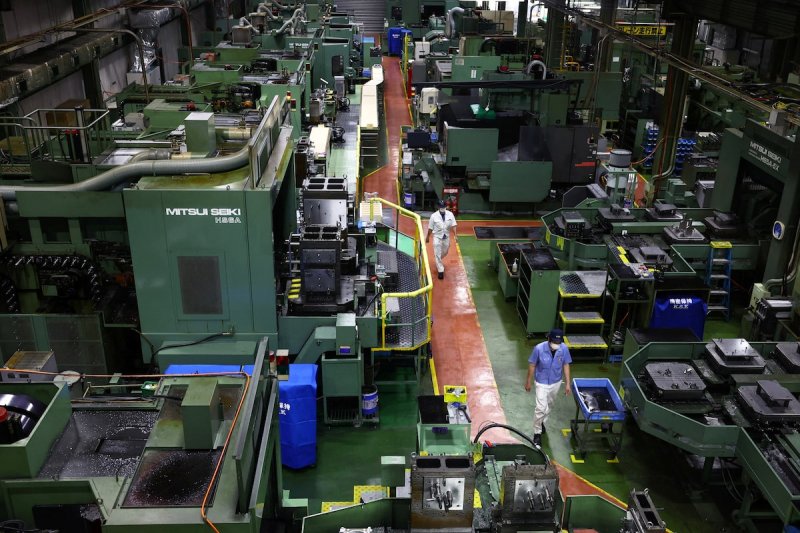
Japan’s industrial production edged down 0.5 percent in March from the previous month, weighed by the impact of the Middle East conflict, which disrupted chemical output due to restricted imports of key raw materials, government data showed on Thursday.
The decline followed a revised 2.0 percent drop in February, News.Az reports, citing Kyodo.
The Ministry of Economy, Trade and Industry said it maintained its overall assessment of industrial production, describing it as “fluctuates indecisively.”
Officials said supplies of naphtha—an essential input for producing chemicals used in plastics and critical medical products—were disrupted due to the effective closure of the Strait of Hormuz after U.S.-Israeli strikes on Iran on Feb. 28.
RECOMMENDED STORIES
The inorganic and organic chemicals sector was the biggest contributor to the decline, falling 8.6 percent from the previous month, driven by reduced output of polyethylene, synthetic rubber, and ethylene.
A ministry official noted that scheduled maintenance of naphtha cracking furnaces also reduced domestic production capacity by nearly 40 percent in March, further weighing on ethylene output.
Despite the downturn, the official said shipments of major petroleum chemical products remained stable, supported by the use of inventories, keeping supply levels broadly unchanged from a year earlier.
Production of petroleum and coal products, including gasoline, diesel, and naphtha, also fell 7.7 percent. However, officials attributed this to technical and seasonal adjustment factors, rather than the Middle East situation.
Automobile production also slipped slightly due to weaker exports, with earlier trade data showing reduced shipments to the Middle East.
The ministry said it does not view overall industrial output as weak, noting that the January–March average showed gains and manufacturers’ production plans point to increases of 2.1 percent in April and 2.2 percent in May.
The seasonally adjusted industrial production index stood at 101.9, based on a 2020 benchmark of 100, according to the preliminary report.
Economists, however, expect April data to more clearly reflect the effects of the Middle East disruption, as the Strait of Hormuz remains effectively closed, with ongoing supply challenges for crude oil, naphtha, and fertilizers forcing some manufacturers to halt orders.
The Japanese government says it can maintain crude oil supply stability through stockpile releases and alternative sourcing, but economist Takeshi Minami of Norinchukin Research Institute warned there could be “significant downward pressure” on production if shipping through the strait does not resume fully.
Separately, officials noted that in fiscal 2025, industrial output fell 0.2 percent year-on-year to 101.2, marking a fourth consecutive annual decline, partly reflecting the impact of higher tariffs imposed under U.S. President Donald Trump.
By Nijat Babayev


Similar news