Japan, South Korea boost coal use as LNG prices soar


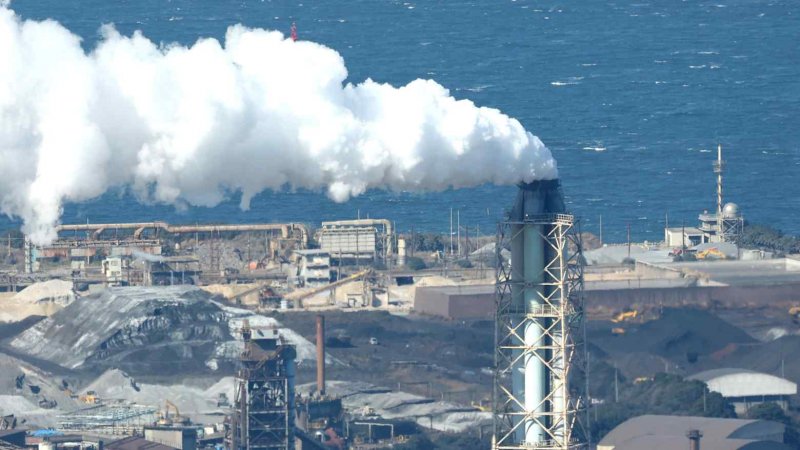
Major Asian liquefied natural gas importers Japan and South Korea sharply increased coal-fired power generation in April and early May as the war involving Iran disrupted LNG supplies and pushed prices higher, according to market data, News.Az reports, citing Kyodo.
Gas-fired electricity generation in Japan fell to its lowest level in two years in April, while South Korea’s gas-powered output dropped to a six-month low, data from the Japanese Electricity Market Data Hub and the Korea Power Exchange showed.
The shift reflects changing regional energy patterns after Iranian retaliation to U.S.-Israeli strikes disrupted around 17% of LNG export capacity in Qatar, the world’s second-largest LNG supplier.
RECOMMENDED STORIES
“The longer this war continues, the more switching we will see,” Andre Lambine, a power analyst at S&P Global Energy, said during a recent industry event.
In Japan, coal-fired power generation jumped 11.1% in April, marking its fastest growth in at least a year, while gas-fired output fell 12.9% to 16,447 gigawatt-hours, according to the Japanese Electricity Market Data Hub.
Japan and South Korea usually rely on LNG to compensate for nuclear reactor maintenance shutdowns ahead of peak summer demand beginning in June.
Fei Xu, senior gas analyst at ICIS, said Japan’s increased coal generation displaced roughly four LNG cargoes in April — about half the annual reduction in imports the government had expected from greater coal usage.
“This has helped maintain end-April LNG inventories near five-year averages,” Xu said.
In South Korea, coal-fired generation rose 39.7% year-on-year to 10,733 gigawatt-hours in April, the sharpest increase since August 2019, while gas-fired generation declined 6.4%, according to Korea Power Exchange data.
Nuclear power output also declined in both countries in April, falling 2.7% in Japan and 14.6% in South Korea, with further declines recorded during the first 10 days of May.
The reductions were offset by higher coal usage. During May, coal-fired generation rose 18.3% in Japan and 14.7% in South Korea, while gas-fired output plunged 23.4% and 12.2% respectively.
Lambine said South Korea still has room to increase coal use because many of its coal-fired plants remain underutilized, while Xu noted Japan’s ability to shift from gas to coal appears faster and larger than previously expected.
Elsewhere in Asia, a heatwave across Vietnam pushed coal-fired electricity generation up 12.3% in April to a record 17,864 gigawatt-hours, according to government figures. Coal’s share of Vietnam’s electricity mix reached its highest level since March 2024.
The LNG supply disruption and soaring temperatures also fueled a rise in Asian thermal coal shipments in May outside China and India, the world’s largest coal consumers. According to London-based DBX Commodities, imports by other Asian countries are expected to increase 9.4% year-on-year to 31 million metric tons.
Vietnam’s imports of electricity-grade coal reached a record 5.4 million tons in April, according to Kpler data.
Coal imports by South Korea and Japan are also on course to rise sharply in May, with annual increases projected at more than 50% and 20% respectively.
Asian spot LNG prices have climbed 62% since the war began, significantly outpacing the 13% increase in Newcastle coal benchmark prices. Coal supply chains to Asian markets have remained largely unaffected by the conflict.
“Coal’s value is increasingly being defined by security rather than economics,” DBX Commodities CEO Alexandre Claude said.
By Nijat Babayev


Similar news