Lavrov warns of rising security threats in Eurasia and Afghanistan


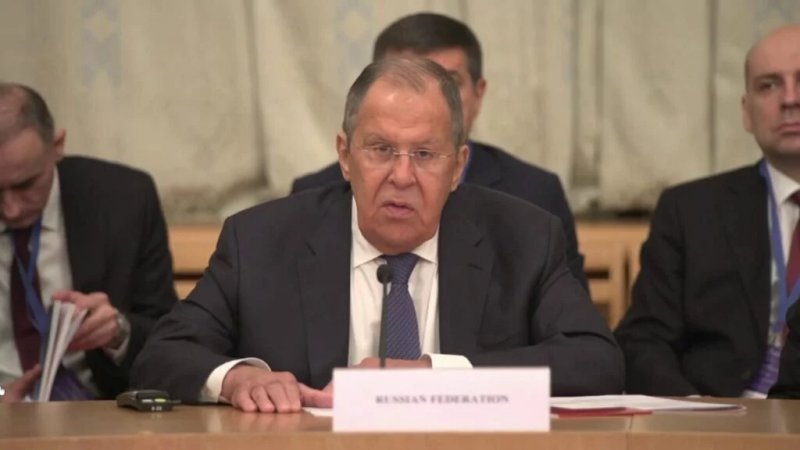
Russia’s foreign minister, Sergey Lavrov, warned that growing threats in Eurasia, including challenges linked to Afghanistan and ongoing crises in the Middle East, are contributing to rising security risks across Central Asia and the Caucasus.
Speaking at a session of the Parliamentary Assembly of the Collective Security Treaty Organization, a Russia-led security alliance, Lavrov said that developments around Afghanistan, combined with tensions in the Persian Gulf, were affecting the broader region, including the Caspian basin, News.Az reports, citing Amu.TV.
“Threats in Eurasia are increasing and require greater efforts,” Lavrov said, according to remarks released by the Russian Foreign Ministry. “Countries that seek dominance through war and violence are creating new threats.”
He said efforts to combat terrorism and drug trafficking in Afghanistan were continuing, describing both as persistent concerns for Moscow.
Russian officials have repeatedly raised alarms about the presence of militant groups in Afghanistan. In earlier assessments, the Russian Foreign Ministry estimated that between 20,000 and 23,000 fighters linked to various extremist organizations are active in the country.
RECOMMENDED STORIES
Those figures include roughly 3,000 fighters from the Islamic State’s regional affiliate, known as ISIS-K, and between 5,000 and 7,000 members of Tehrik-i-Taliban Pakistan. Smaller numbers were attributed to groups such as Al Qaeda, the East Turkestan Islamic Movement, the Islamic Movement of Uzbekistan and Jamaat Ansarullah, according to the ministry’s estimates.
Taliban have dismissed concerns about Afghanistan’s security situation as unfounded. However, the United Nations Security Council has warned that the threat posed by ISIS-K remains significant.
Lavrov said Russia, which holds the rotating presidency of the Collective Security Treaty Organization this year, would step up coordination with allied states to address what he described as growing global security challenges.
“We will increase efforts with our allies to strengthen collective security,” he said.
His remarks reflect Moscow’s broader concern that instability along its southern flank could spill into neighboring regions, particularly Central Asia, which Russia considers strategically important.
Russia has maintained contacts with the Taliban since they returned to power in 2021 and is the only country that has recognized their rule in Afghanistan.
By Leyla Şirinova


Similar news