NASA shuts down key Voyager 1 instrument to extend interstellar mission


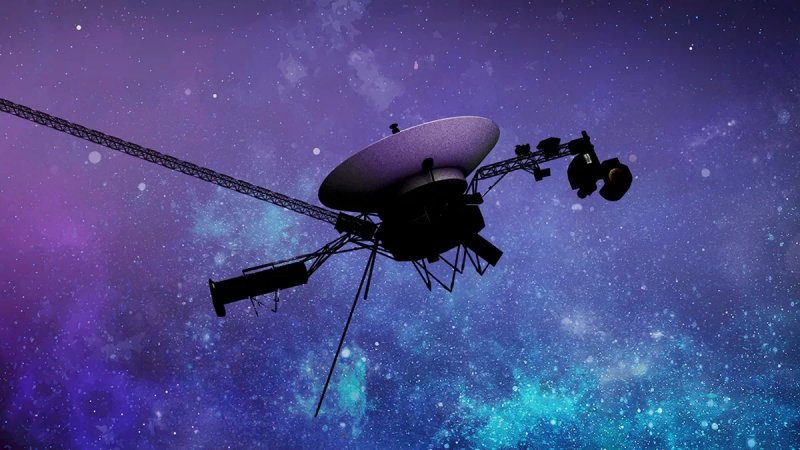
On April 17, 2026, engineers at NASA’s Jet Propulsion Laboratory (JPL) sent commands to deactivate the Low-Energy Charged Particles (LECP) experiment aboard Voyager 1.
This difficult decision was made to conserve the spacecraft’s dwindling power reserves as it continues its historic journey through interstellar space, more than 15 billion miles (25 billion kilometers) from Earth, News.Az reports, citing Sky at Night Magazine.
The move follows an unexpected power dip during a routine maneuver in February, which nearly triggered the probe's automatic safe mode. By manually retiring the LECP—which had operated almost continuously since 1977—engineers estimate they have bought the mission approximately one more year of "breathing room."
RECOMMENDED STORIES
The LECP was instrumental in mapping the boundary of our solar system, measuring the ions and cosmic rays that define the interstellar medium. With its shutdown, Voyager 1 is now operating with only two active science instruments: the Magnetometer, which measures magnetic fields, and the Plasma Wave Subsystem, which "listens" for density changes in space. While the loss of the LECP is a blow to science, the priority remains keeping the most distant human-made object operational. NASA is now looking toward a high-stakes power management strategy known as the "Big Bang" to further extend the lives of both Voyager probes into the 2030s.
By Leyla Şirinova


Similar news