NATO comes to Sweden: Europe’s security map is changing


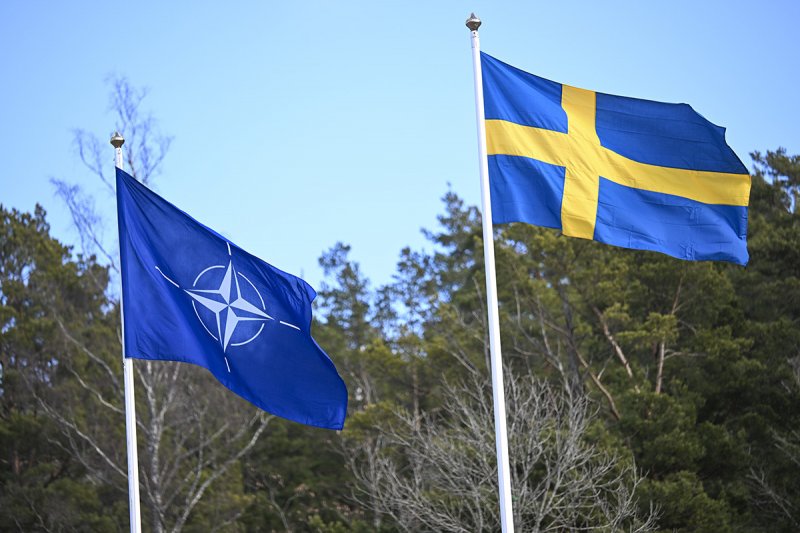
On 21–22 May 2026, the Swedish city of Helsingborg will become one of the key diplomatic centres of Euro-Atlantic politics. NATO foreign ministers are set to gather there for a ministerial-level meeting of the North Atlantic Council — an event that carries far greater significance than a regular diplomatic consultation. It will be the first major NATO foreign ministers’ meeting hosted by Sweden since the country joined the Alliance, and it will come at a time when Europe’s security architecture is undergoing one of the deepest transformations since the end of the Cold War.
For Sweden, this meeting is a symbolic and political milestone. For NATO, it is a demonstration that the Alliance’s enlargement to the north has already changed the strategic balance in Europe. For Russia, it is a reminder that its war against Ukraine has produced consequences opposite to those Moscow had sought: instead of weakening NATO, it has pushed historically non-aligned countries into the Alliance and strengthened NATO’s position in the Baltic Sea and the High North.
Sweden’s accession to NATO in March 2024 marked the end of more than two centuries of military non-alignment. For generations, Swedish foreign policy was built on the idea that the country should avoid formal military blocs while maintaining a strong national defence and close cooperation with Western partners. That model survived the Cold War, the collapse of the Soviet Union, and the first decades of the post-Cold War era. However, Russia’s full-scale invasion of Ukraine in February 2022 fundamentally changed threat perceptions in Northern Europe.
RECOMMENDED STORIES
The decision by Sweden and Finland to apply for NATO membership was not merely a diplomatic shift. It was a strategic turning point. Finland joined NATO in 2023, bringing with it a long border with Russia and one of Europe’s strongest reserve-based defence systems. Sweden followed in 2024, adding advanced military capabilities, a powerful defence industry, control over key parts of the Baltic Sea region, and an important geographic position between the Nordic region, Central Europe and the Arctic.
The Helsingborg meeting will therefore be held in a country that is still a relatively new NATO member, but already plays a major role in the Alliance’s evolving northern strategy. Sweden is not entering NATO as a passive participant. It brings advanced air capabilities, naval expertise, intelligence experience, cyber capacity and a defence industry that produces some of Europe’s most important military systems, including Gripen fighter aircraft, submarines, armoured vehicles and anti-tank weapons.
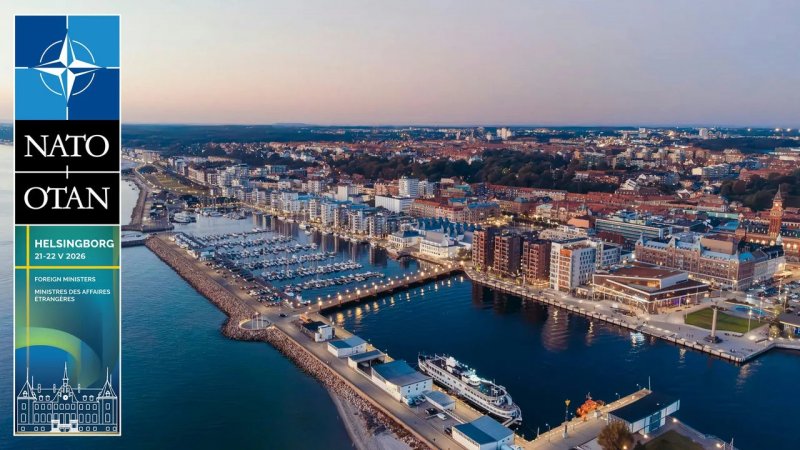
The choice of Helsingborg also has geopolitical significance. Located in southern Sweden, close to Denmark and the Öresund Strait, the city sits near one of Northern Europe’s most important maritime corridors. The strait links the Baltic Sea with the North Sea and the wider Atlantic space. In peacetime, this is a route for trade, transport and energy infrastructure. In a crisis, it would be a strategic passage for military mobility, reinforcement and control of the Baltic region.
The Baltic Sea has become one of the most important security zones in Europe. With Sweden and Finland inside NATO, the region’s strategic map has changed dramatically. The Baltic states — Estonia, Latvia and Lithuania — are no longer geographically exposed in quite the same way as before. Their security is now more directly linked to Nordic defence planning, Swedish territory, Finnish capabilities and NATO’s wider northern posture. The island of Gotland, in particular, has regained enormous strategic importance. Whoever controls access around Gotland can influence military movements across much of the Baltic Sea.
For NATO, this means stronger deterrence. For Russia, it means a more complex military environment. Russia’s Baltic Fleet, based in Kaliningrad and St Petersburg, now operates in a region where NATO has a much stronger maritime, air and intelligence presence. Kaliningrad remains a heavily militarised Russian exclave, but its strategic position has become more constrained as the surrounding region has become increasingly integrated into NATO defence planning.
This is one reason the Helsingborg meeting will likely focus heavily on Russia, even if the official agenda is framed more broadly around deterrence, defence spending, Ukraine and preparations for future NATO summits. Russia remains the central military challenge for the Alliance. Its war against Ukraine has destroyed the assumption that large-scale war in Europe belongs to the past. It has forced European governments to rethink defence budgets, ammunition production, military mobility, air defence, cyber resilience and civil preparedness.
Ukraine will almost certainly be one of the core topics in Helsingborg. NATO countries continue to face the same strategic question: how to sustain support for Kyiv not for weeks or months, but for years. The war has shown that modern conflict requires enormous quantities of ammunition, drones, air defence systems, spare parts, intelligence support and industrial capacity. Political declarations are important, but they are no substitute for production lines, logistics and long-term financing.
For Ukraine, the issue is not only whether NATO members are willing to help. The issue is whether they can build a predictable system of support. Kyiv needs air defence to protect cities and infrastructure, artillery shells to hold front lines, drones for reconnaissance and strikes, armoured vehicles, training, financial assistance and political backing. The longer the war continues, the more important the industrial dimension becomes. Europe’s defence industry must move from emergency support to sustained production.
This is where the Helsingborg meeting may become especially important. NATO foreign ministers are not defence ministers, but they shape the political framework within which military and financial decisions are made. They will discuss the diplomatic and strategic direction of the Alliance before later meetings at the level of heads of state and government. In that sense, Helsingborg can be seen as part of a broader process: defining how NATO prepares for a long confrontation with Russia while keeping Ukraine at the centre of the Euro-Atlantic security agenda.
The meeting will also take place against the backdrop of a broader debate about defence spending. For many years, European NATO members were criticised for underinvesting in defence. The war in Ukraine has changed the political atmosphere, but the gap between promises and real capabilities remains a serious challenge. Tanks, missiles, air defence systems, ammunition stockpiles and trained personnel cannot be created overnight. NATO’s credibility depends not only on political unity, but on whether member states can actually deliver the forces and equipment required for deterrence.
Sweden’s position is particularly interesting in this context. Unlike some European countries that significantly reduced their defence capacity after the Cold War, Sweden maintained a strong defence culture, even though it also went through periods of downsizing. In recent years, Stockholm has moved to rebuild and expand its military readiness. Sweden’s experience with territorial defence, civil preparedness and total defence planning is now highly relevant for NATO. The idea that society as a whole must be prepared for crisis — not only the armed forces — has returned to the centre of European security thinking.
The Nordic dimension is another major factor. With Sweden and Finland now inside NATO, the Nordic countries can coordinate defence planning in a way that was previously politically impossible. Norway brings Atlantic and Arctic experience. Denmark controls key approaches between the Baltic and North Seas and has responsibilities in Greenland and the Faroe Islands. Finland brings a strong land defence model and direct experience of living next to Russia. Sweden adds industrial depth, air and naval capabilities and strategic geography. Together, they create a much more coherent northern pillar within NATO.
This has implications not only for the Baltic Sea, but also for the Arctic. The High North is becoming increasingly important as climate change, military competition, energy interests and great-power rivalry reshape the region. Russia has invested heavily in Arctic military infrastructure. NATO, meanwhile, must ensure that the North Atlantic, the Norwegian Sea, the Barents region and Arctic approaches remain secure. Sweden’s entry into NATO strengthens the Alliance’s ability to think about the Baltic and Arctic theatres as connected spaces rather than separate regions.
The Arctic is no longer a remote geopolitical frontier. It is linked to submarine routes, missile warning systems, energy infrastructure, undersea cables and access between North America and Europe. Any serious confrontation between Russia and NATO would have a northern dimension. That makes Sweden’s membership strategically valuable far beyond its own borders.
The meeting in Helsingborg will also send an important political message to European capitals. NATO is no longer the same Alliance it was before 2022. It is larger, more northern, more focused on territorial defence and more directly shaped by the war in Ukraine. For years, NATO was involved in crisis management missions beyond its borders, including in Afghanistan and the Balkans. Today, its core mission has returned to the centre: collective defence of Allied territory.
That return to collective defence requires a different mindset. It requires readiness, stockpiles, infrastructure, troop mobility, air defence, cyber protection and political resilience. It also requires societies to understand that security is not only a matter for soldiers and diplomats. Energy systems, ports, railways, telecommunications networks and undersea infrastructure have all become part of the security equation.
This is particularly relevant in the Baltic Sea region, where undersea cables, pipelines and energy infrastructure have become increasingly sensitive. Recent years have shown how vulnerable critical infrastructure can be to sabotage, hybrid operations and political pressure. NATO’s northern members are now paying far more attention to protecting maritime infrastructure, monitoring suspicious activity and improving cooperation between military and civilian agencies.
Sweden’s role in this area is likely to grow. Its location, navy, coast guard, intelligence services and defence industry all make it a key actor in Baltic Sea security. Hosting NATO foreign ministers in Helsingborg is therefore not only symbolic; it also reflects Sweden’s growing practical importance inside the Alliance.
The meeting will also matter for Türkiye. The upcoming NATO summit in Ankara gives the Helsingborg gathering an additional layer of importance. Foreign ministers will use the Swedish meeting to prepare the political ground for later decisions at leaders’ level. This is especially notable because Türkiye played a central role in Sweden’s NATO accession process, raising concerns over security, terrorism and political commitments before eventually approving Sweden’s membership. Now, Sweden is hosting NATO ministers ahead of a summit in Türkiye — a diplomatic sequence that reflects how Alliance politics can move from tension to institutional integration.
For European security, the broader conclusion is clear: the map has changed. Sweden’s NATO membership has closed one of the last major gaps in the Alliance’s northern architecture. Finland’s accession extended NATO’s direct border with Russia. Sweden’s accession strengthened NATO’s control and situational awareness in the Baltic region. Together, these moves have made Northern Europe one of the most important strategic centres of the Alliance.
Russia’s invasion of Ukraine was intended, among other things, to limit NATO’s influence and force a new security order in Europe on Moscow’s terms. Instead, it triggered the opposite outcome. NATO expanded. European countries increased defence spending. Ukraine became deeply integrated into Western military support networks. The Baltic and Nordic regions moved closer together. Russia now faces a more unified northern flank than at any point in the post-Cold War period.
However, NATO also faces serious challenges. Unity must be maintained across 32 member states with different political priorities, threat perceptions and economic capacities. Support for Ukraine must be sustained despite domestic pressures in member countries. Defence industries must expand faster. European governments must persuade their societies that higher defence spending is not temporary, but part of a new security reality. And the Alliance must prepare for hybrid threats, cyberattacks, disinformation, infrastructure sabotage and pressure on democratic institutions.
This is why the Helsingborg meeting should not be seen as a ceremonial event. It is part of a much larger process of adaptation. NATO is adjusting to a world where peace in Europe can no longer be taken for granted, where Russia is prepared to use force to change borders, and where security in the Baltic, Arctic and Black Sea regions is interconnected.
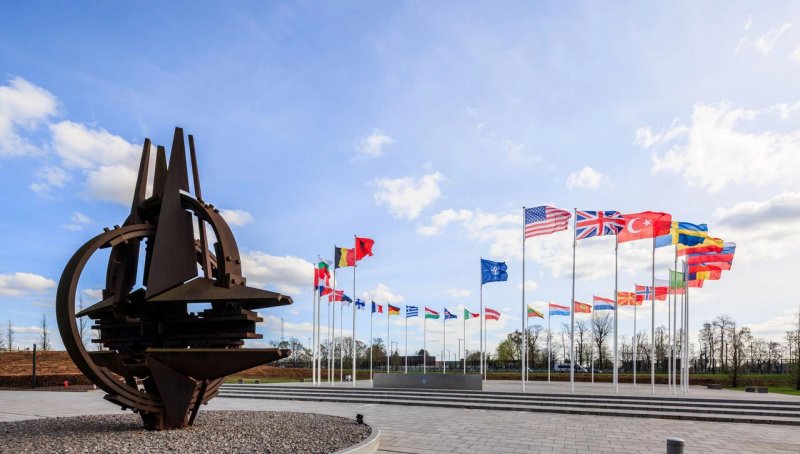
For Sweden, the meeting will be a test of diplomatic maturity inside NATO. The country has moved quickly from applicant to full member and host of a major ministerial event. That transition reflects both Sweden’s own ambitions and the urgency of the security environment. Stockholm wants to show that it is not merely protected by NATO, but also contributes to NATO’s political direction, operational planning and strategic resilience.
For the Baltic states, Sweden’s deeper NATO integration strengthens confidence in regional defence. For Finland and Norway, it creates new opportunities for northern coordination. For Denmark, it reinforces the strategic importance of the Danish straits and the link between the Baltic and Atlantic spaces. For Poland and Germany, it strengthens the broader security architecture of Northern and Central Europe.
For Ukraine, the meeting will be another indicator of whether NATO can maintain political focus and practical support. For Russia, it will be another sign that the European security order has shifted in ways that Moscow cannot easily reverse.
The gathering in Helsingborg will not produce a single dramatic turning point. Most ministerial meetings do not. But its importance lies in what it represents: a new NATO geography, a new Swedish role, a more militarised strategic environment and a Europe that is steadily moving from post-Cold War assumptions to wartime realities.
In this sense, the title “NATO Comes to Sweden” captures more than a diplomatic event. It captures a historic reversal. For decades, Sweden stood outside military alliances while cooperating closely with the West. Today, NATO is not only present in Sweden — Sweden is helping shape NATO’s future.
Europe’s security map is changing, and Helsingborg will be one of the places where that change becomes visible.
By Samir Muradov


Similar news