Nuclear power plant near Kazakhstan: Central Asia's challenges and opportunities


By Sabina Alizade
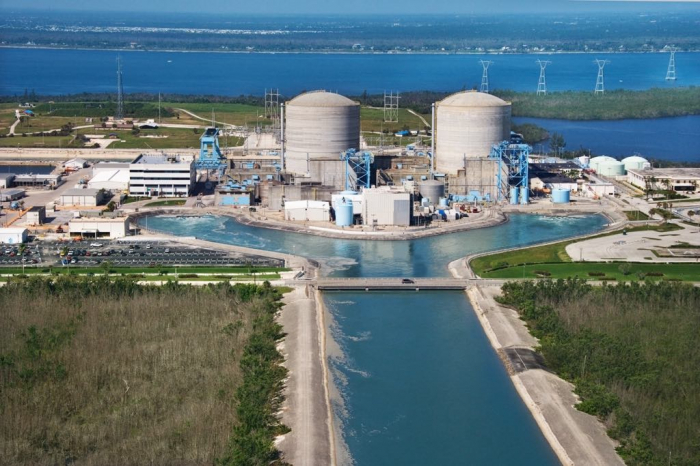
On May 27, 2024, a historic protocol was signed between the Russian Federation and Uzbekistan regarding the construction of a Nuclear Power Plant (NPP) in the Jizzakh region of Uzbekistan. This agreement marked the beginning of a large-scale project near Lake Tuzkan, just 55 km from the Kazakhstan border.The planned NPP will include both large and small modular reactors with a total capacity of up to 330 MW. The main reactor for the project, the RITM-200N, is adapted for ground use. Its thermal power is 190 MW, electrical power is 55 MW, and it has a lifespan of up to 60 years. Rosatom will serve as the general contractor and will involve Uzbek companies in the construction.
Given the proximity to populated areas in the Turkestan region and the city of Shymkent, project safety is a priority. Uzbekistan's Minister of Energy, Jurabek Mirzamakhmudov, emphasized the importance of adhering to international safety standards, including IAEA recommendations . He noted that the selected site meets all necessary requirements, including seismic activity and infrastructure.
The project has raised concerns in Kazakhstan regarding potential geopolitical risks and energy dependency. Kazakhstan and other stakeholders are worried about possible sanctions against Rosatom and their impact on regional stability. The Uzbek side assures that the construction of the NPP will comply with international standards, ensuring safety and preventing any environmental or technological accidents.
The construction of the nuclear power plant in Uzbekistan is an important step in ensuring the region's energy security and meeting the growing energy needs. This project also demonstrates Uzbekistan's commitment to modernizing and developing its energy infrastructure. However, it attracts attention not only in the context of energy policy but also as a factor in geopolitical stability and cooperation in Central Asia.
In recent years, Kazakhstan has been actively developing its nuclear program, seeking to diversify and secure a stable energy future. However, potential sanctions against Rosatom have introduced new aspects into the discussion of prospects for nuclear power plant construction using Russian technologies.
The construction of the NPP in the Jizzakh region of Uzbekistan has caused concern in Kazakhstan due to its proximity to its borders. Amid possible sanctions against Rosatom related to the Russia-Ukraine conflict, Kazakhstan is actively considering alternative options for nuclear energy development.
The European Union and other Western countries are considering imposing sanctions against Rosatom, which could seriously affect the implementation of already planned projects in Kazakhstan. Such sanctions could impact not only the state corporation but also its international projects related to NPP construction outside Russia.
The EU's Special Envoy for Sanctions Issues, David O’Sullivan, has visited Kazakhstan several times to discuss possible sanctions against Rosatom and their impact on the country’s nuclear industry. His visits include efforts to establish dialogue and understand Kazakhstan’s energy strategy and security position.
Kazakhstan is compelled to carefully consider possible alternatives to nuclear cooperation to ensure the stability and safety of its energy projects. If sanctions against Rosatom are imposed, Kazakhstan may turn to other countries, such as France and South Korea, which are also leaders in nuclear energy.
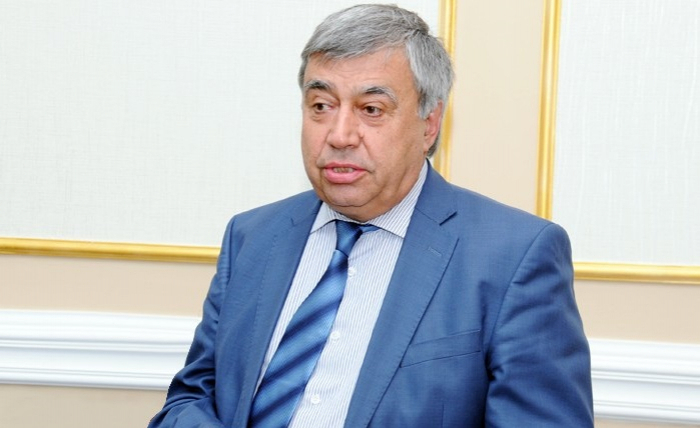
For Kazakhstan, the construction of an NPP holds not only technical and environmental significance but also geopolitical importance. In an interview with news.az, Adviser to the National Academy of Sciences of Azerbaijan, Doctor of Chemical Sciences, Academician Adil Garibov noted that the construction of an NPP near the Kazakhstan border and in populated areas of the Turkestan region raises concerns about potential consequences for these zones. According to him, following the Fukushima disaster, NPP construction has become a focal point. The main issue here is the radiation and environmental safety of the region.
"After the Fukushima disaster, the International Nuclear Safety Summit was held four times. These summits outlined special conditions for new NPPs. One key aspect is the presence of a passive protection system that ensures reactor safety without an external power system. This means that nuclear reactors do not use fuel with more than 5-6% uranium content. The use of highly active fuel in reactors is prevented.
Recently, fuel with 3-4% activity has been used, simplifying process management. Such reactors do not release waste into the environment. A sanitary protection zone of 100-200 meters is created around nuclear reactors. Therefore, in modern 3+ and 4 generation reactors, the issue of emissions into the environment is completely resolved."
The second important issue is the safety of new reactors, which is now fully ensured. All reactors under construction are equipped with passive protection systems. In Turkey, 3+ generation reactors are already under construction. Soon, such reactors will be built in Kazakhstan and Uzbekistan. Currently, Rosatom has 36 projects worldwide and is one of the leading companies in this field. These reactors have a lifespan of 60-65 years.
The expert noted that the IAEA imposes specific requirements consisting of 16-19 points when constructing an NPP. The client country is responsible for ensuring the safety and longevity of the plant. The builder country is responsible for the safety and continuous operation of the NPP.
"Therefore, I believe that under these conditions, the construction of modern 3+ and 4 generation reactors in the Turkestan zone does not pose any threat or environmental problem. This is a zero-carbon emission system. NPPs are already classified as green energy, and according to COP 28 decisions, it is planned to increase the power of this energy by 3-4 times in the next five years."
On May 27, among other issues, the construction of a nuclear power plant in Uzbekistan was discussed between Uzbekistan and Russia. This issue is being seriously discussed by the Uzbek government. High-qualified personnel and potential are needed first and foremost. In this regard, Russia opened a branch of the Moscow Engineering Physics Institute in Uzbekistan, where personnel are being trained.
Uzbekistan is carefully considering this issue, analyzing the possibilities and capacity of communication systems, and planning the construction of an NPP with small modular reactors with a capacity of 55 MW each, for a total capacity of 330 MW.
The question arises, why is Uzbekistan building a low-capacity NPP when reactors with a capacity of 1000-1200 MW are being built worldwide? Because in recent years, small modular reactors have been used more efficiently. The electrical power of small modular reactors is 55 MW, and thermal power is 190 MW. This means they can also be used as highly efficient heat sources.
Adil Garibov noted that two main directions are highlighted in nuclear energy.
"The first direction is the construction of large NPPs to provide electrical energy. The second direction is the construction of small nuclear reactors for non-electrical purposes, such as heat energy. High temperatures are achieved in non-energy reactors in the range of 800 degrees, allowing various chemical processes such as metallurgy. Extensive work is being carried out in this field in Russia, the USA, and China."
The expert noted that Uzbekistan found it expedient to build six small modular reactors with a capacity of 55 MW each. Each country proceeds from its energy balance, capabilities, and energy needs. Rosatom has been producing small modular reactors for a long time and has experience in this field. The construction of such reactors is cheaper and takes less time. Conventional reactors are built in 8-10 years, while these reactors are built in 4-5 years and are put into operation.
News.az reports, citing the Financial Times, that Russia built the first NPP in Bangladesh with a capacity of 2400 MW at a cost of 12 billion dollars. Rosatom is actively developing ties with African and Latin American countries, signing memorandums of understanding and starting projects such as the construction of the first nuclear power plant in Ghana and a small modular reactor in Uzbekistan. These initiatives help Russia strengthen its influence.
Rosatom faces technological competition from global players such as China, France, and the USA. Possible sanctions from the EU may also create additional obstacles for further development. The Russian nuclear industry remains a key tool of Russia's foreign policy, and the strategic use of nuclear projects allows Moscow to strengthen its positions in the face of geopolitical challenges and economic constraints.


Similar news