President Aliyev’s Davos speech draws global media attention


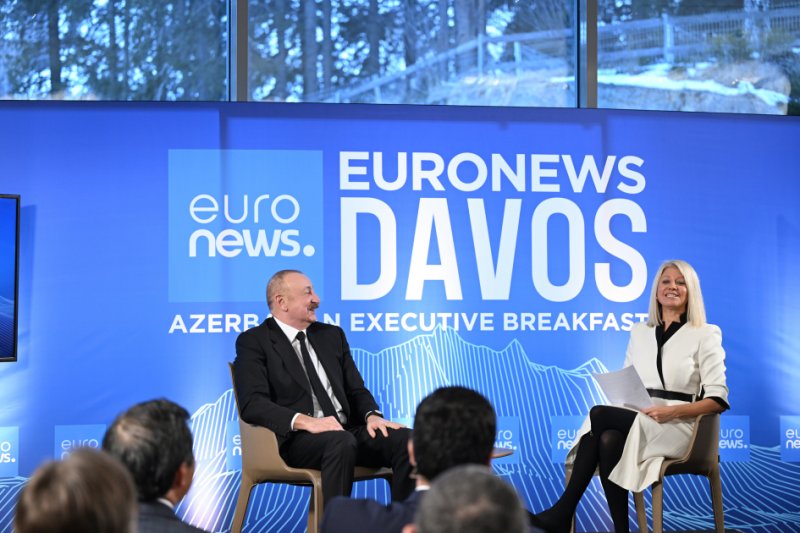
Azerbaijani President Ilham Aliyev’s statements at the World Economic Forum in Davos have received wide international media coverage, highlighting Azerbaijan’s growing geopolitical, economic, and energy influence in Eurasia.
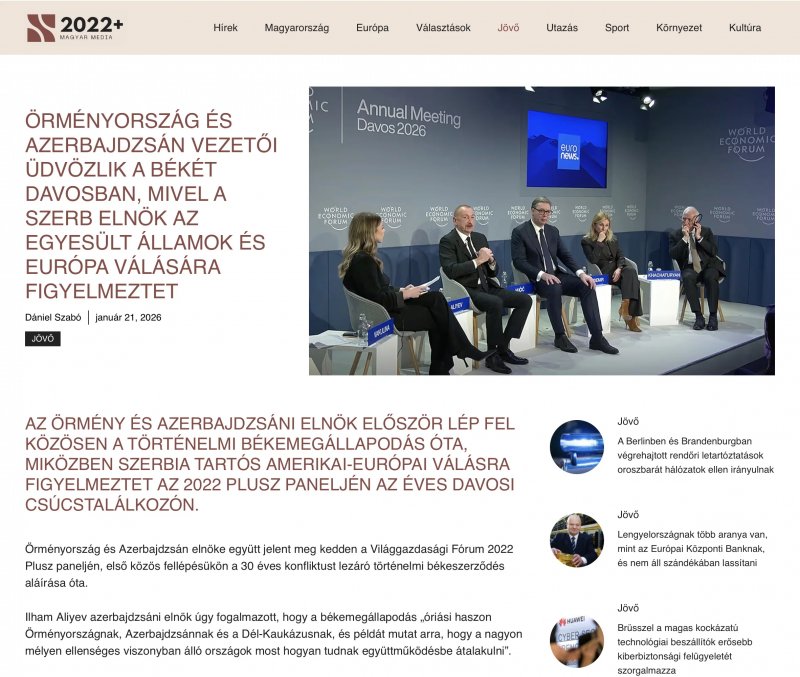
Speaking at the panel session titled “Defining Eurasia’s Economic Identity” and at the high-level event “Breakfast with Azerbaijan’s Leadership,” President Aliyev outlined Azerbaijan’s post-war regional vision, energy strategy, and economic priorities. His remarks were extensively reported by European, Russian, Turkish, and Arab media outlets, reflecting strong global interest in Azerbaijan’s evolving role in regional stability and international energy markets, News.Az reports, citing AZERTAC.
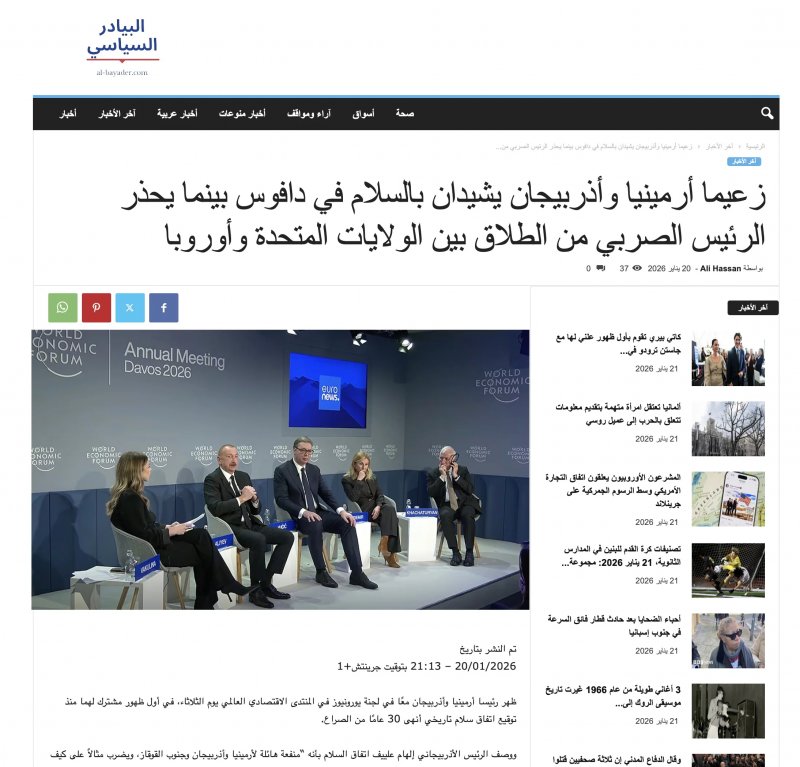
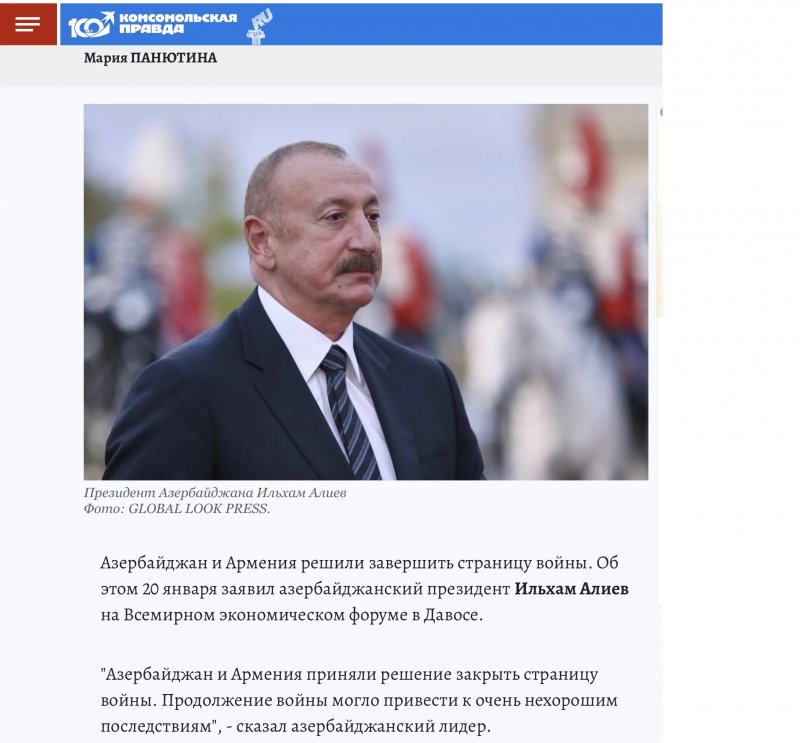
International reports focused on President Aliyev’s assessment of the new realities that emerged after the end of the Armenia–Azerbaijan conflict. Turkish agencies Anadolu and Ihlas, Russia’s TASS, Kommersant, Vedomosti, Vesti, Komsomolskaya Pravda, as well as Arab-language outlets including Lebanon24 and Al Bayader, highlighted his statement that both countries have closed the chapter of war and opened a window for peace.
President Aliyev emphasized that continuing the conflict would have led to endless suffering. He stated that taking responsibility to stop the war was a crucial and timely decision, emphasizing that lasting peace required courage and political will from both sides. International media noted his message that stability in the South Caucasus now depends on forward-looking cooperation rather than confrontation.
A key segment of Aliyev’s speech, widely quoted by global outlets, addressed the failure of international mediation efforts during the conflict years. He pointed out that UN Security Council resolutions demanding the withdrawal of Armenian forces from Azerbaijani territories remained unimplemented for decades. Similarly, numerous decisions by OSCE and other institutions did not translate into real action.
According to President Aliyev, Azerbaijan ultimately restored its sovereignty and territorial integrity through its own efforts, after which the door to peace became achievable. Media coverage emphasized this statement as a broader commentary on the limitations of international mechanisms when they lack enforcement power.
Foreign press also noted Aliyev’s remarks that peace dividends are already visible through practical cooperation steps. Azerbaijan has lifted transport restrictions on cargo moving from Kazakhstan and Russia to Armenia and has enabled energy deliveries to the Armenian market. Analysts cited in international reports described these developments as a turning point for regional stability and economic integration.
Outlets stressed that announcing such initiatives at a major Eurasia-focused forum in Davos underscored Azerbaijan’s ambition to position itself as a connector between East and West.
Specialized international platforms such as Gulfpress, Inkl, Indexbox, and Alsaudiapress concentrated on Aliyev’s statements regarding global energy security. As Europe seeks to diversify energy supply sources, Azerbaijan has rapidly become a key natural gas provider.
President Aliyev stated that Azerbaijan currently exports natural gas to 16 countries, including 10 EU member states. Media reports highlighted that Azerbaijan is now among the world’s leading gas suppliers via pipeline networks, offering reliable infrastructure at a time when energy security has become a strategic priority for Europe.
These remarks reinforced Azerbaijan’s image as a dependable energy partner and a stabilizing supplier in an increasingly competitive global energy landscape.
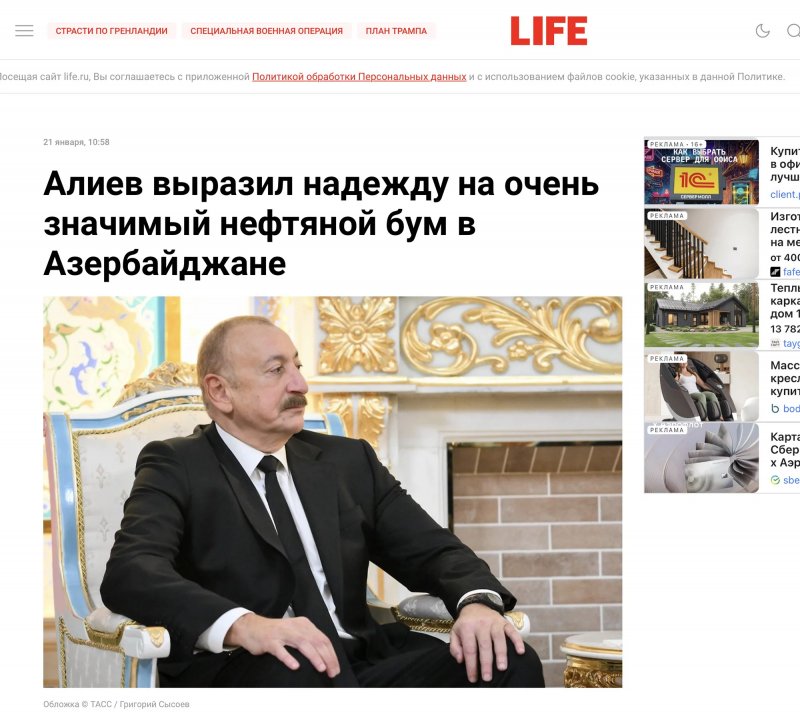
Russian outlets including MK.ru, Vesti.ru, Life.ru, Vzglad, and Komsomolskaya Pravda focused on Aliyev’s comments about Azerbaijan’s oil sector. He indicated that while gas production is expanding, plans exist to stabilize and potentially increase oil output, raising prospects of a second oil boom.
At the same time, the President emphasized that Azerbaijan’s main strategic priority remains economic diversification. He highlighted green energy as a cornerstone of future development, announcing expectations to reach 8 gigawatts of solar and wind energy capacity by 2032. International media interpreted this as a signal that Azerbaijan aims to balance traditional energy strength with renewable leadership in the region.
Across coverage, media outlets underlined that Aliyev’s Davos appearances presented Azerbaijan as a country transitioning from post-conflict recovery to regional leadership, energy partnership, and economic modernization. His speeches projected confidence, strategic clarity, and a commitment to peace-driven development.
The broad international response to his remarks illustrates Azerbaijan’s rising visibility on the global stage — not only as an energy supplier, but as a political and economic actor shaping Eurasia’s future.
By Aysel Mammadzada


Similar news