Putin meets Xi: Why Russia and China are becoming more dependent on each other


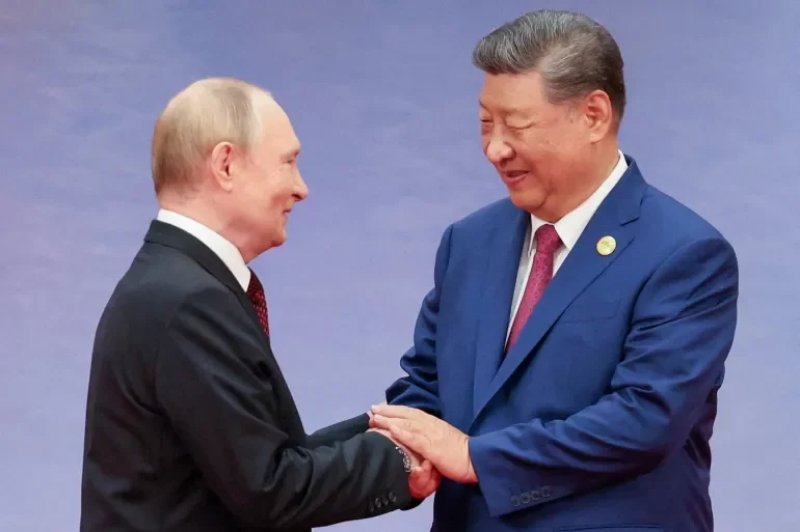
Russian President Vladimir Putin has arrived in China for a two-day visit focused on talks with Chinese President Xi Jinping, as Moscow and Beijing continue to deepen cooperation amid the war in Ukraine, Western sanctions, and wider global instability.
The visit comes just days after US President Donald Trump concluded his own trip to Beijing, highlighting how China has recently become the focal point of high-level diplomacy involving the world’s major powers, News.Az reports, citing Al Jazeera.
Putin’s meeting with Xi is their second face-to-face encounter in less than a year and marks the 25th anniversary of the 2001 Treaty of Good-Neighborliness and Friendly Cooperation, which laid the foundation for modern bilateral relations after decades of ideological rivalry and mistrust during the Cold War.
RECOMMENDED STORIES
Analysts say the timing reflects how Russia and China are drawing closer under pressure from the West and shifting global power dynamics. Since Russia’s invasion of Ukraine in 2022, Western sanctions have pushed Moscow to rely far more heavily on Beijing for trade, finance, and industrial supply chains.
At the same time, China has expanded its access to discounted Russian energy and raw materials, strengthening its energy security while benefiting from reduced global competition in key markets. However, despite growing ties, the relationship remains asymmetrical, with China holding significantly greater economic leverage due to the size of its economy.
Russia has become increasingly dependent on China for critical technologies and industrial components, including dual-use goods linked to defence production. Analysts note that a large share of Russia’s sanctioned imports now comes from China, making Beijing an essential economic lifeline for Moscow.
Energy cooperation remains the cornerstone of the partnership. With European markets largely closed to Russian exports, China has emerged as the primary buyer of Russian oil and gas. This shift has fundamentally reshaped global energy flows and increased Beijing’s influence over pricing and supply terms.
A key project under discussion is the long-delayed Power of Siberia 2 pipeline, which could transport around 50 billion cubic metres of gas annually from Russia to China via Mongolia. If completed, it would further lock in long-term energy interdependence between the two countries.
Beyond economics, Russia and China also coordinate closely on global politics. Both are permanent members of the UN Security Council and frequently align on issues such as sanctions, sovereignty, and opposition to US-led policies, while carefully avoiding a formal military alliance.
Military cooperation has nonetheless expanded through joint exercises, including naval drills focused on air defence and anti-submarine warfare. These activities are widely seen as signalling strategic alignment without creating binding defence commitments.
Analysts say the relationship is increasingly defined by pragmatism rather than ideology. While once rivals and later cautious partners, Russia and China now rely on each other in ways that are likely to deepen further as global tensions persist, even if both sides continue to carefully manage the limits of their partnership.
By Leyla Şirinova


Similar news