Remains of Buddhist temple discovered in Kyrgyzstan Silk Road site


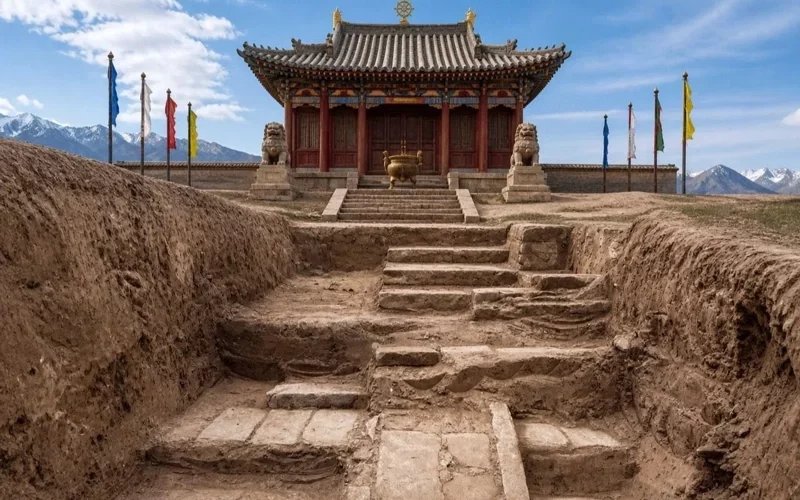
Archaeologists in Kyrgyzstan have uncovered the remains of a Buddhist temple complex at the ancient settlement of Ak-Beshim, a key Silk Road city located in the Chuy region.
The discovery was made by a Kyrgyz-Japanese archaeological expedition working at the site of the medieval city of Suyab, about seven kilometers southwest of Tokmok. Researchers found structural elements including a platform, ramp, and stairs made of fired brick, which are typical features of temple architecture linked to the Tang dynasty period, News.Az reports, citing Kazinform International News Agency.
Experts date the complex to the 7th–8th centuries and say it supports earlier theories that a Buddhist religious structure once existed in the area. The finding also confirms hypotheses first suggested by archaeologists in the mid-20th century regarding the presence of Buddhist monuments in the region.
RECOMMENDED STORIES
Suyab was historically an important urban and cultural centre on the Silk Road and once served as the capital of the Western Turkic Khaganate. The site has long been of interest to researchers studying the spread of Buddhism across Central Asia.
Archaeological work at Ak-Beshim has been ongoing for years, with further research expected to provide additional insights into religious and cultural exchange along ancient trade routes in the region
By Leyla Şirinova


Similar news