Rhine water levels rise after rain, but shipping still restricted


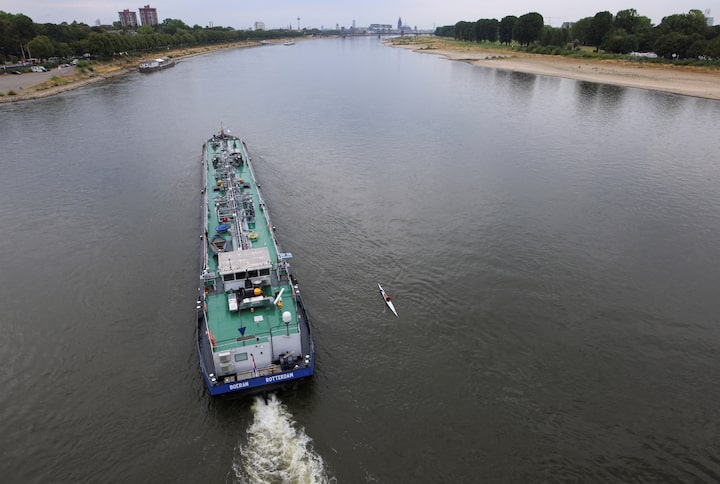
Water levels along the Rhine River in Germany have begun to recover after recent rainfall, easing some of the disruption to cargo transport, but shipping conditions remain limited as vessels are still unable to operate at full capacity.
According to commodity traders, improved rainfall over the past days has helped raise river levels, allowing ships to carry more cargo than earlier this week. However, most vessels are still only able to sail at around 60% to 70% capacity, meaning transport bottlenecks have not been fully resolved, News.Az reports, citing Reuters.
Earlier in April and early May, prolonged dry weather significantly reduced water levels across sections of the Rhine, making it too shallow for fully loaded ships to pass safely. As a result, operators were forced to either reduce cargo loads or use multiple vessels, increasing both logistical complexity and shipping costs.
RECOMMENDED STORIES
Key bottlenecks remain in several critical sections of the river, including around Duisburg, Cologne, and the strategic chokepoint near Kaub. Traders note that while conditions are improving, full-load navigation is still not possible in these areas.
Shipping companies have also continued to apply surcharges to freight rates to offset reduced cargo capacity, adding further pressure on supply chains for goods such as grains, coal, chemicals, and petroleum products.
Forecasters suggest that if rainfall continues, conditions at Kaub could normalize early next week as water flows downstream. Still, operators remain cautious, given how quickly river levels can fluctuate during seasonal transitions.
The Rhine is one of Europe’s most important commercial waterways, and past disruptions—such as the 2022 drought—have shown how low water levels can quickly ripple through industrial production and energy supply chains across Germany and beyond.
By Aysel Mammadzada


Similar news