Syria: Armed Bedouin clans withdraw from Druze-majority Sweida after ceasefire


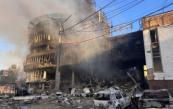
Armed Bedouin factions in southern Syria announced Sunday they have withdrawn from the Druze-majority city of Sweida following a week of violent clashes and a U.S.-brokered ceasefire. Humanitarian aid convoys have begun entering the city, which has been left devastated by sectarian fighting, power outages, and severe shortages.
The clashes between Druze militias and Sunni Bedouin clans have killed hundreds, sparking fears of further sectarian violence and threatening Syria’s fragile postwar stability. Israel reportedly carried out dozens of airstrikes in Sweida province, targeting government forces aligned with Bedouin fighters, News.Az reports, citing NPR.
The violence was triggered by tit-for-tat kidnappings that spread across multiple towns and escalated into street battles in Sweida, the provincial capital. Syrian government forces were deployed to halt the violence but later pulled back as part of the ceasefire agreement.
Interim Syrian President Ahmad al-Sharaa, perceived by many as sympathetic to the Bedouins, urged the fighters to leave the city.
“We thank the Bedouins for their heroic stances but demand they fully commit to the ceasefire and comply with the state's orders,” al-Sharaa said in a televised address on Saturday.
Despite the withdrawal, dozens of armed Bedouins remain on the outskirts of Sweida, cordoned off by government security forces. Khaled al-Mohammad, a fighter from Deir al-Zour province, told the Associated Press:
“We will not leave until [Sheikh Hikmat al-Hijri] and those with him who stirred sedition turn themselves in.”
The Syrian Red Crescent confirmed that 32 trucks carrying food, water, medicine, and fuel have entered Sweida. However, tensions flared when a government delegation accompanying another convoy was blocked by armed Druze groups loyal to al-Hijri.
Al-Hijri, a leading Druze spiritual figure, denied accusations of obstructing aid and emphasized the importance of religious unity:
“Shame and disgrace be upon all those who seek to sow discord and hatred in the minds of young people.”
The U.N. International Organization for Migration (IOM) reported that 128,571 people have been displaced by the recent violence, including 43,000 on Saturday alone.
Washington’s special envoy to Syria, Tom Barrack, condemned the violence, urging all groups to stop fighting:
“Syria stands at a critical juncture, peace and dialogue must prevail, and prevail now,” he said on X (formerly Twitter).
Videos circulating online show Bedouin fighters destroying portraits of Druze leaders and humiliating elderly Druze men, acts seen as deeply offensive. In retaliation, Druze militias attacked Bedouin-majority villages, forcing families to flee to neighboring Daraa province.
With over 1 million Druze worldwide, more than half live in Syria, with significant communities in Lebanon, Israel, and the Israeli-controlled Golan Heights. While many Druze initially welcomed the fall of the Assad regime, recent attacks have deepened distrust toward Damascus’ transitional leadership and raised concerns about future coexistence.


Similar news