The Great Return isn’t just rebuilding cities — it’s restoring justice


The 44-day Patriotic War was a turning point not only in the modern history of Azerbaijan, but also in the geopolitical landscape of the South Caucasus. The historic victory over Armenia did more than restore territorial integrity — it reaffirmed national dignity, demonstrated the resilience of a unified society, and sent a clear message to the world: long-standing injustice can be reversed when a nation stands behind its cause with determination and legitimacy.
Yet the true meaning of victory did not end on the battlefield. In many ways, it began afterwards — in the cities, mountains, and destroyed settlements of Karabakh and East Zangezur. What followed was not merely a technical reconstruction project. It became a civilizational mission: restoring life, memory, and continuity to lands that were erased, burned, and depopulated for almost thirty years.
A victory that became a beginning
The concept of the Great Return — today widely recognized as one of the most ambitious post-conflict reconstruction strategies in the world — did not emerge overnight. Its earliest foundation was laid after the April battles of 2016, when Azerbaijan liberated strategic positions and rebuilt the village of Cocuq Marjanli. That small settlement became a powerful symbol: if life could return there, it could return everywhere.
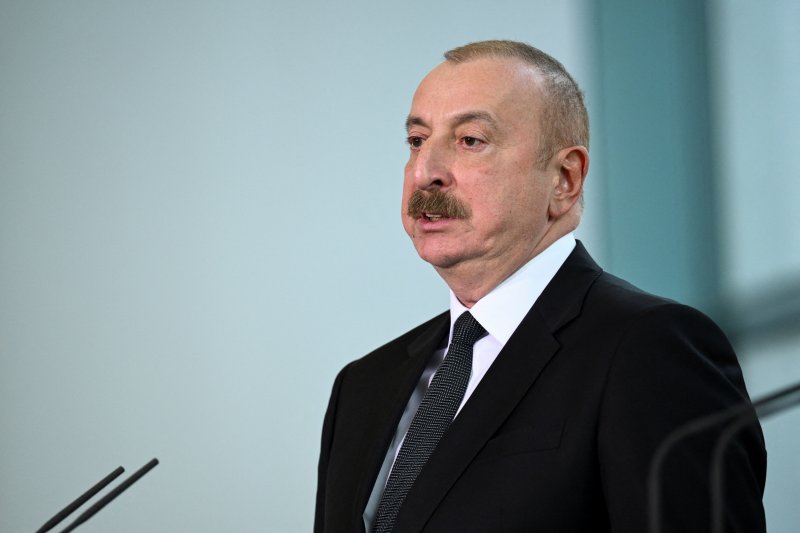
The full-scale implementation of this vision became possible only after the 2020 Patriotic War. The Trilateral Statement of November 10, 2020 ensured Azerbaijan’s sovereignty over its lands, including the return of Kalbajar on November 25 without a single shot. The image of residents hearing President Ilham Aliyev declare, “Dear people of Kalbajar — congratulations,” was not just a political address — it was closure of a decades-long trauma.
From ruins to a blueprint for the future
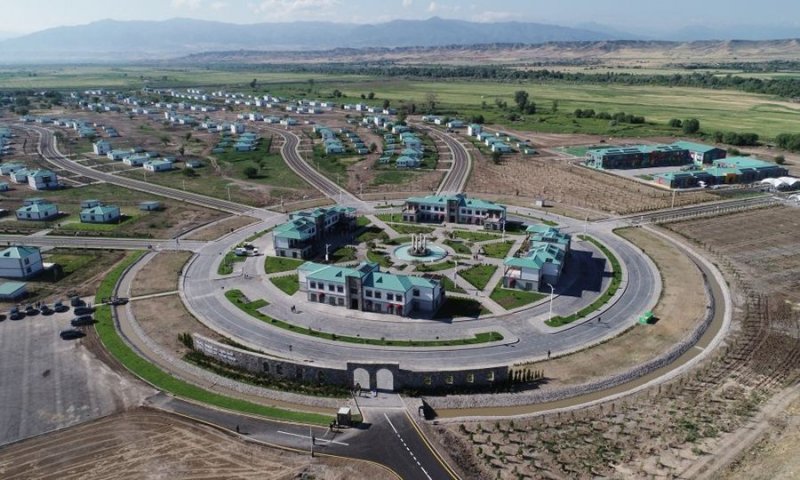
Anyone who visits the liberated territories today witnesses a paradox: total destruction standing beside brand-new infrastructure, smart cities, and emerging settlements. For decades, these lands were subjected to systematic vandalism — schools, mosques, libraries, cemeteries, villages, forests — erased.
Today, the same places are becoming laboratories of innovation.
Smart villages, energy-independent housing, renewable power networks, new airports, tunnels through mountain ranges, and fully re-planned cities are transforming Karabakh into one of the most modern development zones in the region.
Kalbajar is a striking example. Once emptied, looted, and burned, it now has a Master Plan extending to 2040, envisioning a population of 17,000 and the largest per-capita green-space ratio in the country. Schools, hospitals, museums, residential districts, and public services are being built — not as replicas of the past, but as a forward-looking model of sustainable settlement.
And most importantly — families are returning. The key indicator is not buildings completed, but lights turned on in homes previously abandoned to silence.
Justice deferred, not denied
For decades, international law recognized these lands as Azerbaijani — yet nothing changed on the ground. UN Security Council Resolution 822 demanded the immediate withdrawal of Armenian forces from Kalbajar back in 1993, but the demand was ignored without consequence.
The world watched. The world waited. Azerbaijan acted.
And when Armenia finally withdrew in 2020, the world saw flames: burning houses, forests, infrastructure — a final attempt to ensure that if Armenians must leave, then no one should return. Those images — widely circulated — were not just destruction; they were evidence.
That is precisely why today’s reconstruction is not merely urban planning — it is a response to attempted erasure. The Great Return is restoring what international diplomacy could not protect: lived justice.
More than repatriation — A national renaissance
When one speaks with residents now returning to Jabrayil, Fuzuli, Lachin, or Kalbajar, one thing becomes clear: this is not a population “resettled by the state” — it is a nation reclaiming its history.
Every road, power line, and school built reinforces a simple truth:
Azerbaijan did not just win a war — it restored continuity.
President Ilham Aliyev summarized this reality with words that resonate far beyond borders:
> “We restored justice. We restored our rights. And today, life is returning to our homeland.”
A final thought
The Great Return is larger than physical reconstruction. It is a moral and historical phenomenon — the rare moment when a displaced people come home not through negotiation or compromise, but through restored sovereignty and national resolve.
From Kalbajar to Lachin, Fuzuli to Jabrayil, the landscape is changing.
The silence of occupation is being replaced by the sound of construction — and soon, children.
Life is returning.
Memory is returning.
Azerbaijan is returning.
By Rovshan Sayyaroglu
The material was prepared with the financial support of the Media Development Agency of the Republic of Azerbaijan.


Similar news