Azerbaijan’s foreign policy: A strategic vision of partnership, stability, and global engagement


The foreign policy of independent Azerbaijan has undergone a substantial transformation over the past decades. Today, it is defined by a dynamic trajectory, increasing geopolitical agency, diversified diplomatic engagement, and the strengthening of Azerbaijan’s status as a reliable and pragmatic international actor. Guided by the strategic leadership of President Ilham Aliyev, Azerbaijan has successfully consolidated its political sovereignty, enhanced its international influence, and positioned itself as a constructive partner both regionally and globally.
Azerbaijan’s strategic objective is to deepen integration into the international community while expanding cooperation across priority domains — political dialogue, economic partnership, regional security, humanitarian exchange, innovation, and multilateral diplomacy. To achieve these goals, Azerbaijan continues building a robust network of bilateral and multilateral relations, modernizing legal frameworks of cooperation, and actively participating in the institutional architecture of international organizations.
Regular high-level visits, newly signed agreements, joint cooperation mechanisms, and emerging strategic platforms underscore Azerbaijan’s commitment to strengthening its role in global affairs and shaping a sustainable vision for international cooperation.
Strategic partnership with the Arab world
A distinct part of Azerbaijan’s foreign policy landscape is its growing strategic partnership with Arab countries. Relations today extend well beyond symbolic diplomacy — they encompass military cooperation, economic investment, humanitarian projects, and long-term development programs.
The recent visit of an official delegation from the United Arab Emirates within the framework of the “Agreement on Military Cooperation between the Government of the Republic of Azerbaijan and the Government of the UAE” reflects the deepening trust between the two nations. Briefings delivered by the Ministry of Defense on the outcomes of the 44-day Patriotic War and the evolving security environment of the South Caucasus further reinforced confidence and strategic alignment.
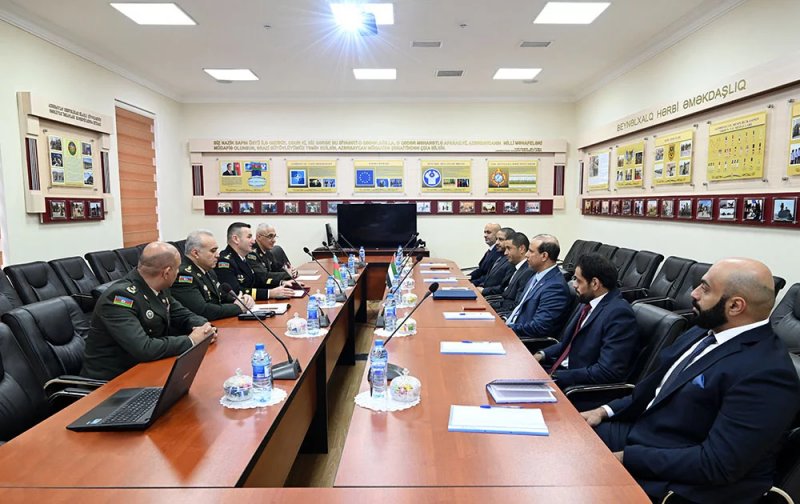
Economic and financial dialogue with the Arab Coordination Group represents another cornerstone of cooperation. Institutions such as the Islamic Development Bank, Abu Dhabi Development Fund, Qatar and Saudi Development Funds, and the Kuwait Fund for Arab Economic Development are investing in Azerbaijan’s infrastructure and social development.
President Ilham Aliyev’s meeting with senior representatives of the Arab Coordination Group and discussions on preferential financial packages for the reconstruction of Karabakh and East Zangezur marked a turning point, elevating engagement to a strategic level. The signing of a Declaration of Intent following the High-Level Roundtable in Baku demonstrated the mutual interest in long-term cooperation.
Against the backdrop of Azerbaijan hosting COP29, interest from Arab sovereign funds in green energy and climate-focused projects signals the beginning of a new chapter. The creation of designated "Green Energy Zones" in Karabakh and East Zangezur positions Azerbaijan as a regional hub for climate technology, renewable solutions, and energy innovation.
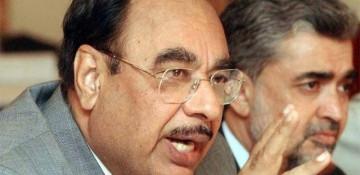
Cooperation is also expanding in the field of international law and governance. Talks between Azerbaijan’s Minister of Justice Farid Ahmadov and UAE Minister of Justice Abdullah bin Sultan bin Awad Al-Nuaimi focused on digital transformation of the justice sector, artificial intelligence in governance, developing legal frameworks, and future judicial cooperation — including extradition procedures. This partnership contributes to Azerbaijan’s ongoing legal reforms and enhances institutional capacity through best-practice exchange.
Europe as a strategic direction: Hungary and Italy
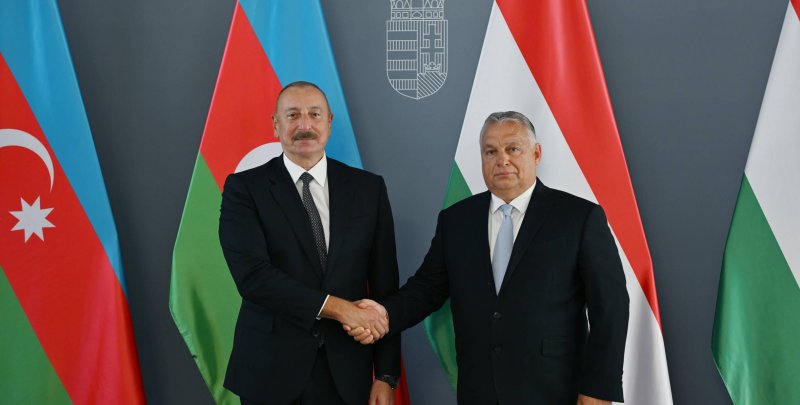
Hungary remains one of Azerbaijan’s closest strategic partners in Europe — and one of the few EU member states pursuing an independent foreign policy. Regular personal dialogue between President Ilham Aliyev and Prime Minister Viktor Orbán reflects a resilient foundation of mutual trust. Hungary has repeatedly defended Azerbaijan in the EU framework, opposing biased or unjustified allegations — a position acknowledged openly by President Aliyev.
Energy remains a key pillar of this partnership. The export of Azerbaijani natural gas to Hungary, and more broadly to Europe, plays a decisive role in strengthening regional and continental energy security. The Southern Gas Corridor has reinforced Azerbaijan’s reputation as a stable and reliable energy supplier to the European Union.
Equally significant are Azerbaijan’s relations with Italy — its largest trading partner in Europe. The official visit of Italian President Sergio Mattarella to Baku on September 30, 2025, became a milestone in bilateral political and economic ties. Meetings between the two heads of state addressed regional security, investment planning, energy cooperation, and the broader EU–Azerbaijan agenda. Two previously signed documents on strategic partnership solidified the institutional framework for sustained cooperation. Italy’s active participation in reconstruction projects across liberated Azerbaijani territories underscores the depth of this partnership.
Azerbaijan in the system of international organizations
Azerbaijan continues strengthening cooperation with leading global and multilateral structures — including the United Nations, OSCE, Council of Europe, Organization of Turkic States, Organisation of Islamic Cooperation, and the Non-Aligned Movement (NAM). Azerbaijan’s chairmanship of NAM from 2019 to 2023 significantly increased the country’s global visibility, diplomatic weight, and engagement in shaping agendas relevant to developing and non-aligned states.
Hosting COP29 in Baku has positioned Azerbaijan as a pivotal regional actor in climate diplomacy, energy transition, and sustainable development — further enhancing its global influence.
Conclusion
Deepening international integration and expanding strategic partnerships remain key priorities of Azerbaijan’s foreign policy. The strengthening of ties with the Arab world, cooperation with Hungary and Italy in political and energy domains, and active engagement in global multilateral structures demonstrate the balanced, multidimensional, and future-oriented nature of Azerbaijan’s diplomacy.
Today, Azerbaijan stands as an advocate of peace, regional connectivity, and sustainable development — a state actively shaping global dialogue rather than merely participating in it. Under the leadership of President Ilham Aliyev, Azerbaijan continues to consolidate its position as a trusted regional actor and a stable model of development within the evolving international system.
By Rovshan Sayyaroglu
The material was prepared with the financial support of the Media Development Agency of the Republic of Azerbaijan.


Similar news