US bombers join Japan jets after China–Russia drills


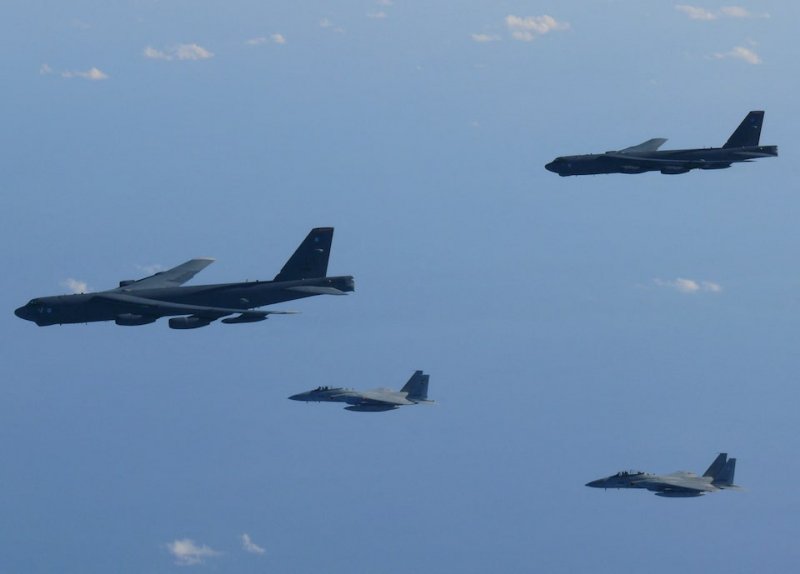
U.S. nuclear-capable B-52 bombers flew over the Sea of Japan with Japanese fighter jets on Wednesday, in a show of force following joint Chinese–Russian military drills around Japan and South Korea, Tokyo said.
Japan’s Defence Ministry said the mission — involving two U.S. B-52s, three Japanese F-35s and three F-15 fighters — demonstrated the allies’ “strong resolve to prevent any unilateral attempt to change the status quo by force,” News.Az reports, citing Reuters.
The flight comes a day after Chinese and Russian strategic bombers conducted joint patrols over the East China Sea and western Pacific, prompting Japan to scramble jets. Tokyo accused Chinese forces of targeting its aircraft with radar beams, a claim Beijing denied, saying Japanese fighters endangered its carrier operations.
Washington criticised the radar incident as “not conducive to regional peace and stability,” stressing its alliance with Japan remains “unwavering.”
Both Japan and South Korea host significant U.S. military forces, with Japan home to the largest concentration of American power overseas, including an aircraft carrier strike group and Marine expeditionary force.
South Korea said it also scrambled jets after Chinese and Russian aircraft entered its air defence identification zone on Tuesday.
Taiwan reported a second consecutive day of heightened Chinese military activity, detecting 27 aircraft — including H-6K nuclear-capable bombers — conducting “joint combat readiness patrols,” along with multiple Chinese warships operating near the island. On Wednesday night, additional J-16 fighters and H-6 bombers carried out long-range training in the Western Pacific.
Regional tensions have increased since Japanese Prime Minister Sanae Takaichi angered Beijing last month with remarks about a potential response to a hypothetical Chinese attack on Taiwan.
China claims Taiwan as its territory and has not ruled out using force to take the island, which lies just over 100 km from Japanese territory and along key sea lanes vital to Tokyo.


Similar news