US offers to lease Zangezur Corridor for 100 years. What’s standing in the way?


U.S. Ambassador to Türkiye Tom Barrack caused a stir with his statement about the Zangezur Corridor.
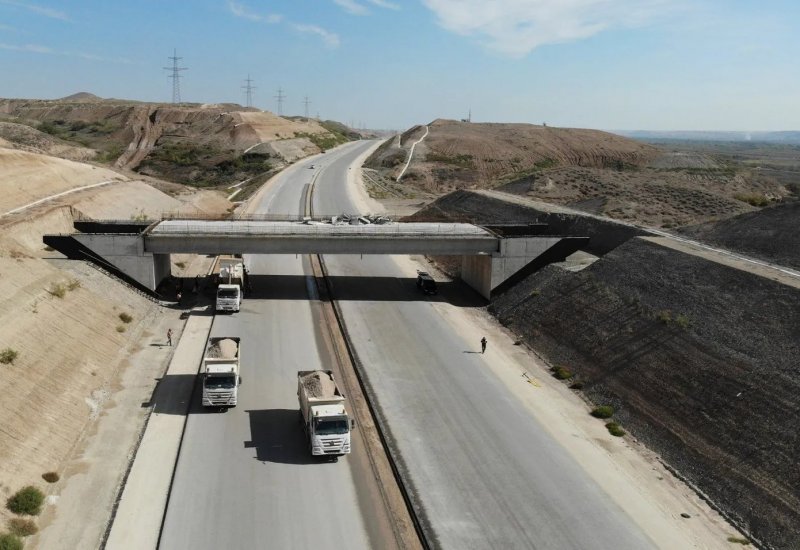
According to him, the United States is ready to take over the administration of the Zangezur Corridor between Armenia and Azerbaijan if it helps move forward the stalled negotiations between the two republics.
Moreover, he claimed that Washington is willing to lease the corridor for 100 years.
“They’re arguing over 32 kilometers of road, but this is no joke. This dispute has been going on for ten years—32 kilometers. Then America steps in and says: ‘Okay, we’ll take it. Lease us these 32 kilometers for 100 years, and you can share it between yourselves,’” Middle East Eye quoted him as saying.
The American diplomat even suggested that the implementation of the project could be guaranteed by a private American company.
Interestingly, the publication’s source emphasized that the initiative originated from Türkiye, and that the United States merely agreed to it. According to the same source, both sides are aware of the proposal. Initially, the idea was for the company to operate only on the Armenian segment of the corridor, but Armenia insisted that it also operate on the section passing through Nakhchivan. However, Azerbaijan considered this an unacceptable form of interference.
Baku has long made it clear that it will not agree to place its communications infrastructure under foreign control—and it seems unlikely to change that position, regardless of whether the interested party is Russia or the West. For Armenia, foreign control over certain sectors is not something new or unfamiliar. Its railways, energy sector, and heavy industries have, for most of the post-independence period, been managed by Russia. Currently, the Armenian government is trying to nationalize the energy company owned by Russian billionaire Samvel Karapetyan, who is under arrest in connection with an alleged coup attempt. The Armenian railways are still operated by Russian Railways (RZD).
Therefore, the proposal—allegedly from Türkiye—and the U.S. agreement to guarantee the corridor’s security have been received in Yerevan without surprise. However, Yerevan seeks to balance the equation, citing the supposed lack of safety for Armenian trains, which, according to Prime Minister Nikol Pashinyan’s “Crossroads of Peace” concept, would travel from Yeraskh to the Iranian border once the road through Meghri (Western Zangezur) is opened. Armenia does not have its own railway link to Iran, and the Zangezur Corridor could become a critical route for trade with the Islamic Republic.
Nikol Pashinyan is trying to promote not the “Zangezur Corridor” per se, but the “Crossroads of Peace,” which envisions restoring transport connections through Meghri (known during Soviet times as the Meghri Corridor). By securing control over the Nakhchivan segment of the Zangezur Corridor, Pashinyan seeks to establish symmetry between the sides. Azerbaijan, however, has no intention of seeking symmetry and appears determined to stick to its position.
https://yuz.uz/imageproxy/1200x/https://yuz.uz/file/news/12274ba834b08ee7b28813b47d09875e.jpg
In truth, it makes little difference to Azerbaijan who provides security for the corridor. According to the trilateral statement of November 10, 2020, security was originally entrusted to Russia. But over the past five years, significant geopolitical shifts have taken place, and Russian guarantees are no longer considered relevant.
Meanwhile, Armenia is seeking ways to retreat. Pashinyan realizes that Baku is unwilling to compromise on the Zangezur Corridor. American guarantees could serve as a useful counterbalance—and Baku initially had no objections. However, it was Pashinyan himself who complicated the matter by insisting that U.S. guarantees apply to the Azerbaijani side as well. Judging by the tone of the U.S. ambassador’s statement, there is now some frustration and disappointment in Washington over the failure to reach an agreement.
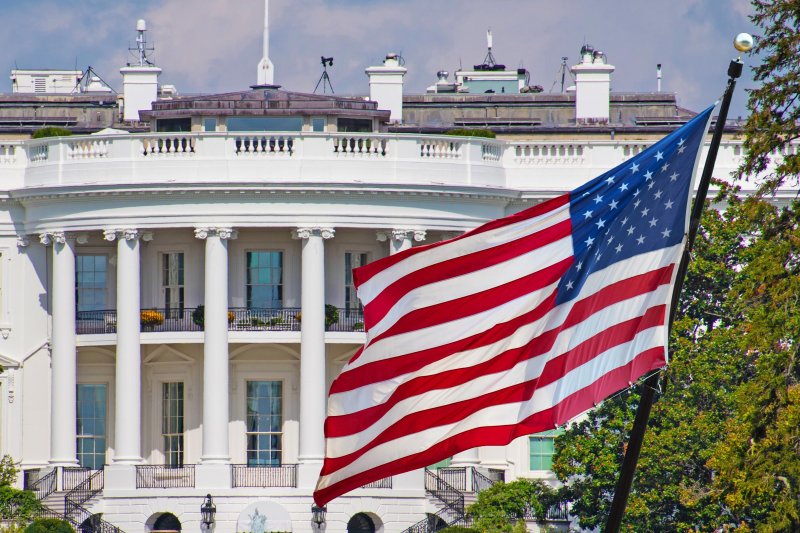
Moreover, the ambassador’s remarks suggest that the White House, as usual, is out of touch with the facts. The Zangezur Corridor emerged as an issue only after the 44-day war; prior to the liberation of the territories, it was not on the agenda. In this context, Washington is unlikely to succeed in portraying itself as a “savior” if Yerevan continues to insist on “equal terms.”
It is worth recalling that at the height of the Zangezur Corridor discussions, Pashinyan declared that all routes passing through Armenia must be under Armenian control and operate in accordance with Armenian law. This statement was directed at Russia’s FSB Border Service, which was preparing to assume its role based on the 2020 trilateral agreement. Today’s Russia is no longer in a position to interfere if Yerevan and Baku agree to the U.S.-proposed 100-year corridor management plan.
Pashinyan wants to open communications, but fails to grasp that, as the losing side—with significant historical debts to Azerbaijan after nearly three decades of occupation—he is in no position to impose conditions or demand equal terms. Thus, Yerevan should not expect parity in discussions over regional transit routes.
Can the United States realistically take on such a role? Frankly speaking, Türkiye’s proposal does not seem entirely realistic. It is a kind of compromise aimed at opening the Zangezur Corridor, which is crucial for Türkiye. But how willing is Baku to sacrifice even a small portion of its sovereignty—however minimal—over a segment of railway infrastructure? That remains a major question. And it seems unlikely that Washington will succeed in persuading Azerbaijan to agree.
By Tural Heybatov


Similar news