Washington’s Hormuz blockade: Pushing Iran toward economic collapse



Editor’s note: Moses Becker is a special political commentator for News.Az. He holds a PhD in political science and specializes in interethnic and interreligious relations. The views expressed in this article are the author’s own and do not necessarily reflect the position of News.Az.
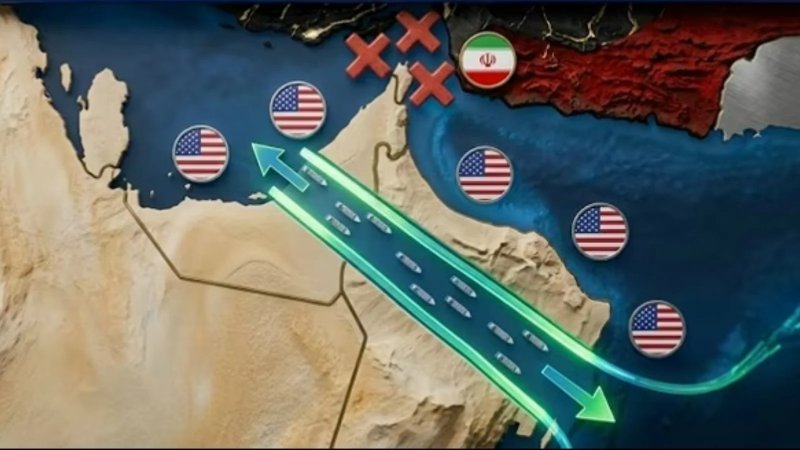
On the evening of April 13, 2026, in response to Iran’s blockade and mining of the Strait of Hormuz, the United States closed all entry and exit routes to the strait for vessels bound for the Islamic Republic. In doing so, Washington cut Tehran off from 90% of its foreign currency revenues, effectively paralyzing its economy. U.S. Central Command (CENTCOM) stated that a full blockade of Iranian ports had been imposed, and that the Islamic Republic’s international maritime trade had been “completely” shut down. Within the first 24 hours, not a single vessel managed to break through the American blockade, the command reported. It added that six commercial ships had been ordered to return to an Iranian port in the Gulf of Oman.
The restrictions apply to vessels under any flag that interact with Iranian ports, oil terminals, or coastal infrastructure. Transit through the strait to non-Iranian destinations is not restricted, but neutral vessels may be subject to inspection, U.S. military officials said.
According to The Wall Street Journal, more than 15 U.S. warships are involved in enforcing the blockade. An aircraft carrier, the USS Abraham Lincoln, along with several guided-missile destroyers, helicopter carriers, and an amphibious assault ship, has been deployed about 200 kilometers south of Iran’s coast. By imposing the blockade, Washington signaled that its forces can intercept vessels carrying Iran-related cargo at distances of tens of thousands of miles. A commercial ship may be treated as a target until it reaches a neutral port.

Source: PRESS TV
Analysts say modern technology allows such blockades to be enforced over vast distances. “The United States does not necessarily need to send ships into the Persian Gulf to block Iran,” commented Carl Schuster, a former U.S. Navy captain. He noted that, according to CENTCOM, more than 15 ships are engaged in blockade operations, most of them outside the Strait of Hormuz. They may be equipped with advanced surveillance and reconnaissance systems linked to air and space-based assets. Some of these vessels reportedly host Marine units that, together with naval crews, can board and seize commercial ships that ignore U.S. warnings to stop or turn back.
As a result of these actions, no tanker can now enter Iranian ports to load oil. This situation places the regime on the brink of economic collapse. It is no longer a matter of survival but of catastrophe. If the current situation persists for six months, especially given the destruction of industrial infrastructure and transport arteries following 40 days of bombardment, it is highly likely that the country will face a breakdown of governance and even statehood. It is clear that few will fight for ideology on an empty stomach.
Beyond Iran, countries in East and South Asia, including China, India, Japan, and South Korea, have been among the most affected by U.S. actions. U.S. President Donald Trump has suggested that they purchase American oil and liquefied natural gas as alternatives. According to The Wall Street Journal, the blockade marks the beginning of a new and highly unstable phase in the U.S. confrontation with Iran. The publication suggests it amounts to an open-ended attempt by the United States to control the Strait of Hormuz. “Such a blockade could lead to a hard confrontation, testing who has greater resilience — Tehran or global markets.”
In other words, Iran’s actions against the United States have unexpectedly given Washington an opportunity to strengthen its position in this strategically vital region. As Reuters notes, “if Trump’s plan works, it will deprive Iran of its main leverage in negotiations with the United States, ultimately making the strait safer for global trade and lowering oil prices.”
When Iran blocked the Strait of Hormuz in February 2026, it did what the world had feared for decades. In the short term, it worked. Twenty million barrels of oil per day were removed from the market. One-fifth of global liquefied natural gas trade disappeared. A third of international fertilizer trade — urea, ammonia, sulfur — was stranded on the other side of the Persian Gulf. A third of global helium production, critical for chip manufacturing and the artificial intelligence industry, was effectively cut off in Qatar. Oil prices exceeded $115 per barrel. The International Energy Agency described it as “the largest supply disruption in the history of the global oil market.”
It is believed that if the strait remains closed for another three to four months, oil prices could stabilize near $100 per barrel, gas could reach $500–600 per thousand cubic meters, and aluminum could approach $3,300 per ton. If the blockade lasts more than six months, oil could range between $120–130 per barrel, and gas could climb to $800 per thousand cubic meters. However, these are only projections. In reality, markets today tend to adapt relatively quickly to extreme conditions.
Source: springernature
A decade ago, the United States depended heavily on external energy supplies, both natural gas and oil. Today, it is the world’s largest producer of both resources, and its output and exports continue to grow. For example, after the conflict between Russia and Ukraine and the imposition of sanctions on Moscow, American gas replaced Russian supplies in Europe. As a result, Europe became dependent on the United States, while American industry gained a massive source of revenue. A similar shift could occur with Qatari gas for its main clients in East Asia — South Korea, Japan, Taiwan, and others.
Japanese Prime Minister Sanae Takaichi has already announced a series of government measures to reduce dependence on gas passing through Hormuz, including investments in U.S. energy development. In this way, Donald Trump is securing new markets for the American oil industry, displacing previous suppliers.
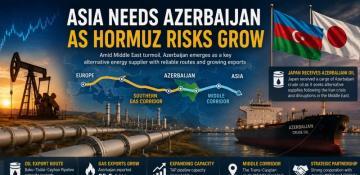
Moreover, the blockade of the Strait of Hormuz has exposed its vulnerability, which is likely to accelerate the development of extensive pipeline networks to export oil to destinations beyond the Persian Gulf. Within days of the conflict’s outbreak, Saudi Arabia activated its East–West pipeline, which delivers about seven million barrels per day. Another pipeline in the United Arab Emirates transports roughly two million barrels per day through the port of Fujairah, located outside the Strait of Hormuz. Together, these pipelines provide about 50% of Hormuz’s capacity. In addition, several long-delayed projects are now likely to be implemented, some potentially extending directly to the Mediterranean via Israel.
The crisis around the Strait of Hormuz is also likely to accelerate the development of civilian nuclear energy. Additional investment is expected to make this form of energy safer and more viable. European Union countries have long sought ways to reduce dependence on oil and gas imports, and the Hormuz blockade once again underscores the need to build economies based on alternative energy sources.
(If you possess specialized knowledge and wish to contribute, please reach out to us at opinions@news.az).


Similar news