Amid rising tensions in the Middle East, a frequently voiced argument suggests that the United States has found itself in a “deadlock,” where any decision it makes could trigger a chain reaction leading to global economic and political collapse. This perspective is often framed through a five-stage scenario: Gulf states falling under Iran’s influence, the collapse of the petrodollar system, military buildup in Asia, Europe distancing itself from the United States, and ultimately the loss of the dollar’s status as the world’s reserve currency.
At first glance, this argument appears logical and even compelling. However, a closer analytical examination reveals a far more complex, multi-layered, and balanced picture. While the United States does face difficult strategic choices, this does not automatically imply a breakdown of the global system.
How accurate is the notion of a US “deadlock”?
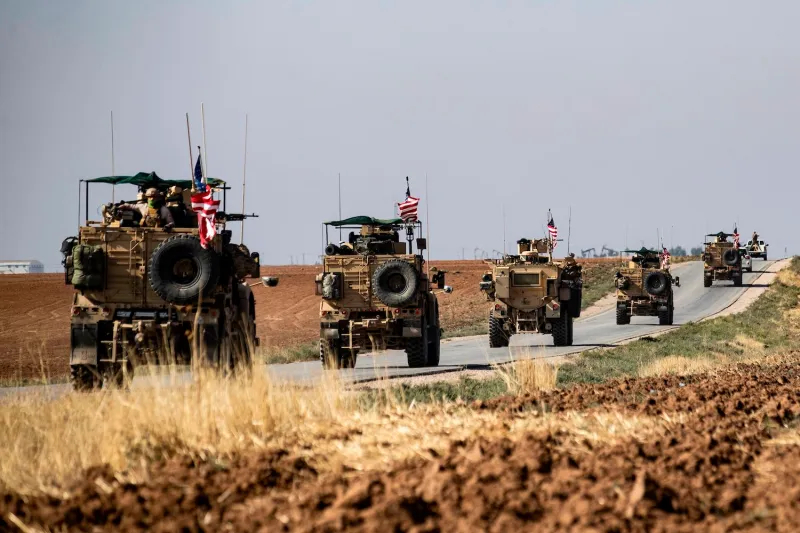
The US presence in the Middle East has never been solely about security. It has also been tied to safeguarding energy routes, ensuring the stability of allied states, and maintaining dominance in the global financial system.
In recent years, however, Washington’s strategic priorities have shifted. The United States is increasingly focusing on the Asia-Pacific region, particularly its competition with China. This shift does not signify a full withdrawal from the Middle East, but rather a recalibration of its engagement.
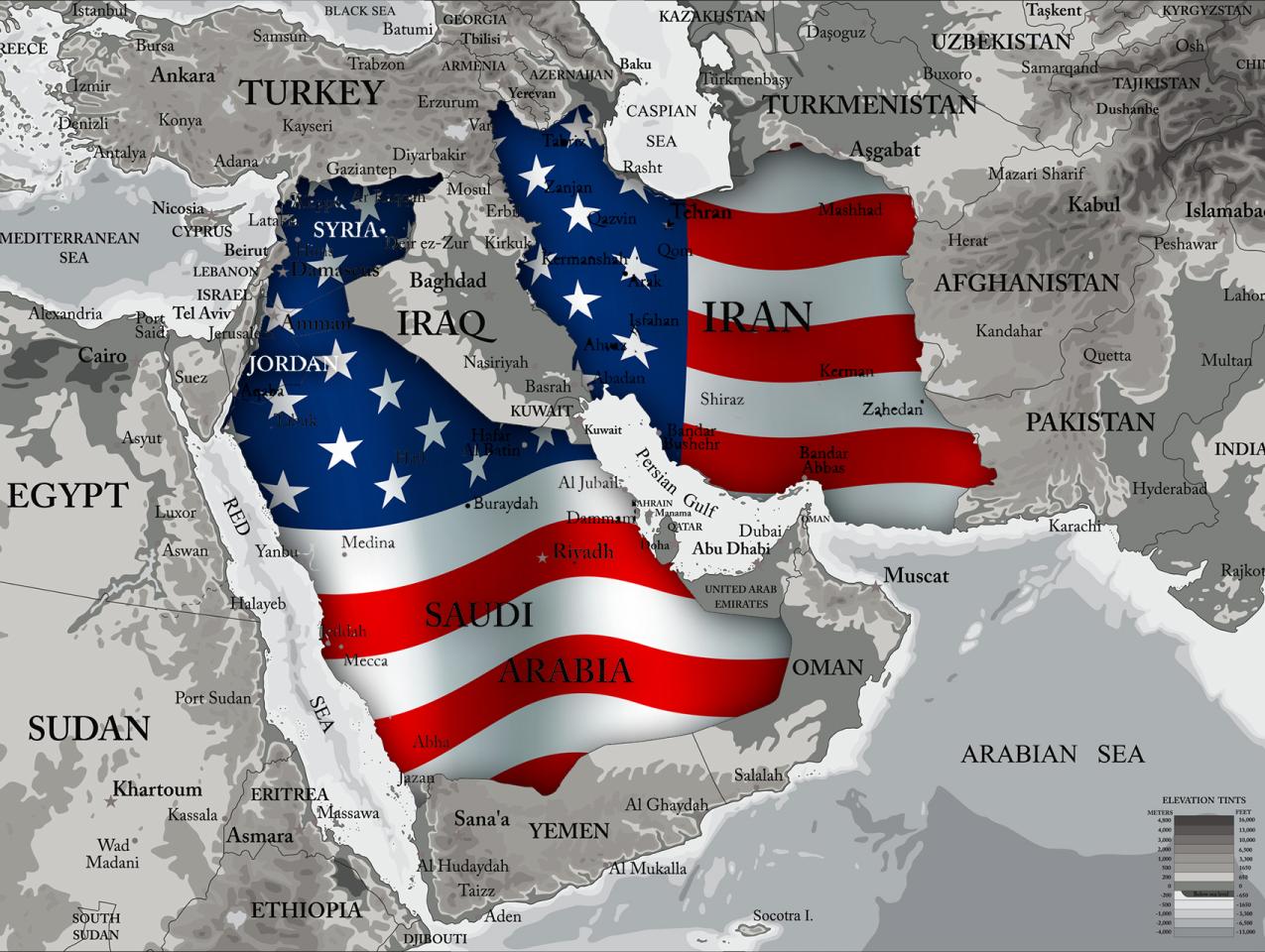
Source: Hoover
In this context, claims about a total US exit from the region are somewhat exaggerated. The United States continues to maintain military bases, naval assets, and strong alliances in the region. Therefore, the notion of a “deadlock” reflects more a political narrative than an accurate description of geopolitical reality.
Stage 1: Gulf states falling under Iran’s influence
The argument suggests that, in the event of a US withdrawal, Gulf countries would inevitably fall under Iran’s influence. In reality, the situation is far more nuanced.
Countries such as Saudi Arabia and the United Arab Emirates are not solely dependent on the United States. They are actively diversifying their foreign relations, engaging with China, Europe, and other regional actors. Their strategic objective is to avoid overreliance on any single power.
While Iran undoubtedly holds influence in the region, the idea that it could dominate the entire Gulf is debatable. In fact, recent trends indicate a shift toward a more balanced, multipolar regional order.
Stage 2: the collapse of the petrodollar system
The petrodollar system is often considered one of the key pillars of US global financial power. Pricing oil in US dollars ensures sustained global demand for the currency, helping support the US economy despite its high debt levels.
However, the sudden collapse of this system appears unlikely. Although some countries have begun exploring alternative currencies for trade, the US dollar remains central to the global financial system.
Replacing the dollar would require not only an alternative currency but also a robust financial infrastructure and a high level of global trust. This would be a gradual process measured in years, not an abrupt shift.
Stage 3: military buildup in Japan and South Korea
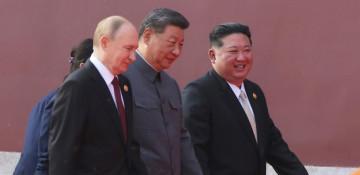
It is plausible that US allies in Asia may increase their military capabilities if they perceive a weakening of US security guarantees. Japan has already expanded its defence budget, and South Korea continues to strengthen its military capabilities.
However, this trend is not solely driven by US actions in the Middle East. It is also shaped by regional dynamics, particularly China’s rise and the threat posed by North Korea.
Therefore, the causal relationship is broader and cannot be reduced to developments in a single region. Even with a reduced US presence in the Middle East, the security architecture in Asia is unlikely to collapse.
Stage 4: Europe distancing itself and NATO fragmentation
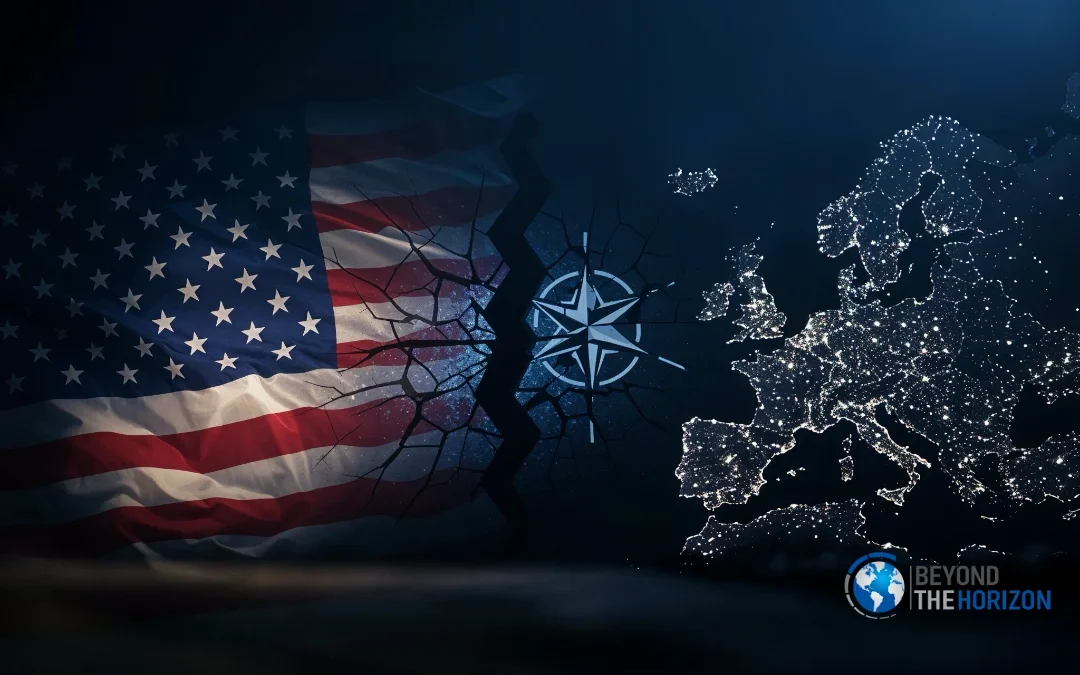
Source: behorizon
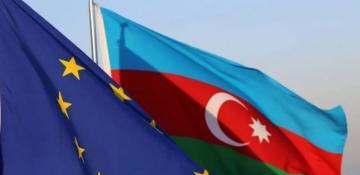
Another claim is that Europe might distance itself from the United States, seek peace with Russia, and that NATO could fragment as a result. However, developments following the war in Ukraine suggest the opposite.
European countries have strengthened their defence policies, and NATO has expanded its military presence in Eastern Europe. Even if the United States reduces its engagement elsewhere, Europe is more likely to reinforce its own security capabilities rather than dismantle existing alliances.
Thus, the notion of NATO’s imminent collapse lacks strong empirical support.
Stage 5: loss of the dollar’s reserve currency status
The possibility of the US dollar losing its status as the world’s primary reserve currency is often discussed and represents a genuine long-term strategic concern for Washington.
However, such a shift would be gradual and driven not only by geopolitical factors but also by economic performance, financial market depth, and institutional trust.
While the dollar faces competition, it remains dominant. A sudden collapse in global demand for US debt is highly improbable, as it would trigger systemic shocks affecting all economies, not just the United States.
The Strait of Hormuz: a strategic “key” or one of many tools?
The Strait of Hormuz is one of the most critical chokepoints in global energy supply, with a significant share of the world’s oil passing through it. Iran’s ability to influence this route provides it with considerable geopolitical leverage.
However, this “key” is not absolute. The United States and its allies have long invested in alternative routes, strategic reserves, and military capabilities to mitigate such risks.
A crisis in the Strait of Hormuz would undoubtedly affect the global economy, but it would not necessarily “lock” the United States into an inescapable position. Instead, it represents a risk within a system of mutual interdependence.
Conclusion: the gap between narrative and reality
The five-stage scenario outlined above follows a certain internal logic, but it is ultimately a simplified and deterministic interpretation of highly complex global dynamics.
The United States does face a strategic dilemma. Both staying in and withdrawing from the region carry risks. However, framing these choices as inevitably leading to catastrophe or systemic collapse does not fully reflect reality.
Iran remains a significant regional actor with strategic leverage such as influence over the Strait of Hormuz. However, its power is not absolute and is counterbalanced by other global players.
Ultimately, the current confrontation highlights vulnerabilities within the global system but does not signal its imminent breakdown. Instead, it reflects an ongoing transition toward a more multipolar, interconnected, and complex world order.



.png)