How are Central Asian nations redefining their post Soviet Identity?


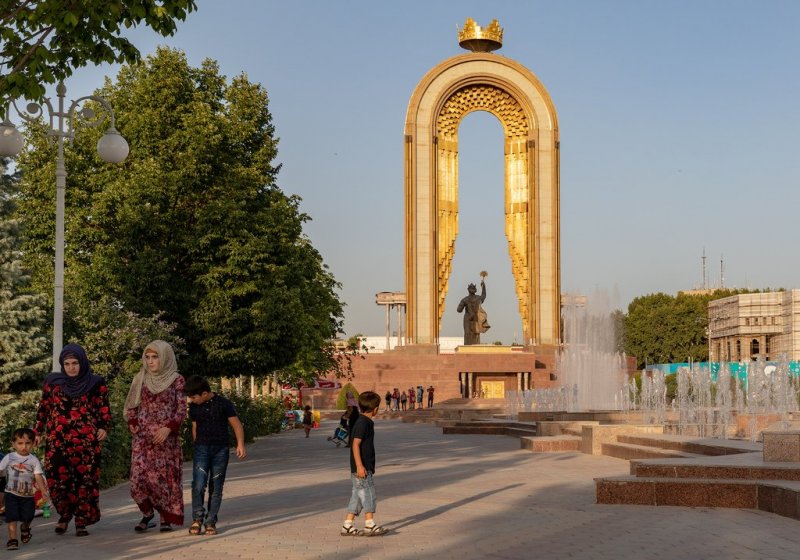
More than three decades after the collapse of the Soviet Union, Central Asian countries are undergoing one of the most important identity transformations in modern Eurasia as governments and societies attempt to redefine national culture, language, history, religion, and geopolitical orientation beyond the Soviet legacy.
Across Kazakhstan, Uzbekistan, Kyrgyzstan, Tajikistan, and Turkmenistan, a new generation of leaders and citizens is increasingly asking fundamental questions about who they are, what historical narratives should define their nations, and how they should position themselves in a rapidly changing geopolitical environment.
RECOMMENDED STORIES
The transformation involves much more than politics.
It includes language reforms, alphabet changes, educational policies, revival of national traditions, historical reinterpretation, religious identity, cultural revival, media narratives, and evolving foreign policy orientations.
For decades during the Soviet period, Moscow largely shaped political structures, educational systems, historical interpretation, and public identity across Central Asia.
Russian language and Soviet ideology dominated public life.
Although independence arrived in 1991, the process of fully redefining national identity proved gradual and complex.
Today, however, accelerating geopolitical shifts, rising nationalism, generational change, digital globalization, and Russia’s war in Ukraine are intensifying debates over post Soviet identity throughout the region.
Central Asian states are increasingly balancing historical ties with Russia while simultaneously strengthening local languages, national culture, regional cooperation, and broader international partnerships.
The result is one of the most significant identity transitions occurring anywhere in the former Soviet space.
Why is post Soviet identity such an important issue in Central Asia?
The Soviet Union profoundly shaped Central Asia politically, culturally, economically, and socially for nearly seventy years.
Borders, institutions, education systems, industrial structures, and even modern national identities were heavily influenced by Soviet governance.
Russian became the dominant language of administration, higher education, science, and urban life.
Historical narratives often emphasized Soviet achievements while limiting independent national interpretations of history.
After independence in 1991, Central Asian countries inherited Soviet institutions but also faced the challenge of building sovereign national identities.
This process became especially important because many governments wanted to strengthen political legitimacy, national unity, and cultural independence.
The collapse of the Soviet Union therefore triggered long term debates about language, history, religion, and national direction that continue today.
How is language shaping national identity?
Language policy stands at the center of post Soviet identity transformation.
Many Central Asian governments increasingly promote national languages as symbols of sovereignty and cultural revival.
Kazakhstan has accelerated efforts to strengthen the use of the Kazakh language in government, media, education, and public life.
Uzbekistan similarly promotes Uzbek language reforms and national cultural policies.
Russian remains widely spoken across much of the region, especially in cities and business sectors.
However, younger generations increasingly grow up with stronger national language education compared to earlier post Soviet generations.
Language therefore functions not only as communication but also as a political and cultural statement about independence and national identity.
Why are alphabet changes politically significant?
Alphabet reform became one of the most symbolic aspects of identity transformation.
Several Central Asian countries shifted or plan to shift from the Cyrillic alphabet inherited from the Soviet Union toward Latin based scripts.
Kazakhstan’s transition toward the Latin alphabet represents one of the region’s most important symbolic changes.
Supporters argue Latinization strengthens integration with the global economy, digital technologies, Türkiye, and the broader Turkic world.
Critics warn that changing alphabets creates educational and administrative challenges while potentially distancing societies from Russian speaking populations.
Nevertheless, alphabet reforms are widely viewed as highly symbolic efforts to redefine cultural orientation away from Soviet influence.
How is Russia’s influence changing?
Russia still maintains major cultural, economic, and security influence across Central Asia.
Millions of Central Asian migrants work in Russia, Russian media remains influential, and Russian language still plays an important role regionally.
However, Moscow’s dominance is gradually declining compared to earlier decades.
China’s economic rise significantly altered regional geopolitics, while younger generations increasingly consume global digital content rather than relying solely on Russian cultural space.
Russia’s invasion of Ukraine also intensified identity debates across Central Asia.
Some governments became more cautious about excessive dependence on Moscow and more interested in emphasizing sovereignty and independent foreign policy.
Public discussions about colonial history, national identity, and cultural autonomy also expanded after the Ukraine war.
Why is history becoming politically important?
Historical interpretation plays a major role in nation building across Central Asia.
Governments increasingly emphasize pre Soviet civilizations, historical figures, empires, literature, and cultural achievements.
Countries are revisiting histories that were often marginalized or interpreted differently during the Soviet era.
For example, historical figures such as Tamerlane occupy increasingly important places in national narratives, particularly in Uzbekistan.
Educational systems and museums increasingly highlight local dynasties, Silk Road heritage, and national heroes.
The revival of historical memory helps strengthen modern national consciousness while reinforcing legitimacy for contemporary statehood.
At the same time, reinterpretation of Soviet history sometimes creates tensions regarding colonialism, repression, and cultural assimilation.
How is religion influencing identity changes?
Islamic revival became one of the most important social transformations in post Soviet Central Asia.
During the Soviet period, religious expression was heavily restricted under official atheism policies.
After independence, mosques reopened, religious education expanded, and Islamic identity became more visible in public life.
Today, Islam plays an increasingly important cultural and social role across much of the region.
However, Central Asian governments generally maintain secular political systems and closely monitor religious activity.
Authorities often fear that uncontrolled religious movements could contribute to extremism or political instability.
As a result, governments attempt to balance Islamic cultural revival with strict state oversight.
Religion therefore forms an important but carefully managed component of modern identity formation.
Why are younger generations thinking differently?
Generational change is significantly reshaping Central Asian societies.
Younger citizens increasingly grew up after the Soviet collapse and therefore possess weaker emotional or cultural attachment to Soviet identity.
They are also more connected to global digital culture through social media, streaming platforms, and international education.
Many young Central Asians consume Turkish, Korean, Western, and global online content alongside Russian media.
This creates more diverse cultural influences than earlier generations experienced.
Young people also often show stronger support for national languages, local culture, and independent foreign policy orientations.
At the same time, economic globalization creates new aspirations and social expectations influencing identity formation.
How important is Türkiye in this transformation?
Türkiye increasingly plays a significant cultural and geopolitical role across Turkic speaking Central Asia.
Shared linguistic, cultural, and historical connections support growing cooperation through the Organization of Turkic States.
Turkish television series, universities, businesses, educational institutions, and cultural programs became increasingly influential.
Türkiye also supports alphabet reforms, educational cooperation, and transportation connectivity projects linking the Turkic world.
For some Central Asian societies, Türkiye offers a model combining Muslim identity, national sovereignty, and modern economic development.
However, Central Asian governments generally seek balanced foreign policies rather than alignment with any single external power.
How is China influencing regional identity?
China’s influence in Central Asia expanded dramatically economically through trade, infrastructure, and investment connected to the Belt and Road Initiative.
However, China’s cultural influence remains more limited compared to Russia or Türkiye.
Many Central Asians view Chinese investment pragmatically while also expressing concerns about debt dependence, demographic pressure, and Beijing’s policies toward Muslim minorities in Xinjiang.
China’s growing economic presence nevertheless affects regional identity indirectly by reducing Russian economic dominance and increasing geopolitical diversification.
The rise of China also forces Central Asian governments to balance multiple external influences simultaneously.
Why are national symbols becoming more important?
Flags, monuments, museums, holidays, literature, architecture, and historical commemorations increasingly play important roles in identity building.
Governments actively promote national symbols emphasizing sovereignty, historical continuity, and cultural uniqueness.
Urban development projects often incorporate national motifs and historical references.
School curricula increasingly emphasize local history and culture.
Renaming streets, cities, and institutions also became part of broader efforts to strengthen post Soviet national identity.
These symbolic changes help reinforce public narratives about independent statehood and cultural revival.
How does migration affect identity?
Migration significantly influences identity debates across Central Asia.
Millions of Central Asians work abroad, especially in Russia.
Labor migration creates strong economic dependence on remittances while also maintaining Russian linguistic and cultural influence.
At the same time, migrants returning home often bring new experiences and perspectives influencing social attitudes.
International education, tourism, and digital communication additionally expose societies to global cultural influences.
Migration therefore creates both integration and tension between traditional identity structures and modern globalization.
Are there tensions between nationalism and multiculturalism?
Yes.
Central Asian societies remain ethnically diverse due partly to Soviet era population policies.
Russian minorities and other ethnic groups still play important roles in several countries, especially Kazakhstan.
Governments generally attempt to promote civic national identity while avoiding ethnic tensions.
However, strengthening national languages and cultural policies occasionally creates debate about minority rights and social inclusion.
Balancing national revival with multicultural stability remains a sensitive challenge for many governments.
How are education systems changing?
Educational reforms became central to post Soviet identity transformation.
Governments increasingly revise school textbooks, university curricula, and historical narratives.
National languages receive greater emphasis in education systems.
International partnerships with Türkiye, Europe, China, South Korea, and Gulf countries are also expanding educational opportunities.
Some countries additionally seek to modernize scientific and technological education while reducing excessive dependence on Soviet inherited structures.
Education therefore functions both as a modernization tool and as a mechanism for shaping future national identity.
Why does the Ukraine war matter so much regionally?
Russia’s invasion of Ukraine deeply affected political thinking across Central Asia.
The war intensified discussions about sovereignty, territorial integrity, language policy, and historical memory.
Some Central Asians became more concerned about excessive dependence on Russia or narratives questioning post Soviet borders.
Governments generally avoided openly confronting Moscow but increasingly emphasized independent foreign policy positions.
Public debates about colonial history and national identity also expanded.
The conflict therefore accelerated identity transitions already underway across the region.
Can Central Asia fully move beyond its Soviet legacy?
Completely escaping Soviet influence is unlikely because the Soviet period fundamentally shaped modern Central Asian states.
Infrastructure, institutions, urbanization patterns, language use, and economic systems all remain deeply influenced by that history.
Russian language and cultural influence will likely remain important for years.
However, Central Asia is clearly moving toward more distinct national identities shaped increasingly by local culture, global connections, and regional cooperation rather than Soviet ideology alone.
The transformation is gradual rather than revolutionary.
Most governments seek balanced modernization and sovereignty rather than abrupt rupture with the past.
What does the future look like?
Central Asia’s identity transformation will likely continue accelerating during coming decades.
Younger generations, digital globalization, geopolitical shifts, and economic modernization are all reshaping how societies view themselves and the world.
National languages and cultural revival will probably strengthen further.
Regional cooperation among Central Asian states may also deepen.
At the same time, balancing relations with Russia, China, Türkiye, the West, and other powers will remain crucial.
The region is increasingly defining itself not merely as a former Soviet space but as an independent geopolitical and cultural region with its own strategic importance, historical legacy, and global future.
By Faig Mahmudov


Similar news