What was behind Merz visit to China


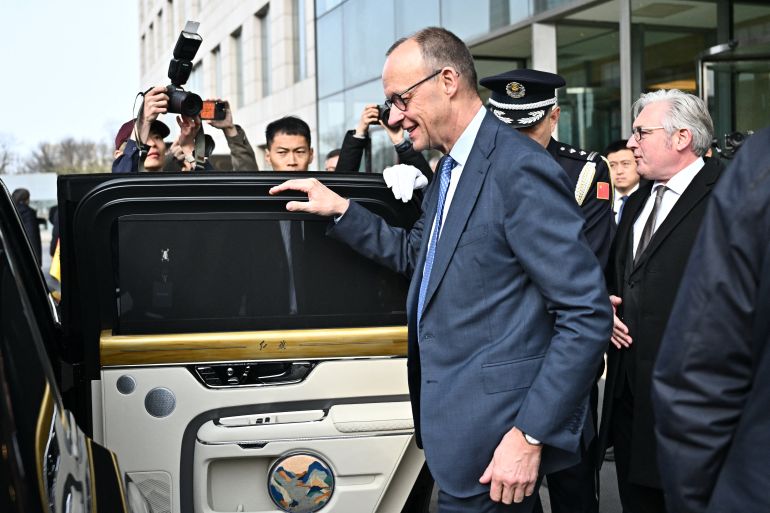
German Chancellor Friedrich Merz traveled to Beijing for high level talks with Chinese leadership as Europe reassesses its strategic and economic relationship with China.
The visit included meetings with President Xi Jinping and senior government officials, as well as consultations with representatives of major German companies operating in the Chinese market.
RECOMMENDED STORIES
The trip marked one of the most significant diplomatic engagements between Berlin and Beijing since Merz took office. It took place at a time of mounting global uncertainty, trade realignments and growing debate within Europe over how to balance economic cooperation with strategic caution.
Why the visit matters for Germany
China has been one of Germany’s largest trading partners for years. German automakers, engineering firms and industrial exporters rely heavily on access to the Chinese market. At the same time, German policymakers have become increasingly concerned about overdependence on a single market and the risks associated with geopolitical tensions.
Merz’s visit aimed to reinforce economic ties while also addressing structural imbalances. German officials have raised concerns about market access, intellectual property protections and industrial overcapacity in certain Chinese sectors. These issues affect key industries such as automotive manufacturing, machinery and green technologies.
The presence of a large business delegation underscored the economic focus of the trip. Companies sought reassurances about regulatory stability and future cooperation in sectors ranging from clean energy to aviation.
Europe’s broader recalibration toward China
The visit reflects a wider shift within the European Union. European leaders increasingly describe China simultaneously as a partner, competitor and systemic rival. This three part definition captures the complexity of the relationship.
On one hand, China remains essential for European exports and global supply chains. On the other, European governments worry about strategic vulnerabilities, technological competition and political influence.
Merz’s engagement with Beijing signals that Germany favors pragmatic dialogue rather than economic decoupling. Berlin supports reducing excessive dependencies while maintaining open trade channels and structured cooperation.
Economic cooperation at the center
Trade and investment were central themes of the discussions. German officials emphasized the importance of predictable market conditions and fair competition. Chinese leaders, in turn, highlighted the value of stable ties with Europe amid shifting global alliances.
One of the most visible commercial dimensions of the visit involved potential aircraft purchases benefiting Airbus. Large scale aviation deals are often seen as indicators of political goodwill as well as economic partnership. Such agreements reinforce interdependence between European industry and Chinese demand.
Beyond aviation, both sides explored collaboration in green transition technologies, electric mobility and digital infrastructure. As Europe accelerates its climate agenda, cooperation with China in renewable energy supply chains remains a sensitive but important issue.
Geopolitical tensions in the background
Although economics dominated the agenda, geopolitical issues were impossible to ignore. Europe continues to urge China to play a constructive role in global conflicts and to uphold international norms. Discussions reportedly touched on global security concerns, supply chain resilience and the stability of international trade routes.
For Germany, maintaining dialogue with Beijing is also part of managing its relationship with the United States. Transatlantic ties remain central to Berlin’s foreign policy, yet European leaders are seeking greater strategic autonomy in economic decision making.
This balancing act requires careful diplomacy. Engaging China too closely risks criticism from allies, while distancing too sharply could harm European industry.
Strategic autonomy and economic security
Within Europe, the concept of economic security has gained prominence. Policymakers are examining critical supply chains in semiconductors, rare earth materials and advanced manufacturing components. China plays a dominant role in several of these sectors.
Merz has signaled support for diversification rather than disengagement. The goal is to expand trade partnerships globally while preserving constructive relations with Beijing. This approach aligns with European Union initiatives aimed at strengthening domestic industrial capacity without closing markets.
The Beijing visit can therefore be interpreted as part of a broader strategy to stabilize relations during a period of structural change in the global economy.
Domestic political considerations
Germany’s China policy is closely scrutinized at home. Business groups advocate continued access to the Chinese market, warning that abrupt disengagement would damage exports and employment. Meanwhile, security analysts caution against technological dependencies and political leverage.
Merz must navigate these competing pressures. By combining economic engagement with clear messaging on fair competition and transparency, he aims to present a balanced approach that protects national interests while preserving growth opportunities.
Signals from Beijing
From China’s perspective, high level European visits are valuable amid global trade tensions and shifting alliances. Strengthening ties with major European economies helps Beijing diversify its diplomatic partnerships.
Chinese officials emphasized stability, mutual benefit and opposition to protectionism. They portrayed cooperation with Germany as part of a long term strategic partnership rather than a short term transactional relationship.
This messaging suggests that Beijing seeks to maintain strong economic channels with Europe even as global geopolitical dynamics become more fragmented.
Potential risks and opportunities
The renewed engagement carries both opportunities and challenges. On the positive side, stable trade relations can support global economic growth and reduce uncertainty. Collaboration on climate policy and green technology could advance shared sustainability goals.
However, unresolved structural concerns remain. Trade imbalances, industrial subsidies and regulatory transparency continue to generate friction. If these issues are not addressed through dialogue, tensions could resurface.
The durability of improved ties will depend on whether both sides can translate diplomatic statements into practical, mutually beneficial reforms.
What comes next
The visit is expected to be followed by additional consultations at ministerial and technical levels. Structured economic dialogues may focus on market access, standards harmonization and investment screening frameworks.
For Europe, the challenge will be maintaining unity in its China policy. Different member states hold varying perspectives based on economic exposure and political priorities. Germany’s stance often influences broader European strategy, given its economic weight within the European Union.
Why this moment is significant
The timing of Merz’s trip highlights the evolving nature of global power relations. As supply chains shift and economic alliances adapt, major economies are reassessing how to position themselves. Germany’s engagement with Beijing reflects recognition that isolation is neither practical nor desirable, yet unconditional openness is also unrealistic.
The visit illustrates a middle path built on structured cooperation, strategic caution and economic pragmatism. Whether this balance can be sustained will shape Europe’s relationship with China in the years ahead.
In essence, Merz’s Beijing visit demonstrates that Europe is seeking stability and opportunity in its ties with China while preparing for a more competitive and complex global environment.
By Faig Mahmudov


Similar news