Who was the boy Bad Bunny gave his Grammy to?


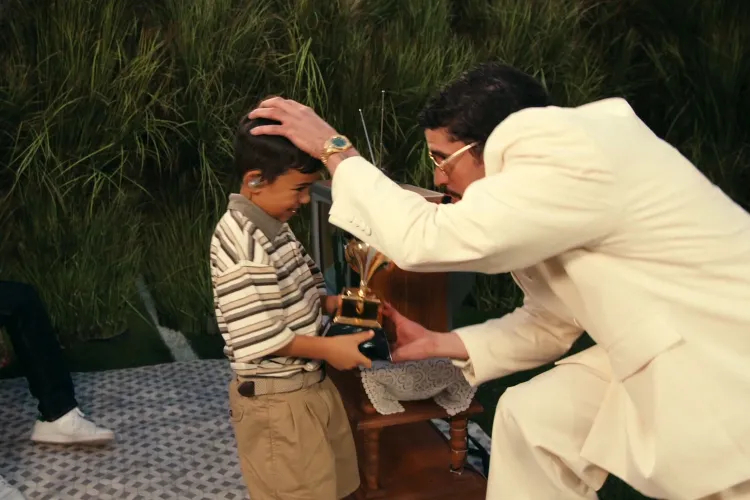
Speculation spread online after Bad Bunny handed a Grammy award to a young boy during his Super Bowl LX halftime performance, but the child was not Liam Conejo Ramos, the 5-year-old who was previously detained by U.S. immigration authorities.
During the performance at Levi’s Stadium on Feb. 8, Bad Bunny paused at a stand labeled “Conejo” and gave a Grammy to a child who appeared to be watching a clip of the artist’s recent Grammy speech on a TV screen. The emotional moment quickly went viral, with some viewers on social media questioning whether the boy was Liam Ramos, News.Az reports, citing foreign media.
Ramos had drawn national attention after he and his father, Adrian Conejo Arias, were detained by U.S. Immigration and Customs Enforcement (ICE) on Jan. 20 after returning home from the child’s preschool in Minneapolis. The pair were later released from a Texas detention center on Feb. 1 following a federal court order.
RECOMMENDED STORIES
However, reports have confirmed that the child featured in the halftime show was an actor, not Ramos. According to media reports and social media information shared by journalists, the actor has been identified as Lincoln Fox.
Some viewers initially believed the moment may have been a reference to Ramos’ story. Others interpreted it differently, as a symbolic scene representing Bad Bunny as a child, highlighting themes of dreaming big and achieving success.
The halftime show itself focused largely on culture, identity and unity, rather than direct political messaging. The performance celebrated Puerto Rican heritage and featured multiple visual and storytelling elements tied to the artist’s personal journey and background.
Bad Bunny made history during the event by becoming the first artist to perform a Super Bowl halftime show entirely in Spanish. The performance also included appearances from major celebrities and musical guests, including Lady Gaga and Ricky Martin.
Meanwhile, Ramos and his father returned to Minnesota earlier in February after nearly two weeks in detention. According to court documents, a federal judge ordered their release, criticizing the circumstances surrounding the detention.
The viral halftime moment shows how quickly major cultural events can spark real-world discussions, especially when they intersect with recent news stories and social issues.
By Aysel Mammadzada


Similar news