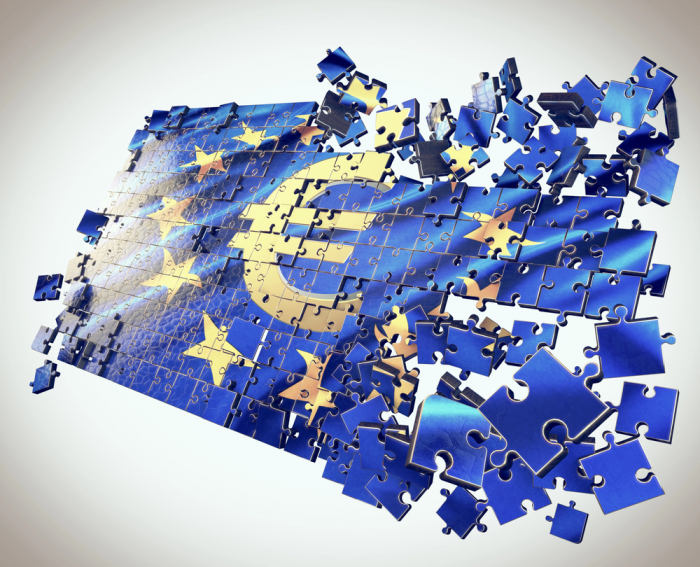
Why and how the European Union will collapse


Editor's note: Moses Becker is a special commentator on political issues for News.Az, a PhD in political science and an expert on interethnic and interreligious relations. The article expresses the personal opinion of the author and may not coincide with the view of News.Az.
The experience of history teaches that any empire goes through three stages: rise, stagnation, and collapse. It doesn't matter how the union was created: through military force or voluntarily. Even proclaimed democratic principles, material well-being, a developed social security system, and human rights protection do not guarantee the long-term coexistence of different peoples, cultures, and traditions within a single space. The union, conceived as an attempt to reconcile the eternal enemies - France and Germany - to avoid another war, was initially quite successful. As long as it concerned "old" Europe, everything went smoothly and attractively. This was influenced by the historical experience of coexistence between France, Germany, and Italy within the empire of Charlemagne.However, over time, due to miscalculations, worrying trends began to emerge. The birth date of the European Union is considered to be November 1, 1993, when the Maastricht Treaty officially came into force, completing the process of uniting the most economically developed countries on the continent. At that time, it was signed by Belgium, the United Kingdom, Greece, Denmark, Ireland, Spain, Italy, Luxembourg, the Netherlands, Portugal, France, and West Germany.
Currently, one of the key countries of this union, namely the United Kingdom, has made a "Brexit" and set off on its own. Even while being part of the united Europe and foreseeing the future, the leadership of this country did not switch to the single currency, keeping the pound sterling as a symbol of its sovereignty. Besides the common currency, the treaty also provided for common citizenship: from now on, every person born in one of the EU countries automatically received the right to move and reside freely throughout the European Union.
However, despite the new opportunities, in many European countries, the ratification of the Maastricht Treaty faced certain difficulties. From the very beginning, serious disagreements arose between France and the United Kingdom. As for the Danes, they even refused to support the idea of unification in a referendum. Only after the European Council made several concessions regarding defense policy, was this problem resolved.
The main goal of creating the EU was to turn it into a new center of power, capable of competing with the USA and the USSR. Initially, this worked quite well. The European Union indeed became a powerful economic and political factor. With the collapse of the USSR, the situation began to change. China started to emerge as a secondary, and in some respects, a primary power. The entire political, economic, and military-strategic landscape is being reshaped both regionally and globally. With the Democrats coming to power in the USA in 2020, the signs of uncertainty in their de facto role as the world leader became more apparent. Simultaneously, Europe started to degrade in terms of its subjectivity, turning into the periphery of the United States, which until recently had borne most of the defense costs of NATO countries almost single-handedly.
One of the major mistakes of the European Union was its uncontrolled expansion. Initially, 12 countries joined the EU, but by the summer of 2013, it already had 28 members. Mostly, these were countries of the former Warsaw Pact, which, with rare exceptions (the empire of Napoleon I), had never been under one "roof" with Western Europe. Even the Roman Empire had to be divided in 395 due to demographic changes in its western part, which was flooded by numerous barbarian tribes. On this basis, the church split in 1054. The eastward expansion of the European Union buried the idea of a Greater Europe and the common house from the Atlantic to the Urals.
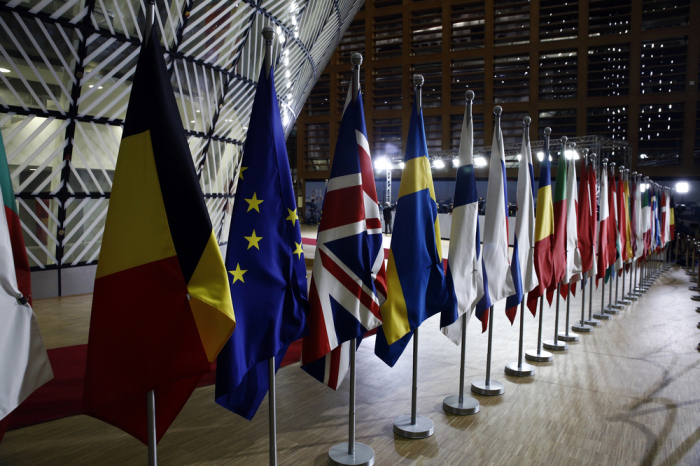
By joining economically weak Eastern European countries, which require constant financial infusions, the leading countries of the European Union harm their own interests. Furthermore, mentally, Western Europeans are significantly different from Eastern Europeans. It was precisely the "east" that significantly contributed to the flourishing of corruption within European structures of power. Additionally, the traditions of the nation state and values developed over centuries have always been strong here.
Another factor contributing to the growth of centrifugal tendencies in the EU was the poorly thought-out and absolutely incompetent migration policy, which changed both the demographics of the continent and the basic principles of tolerance and multiculturalism on which post-war Europe was built. This migration policy contributed to the rise in popularity of right-wing parties and their desire to return full sovereignty to their homelands, as evidenced by the following facts. For example, Jordan Bardella, leader of Marine Le Pen's National Rally, demands that pan-European interests be subordinated to national ones. He is categorically against the expansion of the EU to the Balkans and Ukraine. In his opinion, prohibitive control over immigration, the restoration of internal borders, and the prohibition of freedom of movement within Europe for non-European citizens are necessary.
Marion Maréchal-Le Pen believes that the European Commission should be dissolved, and the European Council should be downgraded from a controlling to a coordinating body. Immigrants and non-Europeans are given a miserable fate in her plans: all European immigration agreements should be terminated, family reunification and visa-free travel should only be for holders of European passports.
The "Republican" (Les Républicains), François-Xavier Bellamy, believes that the constitution of France should become the highest legal norm in the country. He also advocates strengthening the external borders of Europe, including building walls in the east and naval patrols in the Mediterranean.
Borders between European countries should be transparent only for Europeans. This is another common point for the right and far-right. Most likely, this wish will become a reality, as, after the vote count, the National Rally received about 31.5% of the vote, or twice as much as the party of French President Emmanuel Macron. Under the influence of this event, the head of state was forced to dissolve the parliament and schedule new elections for June 30 and July 7. This is undoubtedly a serious political risk, as the ruling party Renaissance could suffer even greater losses.
In the Netherlands, the nationalist Geert Wilders' Party for Freedom will now get seven out of the 29 seats in the EU assembly, whereas in 2019 it had none. The same picture is observed in Austria. The Alternative for Germany (AfD) received 16.5% and became the second most significant political force after the CDU/CSU. In Belgium, a "catastrophe" occurred: as a result of a major defeat in the national parliamentary elections and the European Parliament elections, Prime Minister Alexander De Croo announced his resignation. Riding this wave, the leader of the Brothers of Italy party, Italian Prime Minister Giorgia Meloni, spoke in favor of uniting right-wing forces at the pan-European level and jointly promoting a single agenda for the EU.
It is now clear that Brexit was not an accidental phenomenon. One of the likely scenarios for the development of events in the Old World could be the return of the European Union to an economic basis at the expense of political unity. It is possible that new regional unions, based both on economic proximity and mental commonality, may emerge on the ruins of the modern EU. For example, France could become a center of attraction for the Benelux countries, Germany for Denmark, Norway, and possibly Sweden, Austria for Hungary, the Czech Republic, and Slovakia, Poland for the Baltic states, and so on. In our time, anything is possible, even the restoration of monarchies according to the Spanish or Danish constitutional mode.
(If you possess specialized knowledge and wish to contribute, please reach out to us at opinions@news.az).


Similar news