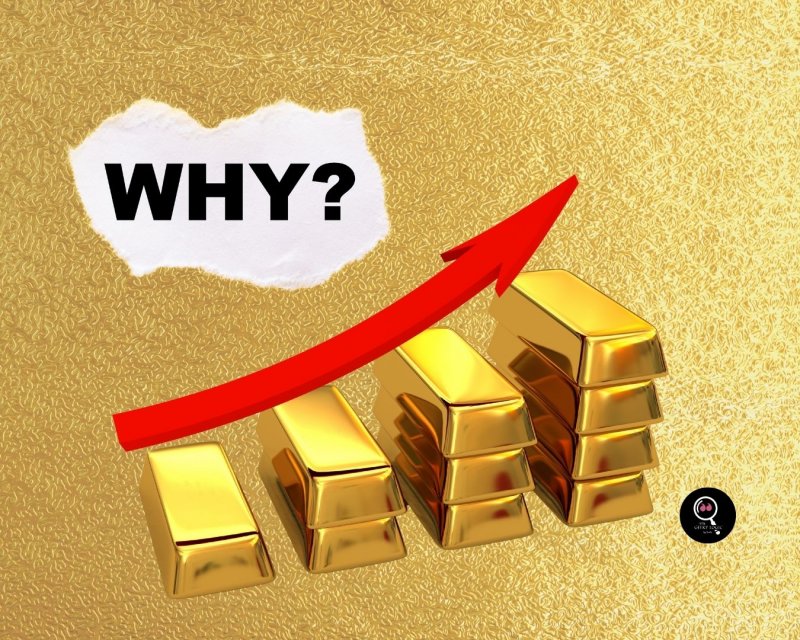
Gold prices have surged across global markets, reaching near-record levels and reshaping investment flows, consumer behavior, and central bank strategies. The rally is driven by economic uncertainty, rising geopolitical tension, and structural changes in global finance. This FAQ provides a detailed breakdown of why gold is rising, who is driving demand, and what to expect in the months ahead.
What Is Happening To Gold Prices Right Now?
Gold prices have increased sharply, with spot and futures prices climbing above analysts’ early-year projections. Physical gold markets — including bars, coins, and jewelry — are facing supply tightness, and retail premiums have risen in key markets such as China, India, Türkiye, and Gulf states. Central banks are also purchasing gold at elevated levels, further tightening supply.
Why Is Gold Rising?
Gold reacts strongly to uncertainty. Today’s rise is the result of multiple overlapping pressures including global recession fears, geopolitical instability, inflation concerns, high government debt levels, expectations of interest rate cuts, weakening currency confidence, and aggressive central bank gold buying. No single factor explains the surge; gold is responding to a combination of global vulnerabilities.
How Do Geopolitical Tensions Affect Gold Prices?
Gold is often seen as a safe haven in times of conflict. With ongoing instability in the Middle East, the Russia–Ukraine conflict, rising tensions in East Asia, and concerns over major-power rivalry between the United States and China, investors turn to gold as a physical, durable, and universally trusted asset. Geopolitical risk is one of the strongest drivers of the current price rally.
Is Inflation Still Increasing Gold Demand?
Yes. Even though some economies have reduced inflation, long-term inflation expectations remain elevated. Many investors believe that inflation will not return quickly to pre-pandemic levels due to persistent supply chain pressures, high government spending, and long-term structural changes. Gold is considered a classic hedge against inflation because it preserves purchasing power over time.
How Are Central Banks Influencing The Market?
Central banks have become the most powerful force in the gold market. Over the last three years, they have purchased gold at the highest rates seen in modern history. Countries in Asia, the Middle East, Africa, and Latin America are diversifying their reserves away from the United States Dollar and seeking protection from global financial instability and sanctions risk. Heavy central bank buying reduces available supply and pushes prices upward.
Does The Strength Or Weakness Of The United States Dollar Affect Gold?
Yes. Gold and the United States Dollar almost always move inversely. When the dollar weakens, gold becomes cheaper for international buyers and demand increases. Factors such as political uncertainty in the United States, concerns about rising national debt, and expectations of Federal Reserve policy shifts all influence the value of the dollar — and therefore gold prices.
How Do Interest Rates Impact Gold Prices?
Gold does not generate interest, so high interest rates usually make bonds more attractive. However, when interest rates are expected to fall, gold becomes more appealing. Investors now anticipate rate cuts from major central banks within the next year. This expectation is already pushing gold prices higher, even before the cuts officially begin.
What Is Happening In The Physical Gold Market?
Demand for physical gold remains exceptionally strong. Retail buyers in China, India, Türkiye, and the Middle East are purchasing record quantities of bars and coins. Jewelry demand is also rising despite higher prices. Meanwhile, global mine supply has grown slowly, and refining capacity constraints have created delivery delays in some regions. Tight supply conditions amplify price increases in both wholesale and retail markets.
How Does Rising Gold Affect Consumers?
Consumers experience rising gold prices in several ways:
-
Jewelry becomes more expensive, especially in markets where gold purity is high (such as 22K and 24K markets).
-
Investment-grade gold bars and coins require larger upfront payments.
-
Families in cultures where gold is tied to weddings or savings face higher costs.
-
Gold-backed financial products such as ETFs may attract more investment, influencing retirement savings and investment strategies.
-
In some countries, rising gold demand contributes to trade imbalances and currency pressure.
Are Investors Leaving Stock Markets For Gold?
Not entirely, but investors are diversifying. Many see gold as a stabilizing asset during periods of market volatility. Slower corporate earnings, concerns about economic slowdown, and geopolitical uncertainty are causing investors to reallocate part of their portfolios into gold to reduce risk.
Is Now A Good Time To Buy Gold?
It depends on the investor’s strategy. Analysts generally advise:
-
Avoid panic buying during price peaks.
-
Consider gold as a long-term hedge rather than a short-term trade.
-
Maintain diversification across asset classes.
-
Monitor inflation, interest rate decisions, and currency movements.
Gold can fall sharply if conditions shift unexpectedly, so timing matters.
How Long Could The Gold Rally Last?
The rally could continue as long as global uncertainty remains high. Persistent inflation, strong central bank buying, and expectations of monetary easing support long-term upward momentum. Many analysts believe the structural factors behind this rally are stronger than those in previous cycles, suggesting the rally may extend through the next 12–24 months.
What Are The Forecasts For The Next 12–18 Months?
Analysts outline three primary scenarios: Optimistic Scenario — Prices Rise Further
Likely if geopolitical tensions intensify, inflation remains stubborn, and interest rates fall quickly.
Forecast: $2,500–$2,800 per ounce.
Baseline Scenario — Prices Stay High With Fluctuations
Likely if the global economy slows, but avoids crisis, and central banks maintain steady purchases.
Forecast: $2,300–$2,500 per ounce.
Correction Scenario — Short-Term Decline Before Rebound
Possible if inflation drops more quickly, the United States Dollar strengthens, or geopolitical tensions ease.
Forecast: $2,050–$2,150 per ounce temporarily.
Even in a correction, long-term demand remains structurally strong.
What Risks Could Push Gold Even Higher?
Gold could surge again if:
-
Major global conflicts escalate.
-
A severe financial or banking crisis emerges.
-
Inflation spikes unexpectedly.
-
The United States Dollar weakens sharply.
-
Central banks accelerate their gold purchases.
-
A global recession deepens risk aversion.
Any one of these triggers could push gold to new all-time highs.
What Risks Could Push Gold Lower?
Gold may decline if:
-
The global economy recovers faster than expected.
-
Interest rates rise instead of falling.
-
Corporate earnings improve significantly.
-
Geopolitical tensions cool off.
-
The United States Dollar strengthens.
-
Central banks slow their gold accumulation.
These conditions reduce gold’s appeal as a safe-haven asset.
Bottom Line
The rise in global gold prices reflects deep uncertainty in the world’s economic and geopolitical environment. Gold is acting not just as an investment but as a psychological anchor during a period of rapid change and instability. Central banks, institutional investors, and ordinary households are all turning to gold for protection.
Gold’s future depends on the direction of inflation, geopolitical risk, monetary policy, and global financial confidence. As long as uncertainty dominates the global landscape, gold is likely to remain one of the most sought-after assets.