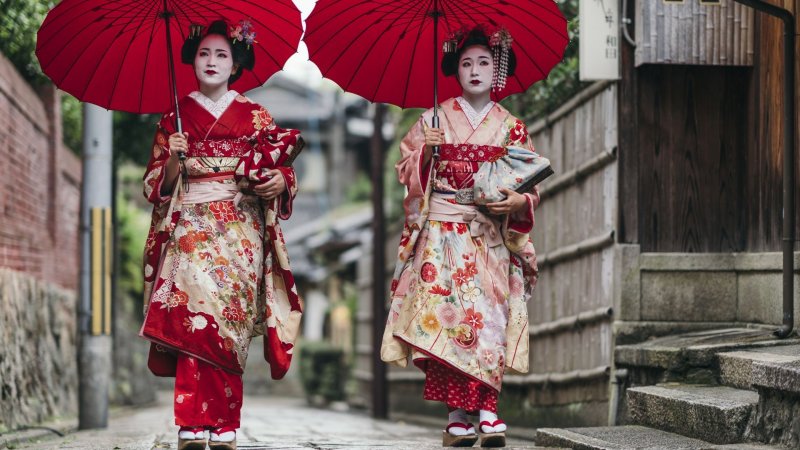
Japan is a country where long memory and fast change coexist in everyday life. Ancient shrines sit beside neon streets. Centuries old craft traditions share the same neighborhoods as robotics labs and chip fabs, News.Az reports.
Mountain villages maintain seasonal festivals, while megacities run on some of the most reliable rail networks on earth. To understand Japan well, it helps to see it not as a single story but as a set of interlocking systems: geography that shapes settlement, institutions that manage risk, an economy that prizes quality and resilience, and a culture that constantly refines what came before.
RECOMMENDED STORIES
This evergreen overview explains the pillars that define modern Japan, the pressures it faces, and the reasons it remains one of the most influential societies in the world.
Geography and the logic of living on islands
Japan is an island country stretching in a long arc along the western edge of the Pacific. Its geography is both a gift and a constraint. The seas provide fisheries, trade routes, and natural boundaries, while the mountainous terrain compresses many people and industries into narrow coastal plains. This basic fact influences everything from housing design to transportation planning.
A large share of the land is rugged and forested. Major population and economic centers cluster around plains and basins, especially in and around the Tokyo region, the Osaka and Kyoto area, and parts of central Honshu. Because buildable land is limited, Japanese urban development has historically been dense and highly optimized. Even smaller cities often feel carefully planned, with zoning, transit access, and mixed use neighborhoods that support daily living without long commutes.
Japan is also a country of distinct regional identities. Northern areas have colder winters and different cuisine, architecture, and agriculture than the subtropical south. Local dialects and traditions remain visible, not as museum pieces but as living markers of community.
A society shaped by natural hazards and risk management
Japan sits in a seismically active zone. Earthquakes, tsunamis, and volcanic activity are part of the national reality, along with typhoons and heavy rainfall events. Over time, Japan has developed a strong culture of preparedness: strict building codes, frequent drills, early warning systems, and public education. This does not eliminate risk, but it reduces the harm that hazards can cause.
Disaster readiness is not only technical. It is also social. Neighborhood associations, local government coordination, and the expectation that people follow evacuation guidance contribute to resilience. The country’s approach tends to favor prevention, redundancy, and continuous improvement. These habits extend beyond disasters into infrastructure maintenance, manufacturing quality control, and public services.
At the same time, hazards shape public debates on energy policy, infrastructure investment, and coastal planning. The question is rarely whether Japan should prepare, but how to balance safety, cost, and the needs of a modern economy.
Government, institutions, and the practice of stability
Japan is a parliamentary democracy with a constitutional framework that emphasizes civilian control and rule of law. The system is known for administrative competence and continuity. Many policies are implemented through close coordination between elected leadership, ministries, local governments, and industry groups. This has historically supported long term planning, especially in infrastructure, industrial development, and social services.
Stability has advantages: predictable regulation, reliable public administration, and an environment conducive to business investment. It also has tradeoffs: decision making can be cautious, consensus driven, and sometimes slow to shift when new realities demand rapid reform. In recent decades, Japan has worked to modernize governance and address structural issues such as demographic change, economic dynamism, and national security.
Local governments play an important role, especially in urban planning, public transport, education, and disaster preparedness. The relationship between the national center and prefectures is generally cooperative, but fiscal pressures and regional population decline make local policy choices increasingly significant.
The economy: quality, resilience, and global integration
Japan remains one of the world’s largest economies and a central player in global supply chains. Its economic identity is built on advanced manufacturing, high standards, and brand trust. Sectors like automotive, electronics, precision machinery, chemicals, and advanced materials have long anchored national competitiveness.
A key feature of Japanese industry is the pursuit of reliability. Many Japanese firms focus on incremental innovation, continuously improving products and processes rather than chasing constant reinvention. This approach has produced world class performance in areas like industrial robotics, machine tools, semiconductors related materials, batteries, and high end components that are invisible to consumers but essential to modern technology.
Japan is also deeply connected to global trade and investment flows. It imports significant energy and raw materials, exports high value manufactured goods, and invests heavily overseas. This openness brings both opportunity and vulnerability. External shocks, energy price volatility, and supply chain disruptions can hit quickly, which is why Japan often prioritizes diversification, strategic stockpiles, and long term supplier relationships.
In recent years, the economy has been shaped by several overlapping goals:
First, sustaining productivity in an aging society
Second, strengthening supply chain resilience for critical industries
Third, accelerating digital transformation across business and government
Fourth, managing energy transition while keeping power reliable and affordable
Fifth, improving wage dynamics so growth feels real to households
These priorities do not always align easily. Policies that boost competitiveness can conflict with cost of living concerns. Climate goals can collide with industrial energy demand. The economic story of Japan today is largely about navigating these tradeoffs while preserving social stability.
Work culture and the evolution of corporate life
Japan’s work culture is often described through its traditions of loyalty, group orientation, and high standards. Large firms historically offered long term employment pathways, predictable training, and a strong sense of organizational identity. This created stability for many households and helped companies develop deep internal expertise.
But corporate Japan has been changing. Global competition, technological change, and demographic realities have pushed firms to become more flexible and performance oriented. Job mobility has increased, especially among younger workers and in fields like software and digital services. More companies are experimenting with hybrid work and modern management practices, though adoption varies across sectors.
There is also a growing focus on work life balance, productivity, and mental health. Social expectations around overtime are gradually shifting, and policy debates often connect labor reform to the need for higher wages, greater participation among women, and better integration of older workers.
A defining challenge is ensuring that Japanese corporate strengths, such as discipline and craftsmanship, translate into the digital era without creating rigidity. The most competitive organizations are those that keep quality culture while accelerating decision making and innovation.
Demographics: the central constraint and the hidden opportunity
Japan’s demographic shift is one of the most important long term forces shaping the country. The population is aging, and birth rates have remained low for many years. This affects labor supply, social security costs, healthcare demand, and regional vitality.
The impact is uneven. Major cities continue to attract young people, while many rural areas face shrinking populations and school closures. This raises difficult questions about how to maintain services, transport links, and local economies. Some communities respond by focusing on niche tourism, specialty agriculture, renewable energy projects, or remote work infrastructure to attract new residents.
Demographics also create innovation pressure. Japan is a global leader in assistive technologies, robotics for caregiving, and systems that support independent living for older adults. Healthcare delivery, home monitoring, and community based services are areas where Japan’s experience may offer models for other aging societies.
The big strategic question is how Japan balances three approaches: boosting birth support policies, extending healthy working years, and managing immigration in a way that supports the economy and social cohesion.
Education, human capital, and the talent pipeline
Japan’s education system is known for strong foundations in literacy, numeracy, and disciplined study habits. Schools often emphasize group responsibility, routines, and respect for shared spaces. The result is a society with high baseline competence and strong social order.
At the same time, Japan has been working to strengthen creativity, communication, and global readiness. English education reforms, international programs, and university research initiatives aim to build a pipeline for high value innovation. Japan’s research institutions and companies continue to produce important work in materials science, engineering, and applied technologies.
The competition for talent is not only domestic. As technology becomes more global, Japan’s ability to attract and retain international researchers and entrepreneurs becomes increasingly relevant. Cities that offer strong support for startups and foreign professionals may gain an advantage.
Culture: continuity, refinement, and soft power
Japan’s cultural influence is exceptionally broad. Traditional arts, cuisine, and aesthetics have long attracted global admiration, but modern cultural exports have expanded Japan’s reach even further. Anime, games, fashion, design, and contemporary music have made Japan a major soft power center for multiple generations.
A useful way to understand Japanese culture is through refinement. Many traditions value repeated practice, subtle improvement, and respect for form. This is visible in craftsmanship, food preparation, martial arts, and performing arts. The culture often rewards mastery built over time.
Japan also has a strong culture of seasonal awareness. Festivals, foods, and travel habits shift with the calendar. This strengthens local identities and keeps community rituals alive.
Cultural change is constant too. Youth culture evolves rapidly, cities act as trend engines, and digital platforms accelerate the spread of new aesthetics. Japan’s cultural strength comes from balancing a stable core of traditions with continuous reinvention.
Technology and innovation: from hardware excellence to digital catch up
Japan’s reputation for engineering is grounded in real achievements: advanced manufacturing, robotics, transportation systems, and precision components that power everything from smartphones to medical devices. The country’s industrial base remains a strategic asset.
Yet Japan has faced challenges in certain areas of software and digital services compared with some other leading economies. Many organizations still operate with legacy systems and paper based workflows. This has created a major national push for digital transformation, including e government services, modernized corporate IT, and stronger cybersecurity.
The innovation landscape includes:
Industrial robotics and automation across factories and logistics
Advanced materials for semiconductors, batteries, and high performance products
Automotive technology, including electrification and connected systems
Healthcare technologies for aging society needs
Clean energy innovations and efficiency systems
Space and advanced research programs that support long term competitiveness
Japan’s biggest opportunity is combining its hardware strengths with modern software capabilities, especially in areas like industrial automation, smart infrastructure, and applied artificial intelligence. The more Japan integrates digital tools into its quality culture, the more distinctive its competitive edge becomes.
Energy, climate, and the transition dilemma
Japan’s energy system faces a complex set of constraints. The country imports much of its fuel, which affects energy security and costs. At the same time, Japan has ambitious climate goals and a need to keep electricity reliable for industry and households.
The energy transition is therefore a balancing act. Japan invests in renewable energy, grid modernization, efficiency, and new technologies such as hydrogen related systems and advanced storage. Policy debates often revolve around how quickly to shift generation sources, how to manage grid stability, and how to protect households from price shocks.
Japan’s experience with natural hazards also makes infrastructure resilience a core requirement. Energy systems must be robust against extreme weather and seismic events. This adds cost and complexity, but it also pushes innovation in grid design, building standards, and emergency response.
Foreign policy, security, and regional dynamics
Japan’s geographic position places it at the center of major strategic corridors in East Asia. The country’s security policy prioritizes deterrence, alliance management, and protection of sea lanes that support trade and energy imports. Japan also plays a significant role in regional diplomacy and development assistance.
Japan’s foreign policy often emphasizes rules based order, economic partnerships, and stability. It is active in trade frameworks and invests in infrastructure and capacity building across Asia and beyond. The strategic environment in the Indo Pacific has become more complex, which has increased attention to defense readiness, cybersecurity, and supply chain security for critical technologies.
For Japan, the goal is to remain economically open while protecting strategic autonomy. This includes building trusted partnerships, strengthening domestic industrial capabilities, and reducing single point vulnerabilities in key supply chains.
Cities, transport, and everyday efficiency
Japan’s urban experience is shaped by transit. Rail networks, subways, buses, and integrated ticketing systems make many cities highly navigable without cars. This supports dense neighborhoods, vibrant street level commerce, and lower per capita transport emissions in urban areas.
Tokyo is often viewed as a model of how a megacity can function efficiently. The key is not only scale but coordination: land use planning, transit operations, and private sector participation have created a system that can handle enormous passenger volumes.
Outside major metros, Japan also invests in regional connectivity. High speed rail, local lines, and well maintained roads support tourism and economic exchange. In many places, the challenge is sustaining service levels as populations decline. Some regions are experimenting with demand responsive transport and new mobility models to keep communities connected.
Travel and tourism: why visitors keep coming back
Japan is one of the world’s most compelling travel destinations because it offers variety at every scale. You can experience high intensity city life, quiet mountain temples, coastal landscapes, and rural towns within relatively short travel times. The infrastructure makes exploration easier: clear signage, safe streets, reliable trains, and a strong service culture.
Food is a major part of the appeal. Japan’s cuisine is diverse and regionally distinctive. Seasonal ingredients and careful technique create a dining culture that ranges from street snacks to refined multi course meals. Even everyday convenience stores have built reputations for quality.
Tourism also raises questions about sustainability. Popular destinations can face crowding, pressure on local services, and strain on heritage sites. Japan’s long term success as a tourism leader will depend on spreading visitor flows, supporting local communities, and protecting cultural and environmental assets.
What to watch: the next decade of Japan
Japan’s future will likely be defined by how it responds to three big themes.
First, demographic adaptation: whether policies and innovation can maintain prosperity with fewer working age people
Second, digital transformation: whether government and business can modernize systems fast enough to boost productivity
Third, strategic resilience: whether Japan can secure energy, critical technologies, and trade routes in a more contested region
If Japan manages these transitions well, it can remain a global benchmark for safe cities, advanced manufacturing, and high quality living. The country’s strength has always been its ability to refine, reorganize, and improve without losing its identity. That is why Japan continues to matter, not only as an economic power, but as a model of how a mature society can reinvent itself.