Why panic is dangerous during radiation incidents


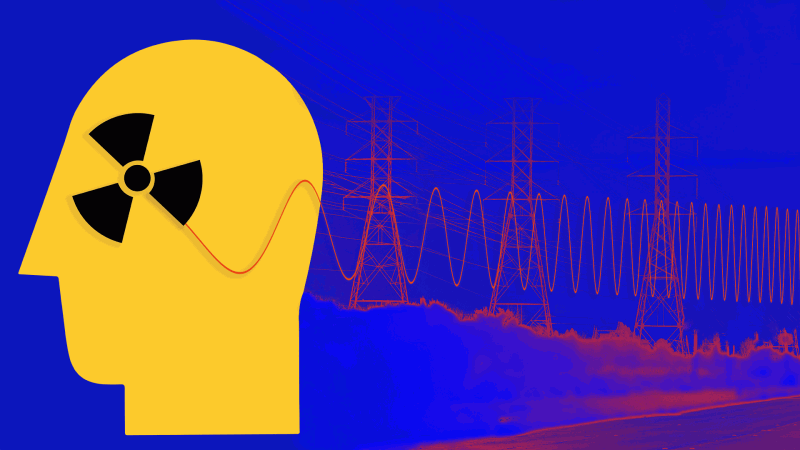
Radiation incidents, whether caused by industrial accidents, natural disasters, or technical failures, often generate intense public fear, News.Az reports.
The word “radiation” itself carries powerful emotional weight, shaped by memories of nuclear disasters, war narratives, and popular culture. While concern is natural, panic during radiation incidents can be far more dangerous than radiation exposure itself. History, psychology, and emergency management experience consistently show that uncontrolled fear leads to poor decisions, unnecessary casualties, and long-term social damage.
This evergreen analysis explains why panic is dangerous during radiation incidents, how it amplifies harm, and why calm, informed behavior saves lives.
Understanding radiation risk versus perceived danger
Radiation is invisible, odorless, and poorly understood by most people. This creates a gap between actual risk and perceived danger. In many radiation incidents, exposure levels are low or localized, yet public reaction can be extreme.
Scientific risk is measured in doses and probabilities. Public fear, by contrast, is driven by uncertainty and imagination. When people do not understand what is happening, they often assume the worst. Panic thrives in information vacuums and spreads faster than facts.
This mismatch between perception and reality is one of the core reasons panic becomes dangerous. People may flee safe areas, overload emergency services, or take harmful actions based on rumors rather than evidence.
Panic leads to irrational decision-making
During emergencies, the human brain shifts into survival mode. This response can be useful in immediate physical danger, but it becomes counterproductive in complex situations like radiation incidents.
Panic reduces the ability to process information logically. People may ignore official instructions, distrust authorities, or follow crowds without understanding where they are going. In radiation events, this can mean evacuating when sheltering is safer, or exposing oneself unnecessarily while trying to escape.
For example, leaving a building without protective measures may increase exposure if radioactive particles are present outside. Panic-driven movement often replaces measured risk reduction with impulsive action.
Overcrowding and secondary casualties
One of the most documented dangers of panic is the creation of secondary casualties. These are injuries or deaths not caused by radiation, but by the response to fear.
Hospitals can be overwhelmed by people who are not contaminated but believe they are. Emergency rooms may become overcrowded, delaying treatment for those who genuinely need urgent care. Roads can become congested with mass evacuations, leading to traffic accidents and preventing emergency vehicles from reaching affected areas.
In past radiation-related incidents, studies have shown that far more people suffered harm from stress, accidents, and medical system overload than from radiation exposure itself.
Stress and long-term health effects
Panic does not end when the immediate incident is over. Prolonged fear and anxiety can produce serious long-term health consequences.
Chronic stress weakens the immune system, increases the risk of cardiovascular disease, and contributes to depression and anxiety disorders. After radiation incidents, mental health impacts often affect larger populations for longer periods than physical radiation injuries.
Fear can also lead to social isolation, stigma, and discrimination. People from affected regions may be treated as contaminated even when no risk exists. This social damage can persist for decades, undermining community resilience and trust.
Misinformation spreads faster than radiation
In the modern information environment, panic is amplified by misinformation. Social media platforms allow rumors, exaggerated claims, and false advice to spread instantly.
During radiation incidents, misleading information about protective measures, exposure levels, or supposed cures can cause real harm. People may consume unsafe substances, misuse medical products, or reject effective guidance.
Panic makes people more vulnerable to misinformation because fear overrides critical thinking. The more alarming a claim sounds, the more likely it is to be shared. This creates a feedback loop in which fear generates false information, which in turn generates more fear.
Panic undermines emergency response
Effective emergency management depends on coordination, trust, and compliance with instructions. Panic disrupts all three.
When people do not trust official information, they may refuse to evacuate when necessary or evacuate when it is not. Emergency responders may struggle to access affected areas due to crowds, resistance, or confusion.
In radiation incidents, time and precision matter. Authorities must assess contamination, establish safety zones, and implement protective actions. Panic-driven behavior complicates these tasks and increases the risk of mistakes.
Children and vulnerable populations suffer most
Panic disproportionately affects children, the elderly, and vulnerable populations. Children are especially sensitive to fear transmitted by adults. Even if they are physically safe, exposure to panic can cause lasting psychological harm.
Elderly individuals or people with disabilities may be unable to flee chaotic situations safely. Sudden evacuations without planning can lead to medication interruptions, injuries, or abandonment.
When panic dominates, the needs of vulnerable groups are often overlooked. Calm, structured responses are essential to ensure that protective measures are inclusive and humane.
Lessons from past incidents
Historical experience reinforces the conclusion that panic is a major risk factor. After major radiation accidents, such as nuclear plant failures, health assessments often reveal that psychological and social impacts outweigh direct radiation effects for most of the population.
In some cases, unnecessary evacuations caused more harm than staying in place would have. Loss of livelihoods, community breakdown, and long-term displacement created enduring trauma.
These lessons have reshaped modern emergency planning, which increasingly emphasizes risk communication, mental health support, and public education alongside technical safety measures.
Why clear communication saves lives
The most effective antidote to panic is clear, honest, and timely communication. People are more likely to remain calm when they understand what is happening, what the actual risks are, and what actions they should take.
Authorities that acknowledge uncertainty while providing concrete guidance tend to maintain public trust. Overreassurance can be as damaging as alarmism if later contradicted by events.
Simple, consistent messages delivered through trusted channels reduce confusion. When people know where to get reliable information, they are less likely to rely on rumors.
The role of public education
Long before any incident occurs, public education plays a critical role in preventing panic. Basic understanding of radiation, exposure pathways, and protective measures empowers people to respond rationally.
Knowing that not all radiation is immediately deadly, that distance and shelter reduce exposure, and that authorities monitor contamination levels helps demystify the threat. Education transforms radiation from an incomprehensible danger into a manageable risk.
Countries that invest in public preparedness tend to experience more orderly responses during emergencies, regardless of the hazard involved.
Personal responsibility during radiation incidents
Individuals also have a role in preventing panic. This includes seeking information from official sources, avoiding the spread of unverified claims, and supporting calm behavior within families and communities.
Remaining indoors when advised, following hygiene guidance, and checking on vulnerable neighbors are practical actions that reduce harm. Panic-driven actions may feel instinctive, but informed restraint is often the safer choice.
Understanding that fear itself can be dangerous encourages people to pause and think before reacting.
A realistic conclusion
Panic during radiation incidents is dangerous because it multiplies harm beyond the physical effects of radiation. It leads to irrational decisions, secondary injuries, overwhelmed healthcare systems, long-term psychological damage, and weakened emergency response.
Radiation risks should be taken seriously, but fear should not be allowed to dominate. Calm, informed behavior, supported by clear communication and public trust, consistently saves lives.
In radiation incidents, as in many complex emergencies, managing fear is as important as managing the hazard itself. The greatest protection often comes not from fleeing in terror, but from understanding the risk and responding with discipline, cooperation, and reason.


Similar news