Türkiye or Saudi Arabia: Who will lead the Islamic world?


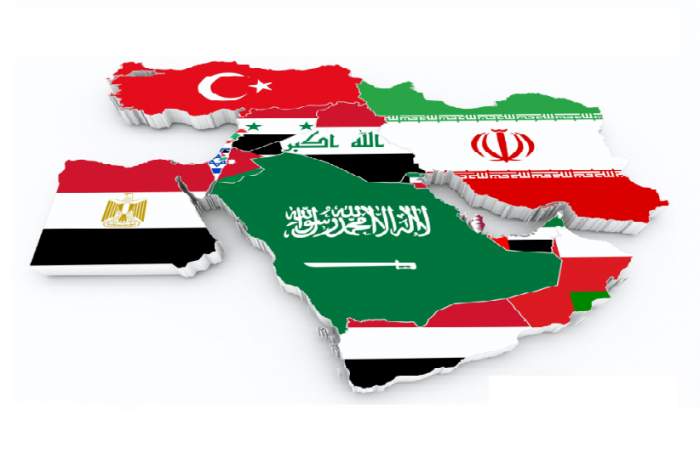
From 1517 to 1917, nearly all modern Arab countries were under the rule of the Ottoman Empire, whose sultan also held the title of caliph. Following its defeat in World War I, the Republic of Türkiye was established in 1923. Meanwhile, in 1932, after a series of successful wars on former Ottoman lands, the Kingdom of Saudi Arabia (KSA) emerged. Spanning approximately 2.15 million square kilometers and home to nearly 35 million people, its capital is Riyadh. However, what truly elevates its standing in the Islamic world is its stewardship of Islam’s two holiest sites, Mecca and Medina. In 1938, vast oil reserves were discovered in the kingdom, cementing its economic power.
Today, an undeclared rivalry is unfolding between Türkiye and Saudi Arabia for dominance in the Islamic world, which encompasses 1.9 billion people. Until recently, Shiite Iran sought to assume the leadership role of the Muslim Ummah, spending decades building its so-called “ Axis of Resistance .” This strategy was launched following the 1979 Islamic Revolution. During the subsequent Iran-Iraq War, Hafez al-Assad, father of Syria’s current leader Bashar al-Assad, supported Iran, forging a strong alliance between Iranian Shiite clerics and the Assad dynasty. This partnership helped strengthen Iran’s influence in the predominantly Sunni Middle East. Syria also served as a vital logistical hub for arming Hezbollah and other Iranian-backed militant groups in the region.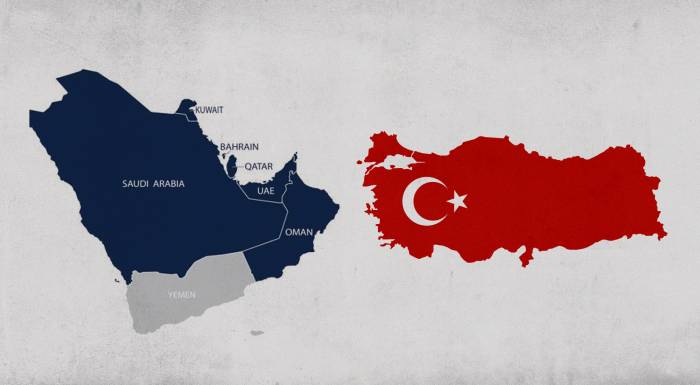
Both Ankara and Riyadh viewed Iran’s growing presence in Arab states with deep concern. Saudi Arabia, in particular, saw the rise of the Iran-backed Houthi rebels in Yemen as a direct threat, while Türkiye struggled with the challenges posed by the Assad regime in Syria. Additionally, Tehran’s nuclear ambitions remain a source of regional unease. However, everything changed after the unprovoked October 7, 2023, attack on Israel by Hamas militants. By late 2024, Hamas had been crushed, Hezbollah suffered a severe blow, and the pro-Iranian regime of Bashar al-Assad in Syria collapsed. A new ruling faction, closely aligned with Türkiye, seized power in Damascus and is now striving to unify the war-torn country and end its international isolation.
This is where things get particularly interesting. In history, the country that supports an opposition movement does not always reap the rewards of regime change. Instead, it is often the state that provides timely economic assistance to the new authorities that emerges as the true beneficiary.
Saudi Arabia’s GDP stands at $1.068 trillion, with a population of 35 million, while Türkiye’s GDP is slightly higher at $1.108 trillion, but spread across 85 million people. The Saudi riyal is one of the strongest currencies in the world, whereas the Turkish lira has been severely weakened by runaway inflation. Furthermore, Türkiye faces a significant trade deficit.

With the return of Donald Trump to the U.S. presidency , Saudi Crown Prince Mohammed bin Salman pledged a generous $600 billion investment in the American economy. However, Trump reportedly urged him to “think bigger” and raise the figure to $1 trillion. It is unlikely that President Recep Tayyip Erdoğan of Türkiye could make a similar financial gesture.
Against the backdrop of Saudi Arabia’s virtually limitless economic resources, a diplomatic offensive on Damascus is already underway—one that will likely be followed by substantial investments in rebuilding Syria’s devastated economy. Just recently, Saudi Foreign Minister Faisal bin Farhan visited Damascus, meeting with Syria’s new leadership, including administration head Ahmed al-Sharaa and interim government Foreign Minister Asaad al-Shaibani. This was the first high-level visit of its kind since Assad’s ouster, and it is unlikely to be the last. Before this, al-Shaibani had already made two trips to Riyadh. Clearly, financial interests are at the heart of such intensive diplomacy. The new Syrian leadership must demonstrate to the people that it is committed to improving living standards, regardless of sectarian or ethnic affiliations.
During his visit to the World Economic Forum in Davos, al-Shaibani openly praised Saudi Arabia’s economic model, declaring that Syria should become “part of a comprehensive Arab project aimed at achieving security and stability in the region.” He reminded the world that “Syria is a member of the Arab League,” emphasizing the primacy of ethnic identity over religious divisions.
This statement sharply contrasts with Türkiye’s stance, as Ankara seeks to maintain its political influence in Syria. While Türkiye currently controls Syria’s interim government, its own economy is in poor shape. And, as history shows, financial power is often the glue that binds alliances. Even U.S. President Donald Trump once remarked that “the key to Syria lies in the hands of President Recep Tayyip Erdoğan.” However, Türkiye is unlikely to compete with Saudi Arabia in economic muscle.
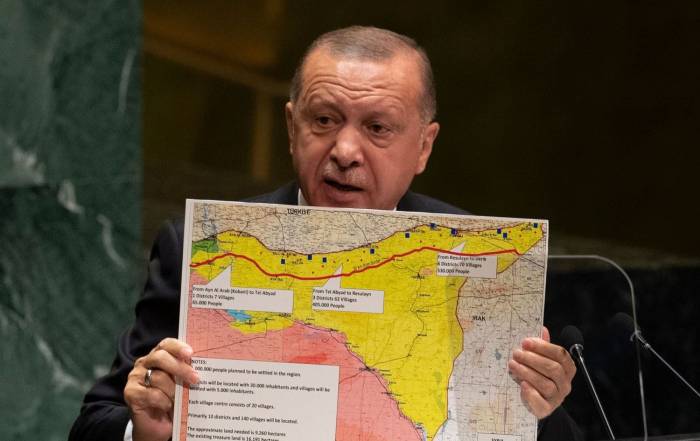
Moreover, some of Erdoğan’s comments regarding certain Syrian territories have raised concerns and may complicate relations between Ankara and Damascus. Although the new Syrian leadership, currently dominated by Hay'at Tahrir al-Sham (HTS), maintains good ties with Türkiye, the long-term geopolitical landscape is uncertain. Notably, Turkish intelligence chief İbrahim Kalın arrived in Damascus just hours after Assad’s fall, and Foreign Minister Hakan Fidan was the only high-ranking diplomat to make an official visit to Syria at that critical moment.
Türkiye was also the first country to reopen its embassy in Damascus. Fidan has repeatedly emphasized that his government is “on the right side of history” in Syria but does not seek to “dominate” it.
Beyond rhetoric, Ankara has offered Syria assistance in infrastructure rebuilding, drafting a new constitution, electricity supply, the resumption of air travel, and even the creation of a unified military force. However, Syria has no intention of becoming a satellite of any foreign power—its primary goal remains Arab unity.
Gulf nations, particularly Saudi Arabia, are strongly opposed to any significant Turkish influence in the region . None of them want a non-Arab power to replace Iran’s former role. Paradoxically, in this regard, their interests align with those of Israel, which is gradually integrating into the broader Semitic family of Abrahamic descendants.
(If you possess specialized knowledge and wish to contribute, please reach out to us at opinions@news.az).


Similar news