What’s next for Syria? Türkiye’s plans, Israel’s strategy, and Iran’s tactics


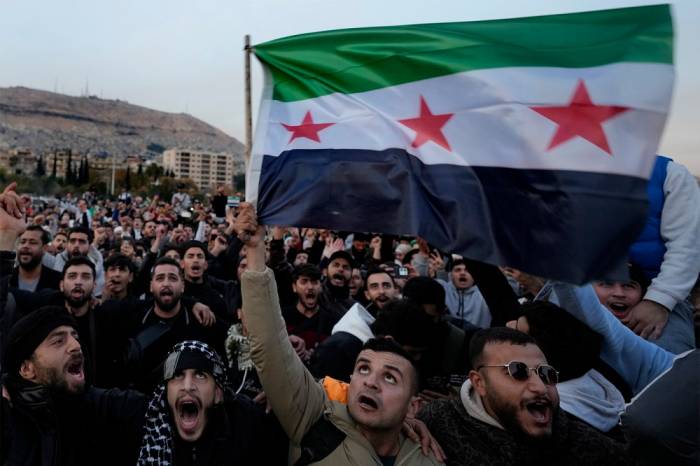
Syrian citizens wave the revolutionary flag as they celebrate during the second day of the take over of the city by the insurgents in Damascus, Syria, on Monday. (AP Photo/Hussein Malla)
Editor's note: Prof. Zeev Khanin teaches at the Department of Political Studies and heads Post-Soviet Conflicts Research Program at the BESA Center for Strategic Studies, Bar-Ilan University. The article expresses the personal opinion of the author and may not coincide with the view of News.Az.
The situation in Syria remains one of the most complex and unpredictable in the Middle East. The interplay between key players—Türkiye, Israel, and Iran—defines the contours of Syria’s future, although predictions remain speculative and fraught with uncertainty. The ongoing conflict reflects the volatile dynamics of radical Islamist groups, the geopolitical ambitions of neighboring states, and the interests of international powers. Despite the complexities, examining these factors reveals emerging patterns that may influence the region's trajectory.Radical Islamist groups, which once served as the backbone of opposition forces against Bashar al-Assad’s regime, are undergoing significant transformation. These groups are now striving to portray themselves as moderate entities. No longer prioritizing global jihad, they claim to focus on building an Islamic state within Syria’s borders. This shift aligns with a strategy to gain legitimacy both domestically and internationally.
However, skepticism about their intentions persists. A striking parallel can be drawn with the Taliban in Afghanistan. Initially, the Taliban pledged to respect human rights and establish cooperative relationships with the West. Yet, the reality diverged dramatically, as Afghanistan plunged into an era of rigid totalitarianism under their rule. The lessons from Afghanistan raise legitimate concerns about whether Islamist groups in Syria could follow a similar trajectory.
Despite their assurances to integrate militias into a unified national army and protect minority rights, these promises often conceal ulterior motives. Such moves aim to dismantle opposition power structures and centralize control. External factors, particularly the policies of the United States and Türkiye, will significantly influence the Islamist groups' trajectory. Their ability to address the concerns of ethnic and religious minorities, such as Kurds, Druze, and Christians, remains a critical variable in determining Syria’s stability.
Israel’s approach to Syria has been marked by cautious pragmatism. While Israel has declared that it has no interest in interfering in Syria’s internal affairs, this stance is conditional upon the absence of direct threats emanating from Syrian territory. The country’s primary focus is on safeguarding its security interests in the Golan Heights and surrounding regions.
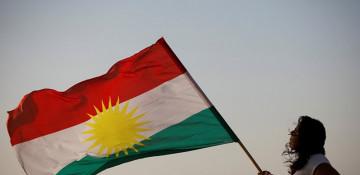
A critical dynamic in the Syrian conflict is the role of Kurdish forces, who control northeastern Syria. By obstructing traditional Iranian supply routes to Hezbollah in Lebanon, the Kurds have inadvertently contributed to Israel’s strategic objectives. This development enhances the prospects for the establishment of an independent Kurdish state, potentially in collaboration with Iraqi Kurds. However, such a scenario depends heavily on the evolving political landscape in Iraq and the possibility of an anti-Iranian movement gaining traction.
Should Türkiye, with the support of the Damascus regime, escalate its pressure on Kurdish forces, Israel and the United States may find themselves compelled to intervene. Israel’s involvement would likely aim to preserve a balance of power in the region, preventing any single actor from dominating Syria’s post-conflict order.
For now, Israel maintains control over security zones in the Golan Heights, established during the Syrian civil war. This presence is expected to continue until genuine stability is restored in Syria. Notably, Israel has no long-term interest in holding territories outside its recognized sovereignty, underscoring its strategic focus on security rather than territorial expansion.
Türkiye has emerged as one of the most influential players in the Syrian conflict. Under President Recep Tayyip Erdoğan’s leadership, Türkiye seeks to transform Syria from an Iranian ally into a satellite under Türkish influence. This ambition aligns with the broader neo-Ottoman vision, which aims to restore Türkiye’s dominance in the Middle East within the historical boundaries of the Ottoman Empire.
However, Erdoğan’s strategy faces significant challenges. Arab nations, particularly Saudi Arabia, strongly oppose Türkish intervention, viewing it as a threat to their regional autonomy. Over the years, Arab leaders have emphasized the importance of pursuing their own civilizational and geopolitical goals without external interference, whether from Iran or Türkiye.
In practice, Türkiye has already solidified its presence in northern Syria by establishing a security zone. This area not only serves as a buffer against Kurdish forces but also provides Türkiye with leverage in broader regional negotiations. While this strategy has bolstered Türkiye’s influence, it has also drawn criticism for exacerbating tensions with Arab states and complicating efforts to resolve the Syrian conflict.
Erdoğan’s ability to exploit internal divisions among Arab states and ethnic groups remains a critical factor. However, these same divisions could also constrain his ambitions, as regional dynamics become increasingly fragmented.
Iran, once a dominant player in Syria, has seen its influence wane in recent years. Confronted with economic sanctions and growing regional isolation, Tehran has adopted a strategy of strategic patience. By temporarily reducing its aggressive posture, Iran aims to avoid provoking its adversaries while gradually rebuilding its capabilities.
At the same time, Iran remains committed to its long-term objectives in the Middle East. Tehran’s current approach mirrors its behavior during previous U.S. administrations, including those of Obama and Trump. By biding its time and adapting to shifting political landscapes, Iran hopes to regain its foothold in Syria.
Nevertheless, Iran’s path to recovery is fraught with challenges. The country’s diminished presence in Syria and growing regional opposition make it increasingly difficult to achieve its goals. However, the rapidly changing dynamics of the Middle East could create new opportunities for Tehran, particularly if international pressure on the regime weakens.
Syria’s future is shaped by a complex interplay of domestic and international factors. The influence of radical Islamist groups, the ambitions of Türkiye and Israel, and the strategic recalibrations of Iran all contribute to the country’s uncertain trajectory.
Türkiye’s involvement has added another layer of complexity, fueling tensions with Arab states and raising questions about the sustainability of its neo-Ottoman ambitions. Meanwhile, Israel’s cautious approach underscores its focus on maintaining regional stability while avoiding unnecessary entanglements.
Iran, though weakened, remains a potential wildcard. The possibility of a resurgence in its influence cannot be ruled out, particularly if regional politics undergo significant shifts.
Ultimately, Syria remains a battleground not only for local actors but also for global powers. The path to stability will require navigating a web of competing interests, fragile alliances, and deep-seated rivalries. As the region continues to evolve, the stakes for Syria’s future—and the broader Middle East—remain extraordinarily high.
(If you possess specialized knowledge and wish to contribute, please reach out to us at opinions@news.az).


Similar news