Al-Sharaa’s UN visit: Syria’s bid to break isolation and rebuild relations


.jpg)
Editor's note: Nijat Babayev is an Azerbaijan-based journalist. The article expresses the author's personal opinion and may not coincide with the view of News.Az.
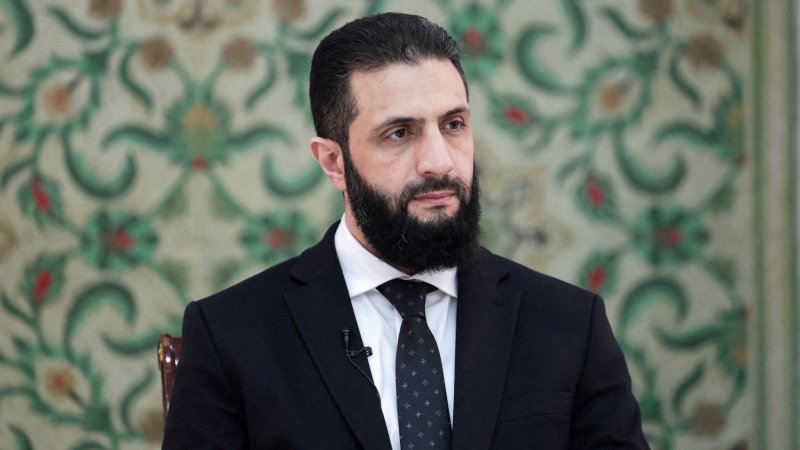
Syrian President Ahmed al-Sharaa has arrived in New York to attend the 80th session of the United Nations General Assembly (UNGA), marking the first time in nearly 60 years that a Syrian head of state has participated in the annual gathering. The last Syrian leader to attend was President Nureddin al-Atassi, who ruled before the Assad family came to power in 1971.
Al-Sharaa recently overthrew Bashar al-Assad’s government in December, making this visit highly symbolic. This visit highlights the growing normalization of al-Sharaa’s government. After arriving in the US, al-Sharaa met members of the Syrian community. Syria’s Foreign Minister Asaad al-Shaibani also raised the country’s new flag over the Washington embassy.
 President Ahmed al-Sharaa met with a delegation from the Syrian community during his visit to New York City, on Sunday, September 21 (Photo: Presidency of the Syrian Arab Republic)
Earlier this year, in May, al-Sharaa met with US President Donald Trump at a Gulf Cooperation Council summit, the first meeting between Syrian and US leaders in 25 years. During that summit, Trump announced the US would lift all sanctions on Syria and indicated a willingness to normalize relations with al-Sharaa’s government.
Despite internal challenges such as violent unrest in Suwayda province and repeated Israeli military actions, al-Sharaa’s administration continues to seek stability. In late June, Trump signed an executive order lifting most of the remaining US sanctions on Syria, a move welcomed in Damascus as a step toward unlocking reconstruction and development funds.
President al-Sharaa’s presence at the UNGA after six decades of Syrian absence sends a powerful signal. It is a symbolic gesture that Syria is ready to re-engage with the world through formal diplomacy. This step, while long overdue, represents a potential turning point in Syria’s foreign policy.
Diplomatic attendance at the UNGA is more than a formality. It is an opportunity for leaders to voice their countries’ positions, build alliances, and shape global narratives. By stepping onto this platform, President al-Sharaa implicitly acknowledges the importance of multilateralism and dialogue in resolving complex international issues. Given Syria’s isolation, this visit may also represent an attempt to repair relationships strained by years of conflict and sanction.
Moreover, the visit could be interpreted as an effort to shift perceptions about Syria. The country’s image internationally has been deeply shaped by the devastating civil war, allegations of human rights abuses, and accusations of proxy conflicts. Al-Sharaa’s presence at the UNGA offers Syria a chance to assert its sovereignty, redefine its narrative, and seek legitimacy on the world stage.
The timing of this visit is telling. Syria remains in the throes of a multifaceted crisis. Although active conflict has decreased in some regions, the country continues to grapple with economic collapse, infrastructural devastation, displacement of millions, and ongoing humanitarian needs. International sanctions have exacerbated the country’s economic woes, while diplomatic efforts toward peace remain fragile and inconclusive.
In this challenging environment, international cooperation and dialogue are more necessary than ever. President al-Sharaa’s visit to the UNGA could be an appeal for increased humanitarian aid, economic assistance, or the easing of sanctions that hinder reconstruction and recovery. It also opens the door to discussions about Syria’s future political trajectory and the role of international actors in facilitating stability.
Additionally, the visit may signal Syria’s interest in strengthening ties with regional neighbors and global powers.
The Middle East remains a complex geopolitical landscape, with shifting alliances and emerging conflicts. Syria’s reengagement at the UNGA could be part of a broader strategy to recalibrate its foreign relations, balancing ties with Russia, Iran, Türkiye, and the Arab League, while cautiously approaching Western countries.
The implications of this visit extend beyond symbolism and domestic concerns. Syria’s return to the UNGA presents both opportunities and challenges for the international community.
For one, it could revitalize diplomatic efforts aimed at resolving Syria’s conflict and fostering long-term peace. The UNGA offers a forum for dialogue among a broad coalition of states, providing a unique platform to address Syria’s crisis from multiple angles—political, humanitarian, and security-related. With President al-Sharaa participating, there may be greater prospects for consensus-building and coordination of aid.
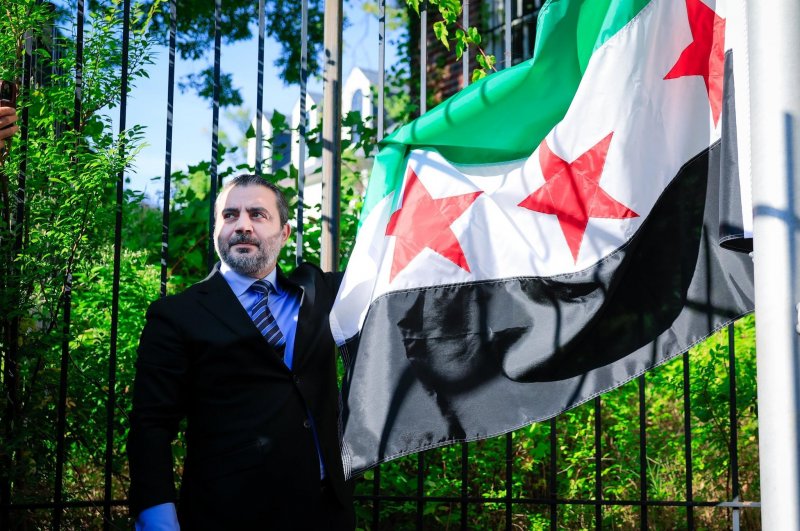 Syria’s Foreign Minister Asaad al-Shaibani also raised the country’s new flag over the Washington embassy. Photo: Syria's Foreign Ministry
Moreover, this engagement may influence the dynamics of international sanctions and diplomatic recognition. Many Western countries have imposed strict sanctions on Syria, seeking to pressure the government toward political reforms and accountability. Al-Sharaa’s presence at the UNGA could be a prelude to negotiations that might ease some restrictions in exchange for progress on human rights or political dialogue.
Ultimately, President al-Sharaa’s visit to the UNGA is a reminder that even the most entrenched conflicts and divisions can find pathways toward dialogue. It is an acknowledgment that Syria’s fate is intertwined with the broader international system and that global cooperation is indispensable for peace and recovery.
While challenges ahead are formidable, this historic attendance breathes new life into the possibility of constructive engagement. For Syria, it is an opportunity to step out of isolation and toward a future shaped by diplomacy rather than conflict. For the world, it is a chance to embrace a more inclusive dialogue that considers the realities on the ground and seeks lasting solutions.
Sixty years have passed since a Syrian leader last attended the UNGA. The world will be watching closely to see what this visit means in practice. Will it mark the beginning of a new era for Syria—a move from conflict to cooperation? Or will it be a fleeting gesture amid enduring challenges? Only time will tell, but the significance of this moment is undeniable.
(If you possess specialized knowledge and wish to contribute, please reach out to us at opinions@news.az).


Similar news