Alan Cafruny: Europe faces economic decline amid Ukraine war and energy crisis - INTERVIEW


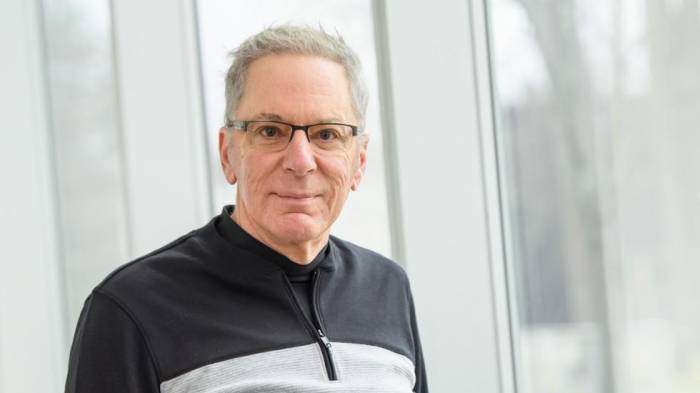
By Samir Muradov News.Az presents an interview with Alan Cafruny, the Henry Platt Bristol Professor of International Affairs at Hamilton College.
- Given the escalation of conflict in the Middle East and rising tensions between Israel and its neighbors, how do you assess the role of major global powers, such as the U.S. and the EU, in this region? What steps should be taken to prevent the conflict from spreading to a wider international level?
- Conflicts and wars within the Middle East have always generated the intervention of external powers and the threat of proxy wars. Thus China’s growing influence in the region, exemplified by its brokering of Iran-Saudi restoration of relations and their entry into the BRICS. Washington will of course retain its strategic relationship with Israel. And the wars in Gaza and Lebanon enhance Iran’s role while also enhancing Russia’s support. The external powers need to restrain regional actors, most obviously Iran and Israel.
- Amid China’s growing influence in Africa and Asia, especially through the Belt and Road Initiative, what risks and opportunities do you see for Europe in the current competition for economic and political influence? How should the EU strategically respond to this initiative?
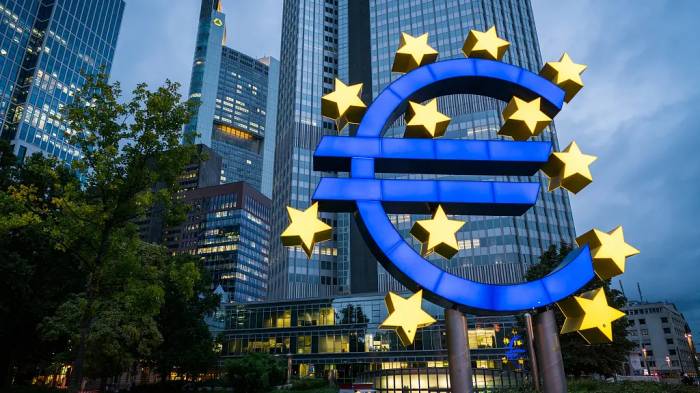
- Europe is experiencing dramatic relative economic decline, greatly exacerbated by the war in Ukraine, the loss of the largest consumer market in Europe and, above all, the massive increase in energy costs as a result of the loss of Nordstream 1 and 2. All of these factors have produced serious deindustrialization, notably of course in Germany. At the same time, the USA seeks to de-couple itself, but also Europe, from China, again impacting most severely on Germany. Europe needs to transcend its “vassal status” (ECFR, 2023) especially in the context of a Trump presidency. Yet, the transatlantic economy accounts for one-third of world trade as well as GDP.
- Sanctions on Russia, imposed following events in Ukraine, have significantly impacted the global economy and energy markets. Do you believe that current pressure measures are effective, and how can European countries mitigate their effects on energy security?
- More than two years since Biden declared that sanctions would “turn the ruble into rubble” it is clear that sanctions on Russia have neither altered Russian behavior nor crippled its economy, a result of both the rise of multipolarity but also the ability of Russia to import substitute. While problems lie ahead for Russia, most notably an overheating war economy, Russia will remain resilient. Europe is seeking gradually to find substitutes for Russian LNG, but US gas exports are 3-4 times more expensive. Nuclear and sustainable energy lies well into the future, for the most part, not least for Germany.
- In the face of rising populism and nationalism within EU countries, how can Brussels effectively maintain unity and stability within the bloc? What is your perspective on the long-term future of the EU amid internal political crises and external pressures?
-The EU is gradually disintegrating. As the Draghi Report has emphasized it faces a massive investment challenge, made worse by fundamental disagreements over the budget. Far right parties such as AfD render cooperation more difficult. The nominal EU will survive along with the single market and monetary union but dreams of a European civilian superpower are fading.
- With climate change accelerating and causing environmental disasters worldwide, how do you assess the readiness of global institutions, such as the UN and WTO, to address climate issues and the need for more sustainable economic models? What role should leading countries like the U.S., EU, and China play in this transition?
The COP 29 Summit starting in Azerbaijan in 11 November will take place amid record levels of carbon dioxide emissions. In 2021 the IEA stated that no new fossil fuel exploitation should take place. This is not, of course the case. The Summit will not be attended by Joe Biden, Emmanuel Macron, or Vladimir Putin, inter alia. At the same time growing geopolitical events are proving to be a distraction, not least with respect to talks over financing, the central goal of COP 29. Much more is required and the US and China must take the lead.


Similar news