Why Were Pakistani Security Forces Targeted In Bajaur Attack?
- 1059742
- Explainers (FAQ)
-
Share
https://news.az/news/why-were-pakistani-security-forces-targeted-in-bajaur-attack
Copied
At least nine security personnel were killed and 21 others injured after a suicide bomber attacked a scouts camp in northwestern Pakistan.
The attack took place Thursday evening at the headquarters of the scouts in Bajaur District, located in Khyber Pakhtunkhwa near the Afghan border.
RECOMMENDED STORIES
According to police sources, the attacker rammed an explosives-laden vehicle into the main gate of the compound at around 7:55 p.m. local time.
Authorities said the explosion caused severe damage to the entrance gate and nearby walls.
After the blast, heavily armed militants reportedly launched a gun attack on the camp, leading to an exchange of fire with Pakistani security forces stationed inside the facility.
Who were the victims?
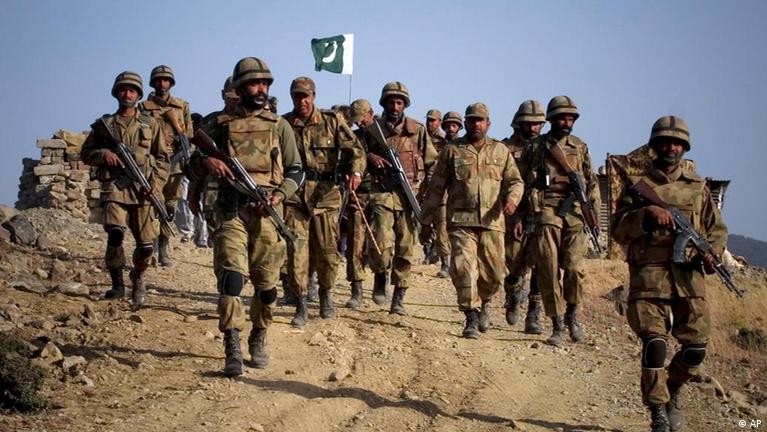
The victims were members of Pakistan’s security forces stationed at the scouts headquarters.
At least nine personnel were confirmed dead while 21 others sustained injuries.
Officials said the process of identifying all casualties was continuing after the attack.
Several injured personnel were transferred to nearby hospitals for treatment.
Authorities also reported that several militants were believed to have been killed during the exchange of fire, although the exact number had not yet been officially confirmed.
What is the scouts camp in Bajaur?
The camp targeted in the attack belongs to Pakistan’s scouts forces, which are paramilitary security units operating mainly in border and tribal regions.
These forces assist the military and police in counterterrorism operations, border security, and maintaining internal stability.
Facilities in areas such as Bajaur are considered strategically important because they help monitor militant activity near the Pakistan Afghanistan border.
Security installations in Khyber Pakhtunkhwa have frequently been targeted by militant groups over the years.
How did the attack unfold?
According to preliminary reports, the attacker drove an explosive laden vehicle toward the compound’s main entrance.
Security personnel attempted to stop the vehicle before it reached deeper inside the facility.
The bomber then detonated the explosives near the gate.
The blast damaged parts of the compound and created confusion inside the camp.
Shortly afterward, armed militants reportedly opened fire using small and medium weapons.
Security personnel inside the headquarters responded, triggering a gun battle between attackers and troops.
Once the firing ended, authorities launched rescue operations and began clearing the compound.
Has any group claimed responsibility?
As of now, no militant organization has officially claimed responsibility for the attack.
However, security officials are likely investigating whether extremist groups active in northwestern Pakistan were involved.
The region has historically experienced attacks linked to militant organizations including factions connected to the Tehrik-i-Taliban Pakistan, commonly known as the Pakistani Taliban.
Authorities are expected to analyze intelligence, explosives, and communication data to determine responsibility.
Why is Bajaur considered a sensitive area?
Bajaur District is located near Pakistan’s border with Afghanistan and has long been considered one of the country’s most sensitive security regions.
The area was previously part of Pakistan’s tribal belt, historically known for militant activity and difficult terrain.
For years, Pakistani security forces conducted military operations there against insurgent groups.
Although security conditions improved compared to the peak years of militancy, attacks have continued sporadically.
The region’s proximity to Afghanistan also makes it strategically important for border security and counterterrorism operations.
Why are attacks increasing in northwestern Pakistan?
Pakistan has witnessed a resurgence in militant violence in parts of Khyber Pakhtunkhwa and Balochistan over recent years.
Security analysts attribute this to several factors, including instability in neighboring Afghanistan after the Taliban takeover in 2021.
Pakistani officials have repeatedly expressed concern that militant groups are using Afghan territory to organize attacks inside Pakistan.
The Pakistani Taliban has intensified operations against security forces, police stations, and military facilities in recent years.
Border tensions, political instability, economic challenges, and weakened local security conditions have also contributed to rising violence.
What type of attack was this?
The assault appears to have been a coordinated suicide and armed attack.
Such attacks usually involve an initial suicide bombing designed to breach defenses or create chaos, followed by gunmen launching additional assaults.
This tactic is commonly used by militant groups targeting security compounds because it increases casualties and complicates defensive responses.
Vehicle borne improvised explosive devices, often called VBIEDs, are among the most destructive methods used in such attacks.
The combination of explosives and armed assault suggests the attackers intended to inflict maximum damage on the facility.
How serious was the explosion?
Authorities said the blast heavily damaged the main gate and surrounding structures of the compound.
The full extent of the damage was still being assessed as security operations continued in the area.
Explosive laden vehicles can carry extremely large quantities of explosives, producing devastating shockwaves capable of destroying buildings and defensive barriers.
The damage level often depends on how close the vehicle gets to its intended target before detonation.
Security officials indicated personnel at the gate attempted to stop the attacker before the vehicle penetrated further into the compound.
How are Pakistani authorities responding?
Pakistani security forces launched rescue, clearance, and search operations immediately after the attack.
Troops secured the compound while medical teams evacuated the injured.
Authorities are also expected to begin forensic investigations into the explosives used, the identities of the attackers, and any possible support networks.
Security measures in surrounding districts may also be tightened following the incident.
Pakistan’s military and intelligence agencies frequently conduct follow up operations after major militant attacks.
What is the broader security situation in Pakistan?
Pakistan continues facing security challenges from militant violence, especially in border regions.
Although the country significantly reduced large scale terrorism compared to the mid 2000s and early 2010s, extremist attacks have increased again in recent years.
Security personnel, police, government installations, and civilians have all been targeted.
Militant groups operating in Pakistan often seek to destabilize the government, undermine military operations, or retaliate against counterterrorism campaigns.
The Pakistani government has repeatedly pledged to intensify operations against insurgent groups.
However, the complex regional security environment continues creating challenges for long term stability.
Why are suicide attacks so difficult to prevent?
Suicide attacks are among the hardest forms of terrorism to stop because attackers are prepared to die during the operation.
Vehicle based suicide bombings can be especially difficult to intercept if attackers approach quickly or disguise themselves as ordinary traffic.
Security forces often rely on checkpoints, barriers, surveillance, intelligence gathering, and rapid response procedures to reduce risks.
In this case, authorities indicated personnel attempted to stop the vehicle before it reached deeper inside the compound.
Even when attacks are partially intercepted, the explosives involved can still cause major casualties and destruction.
Could there be further attacks?
Security officials often raise alert levels after major militant incidents because coordinated or follow up attacks are possible.
Authorities may increase patrols, strengthen checkpoints, and enhance security around military facilities and public places.
Counterterrorism operations may also intensify in nearby areas if intelligence suggests militant networks remain active.
At this stage, officials continue assessing the situation and searching for any remaining threats connected to the attack.
What happens next?
Investigators will likely focus on identifying the suicide bomber, determining which group organized the attack, and uncovering any support network involved.
Authorities are also expected to evaluate security vulnerabilities at the compound and strengthen protective measures where necessary.
Funeral ceremonies for the slain personnel are likely to be held with military honors.
The attack is expected to renew debate inside Pakistan about border security, militancy, and the broader regional security situation following developments in Afghanistan.
For now, security operations remain ongoing in Bajaur as authorities continue rescue efforts, damage assessment, and counterterrorism investigations.
By Faig Mahmudov