Aleksandr Kovalenko: Russia attacks harder but advances less far – INTERVIEW


.png)

Ukraine’s front line remains tense but largely static, with the heaviest fighting concentrated in the Pokrovsk–Myrnohrad area and parts of the Zaporizhzhia region. Russian forces continue to carry out localized assaults and raids but have failed to achieve any operational or strategic breakthroughs, while sustaining heavy losses. Ukraine maintains a defensive posture aimed at wearing down the enemy, relying heavily on drones and long-range strikes amid ongoing concerns over air defense shortages and political constraints on Western assistance. The News.Az analytical portal interviewed Ukrainian military expert Aleksandr Kovalenko to clarify the latest developments along the front line.
– Mr. Kovalenko, how would you characterize the current operational situation along the front line? In which directions is combat intensity currently the highest?
– The current situation along the front line is quite tense and complex. Overall, the most active area is the Pokrovsk–Myrnohrad agglomeration, specifically the Pokrovsk direction. Russian units there have clear deadlines set by their command, which, it should be noted, have already been postponed several times.
RECOMMENDED STORIES
At present, the 41st, 51st, and 2nd Combined Arms Armies, whose units are engaged in the Pokrovsk–Myrnohrad agglomeration, have been tasked with fully resolving the issue of Pokrovsk and Myrnohrad by the end of February.
The situation is also difficult in the Zaporizhzhia region, particularly on the Huliaipole axis and in the Stepnohirsk area, where active combat operations are ongoing. In particular, the Stepnohirsk area, where Russia’s 58th Army is operating, serves as a bridgehead currently being prepared to enable strikes, including artillery and FPV drone attacks, against Zaporizhzhia itself and southern Zaporizhzhia. In other words, this bridgehead is intended purely for terrorizing the city.
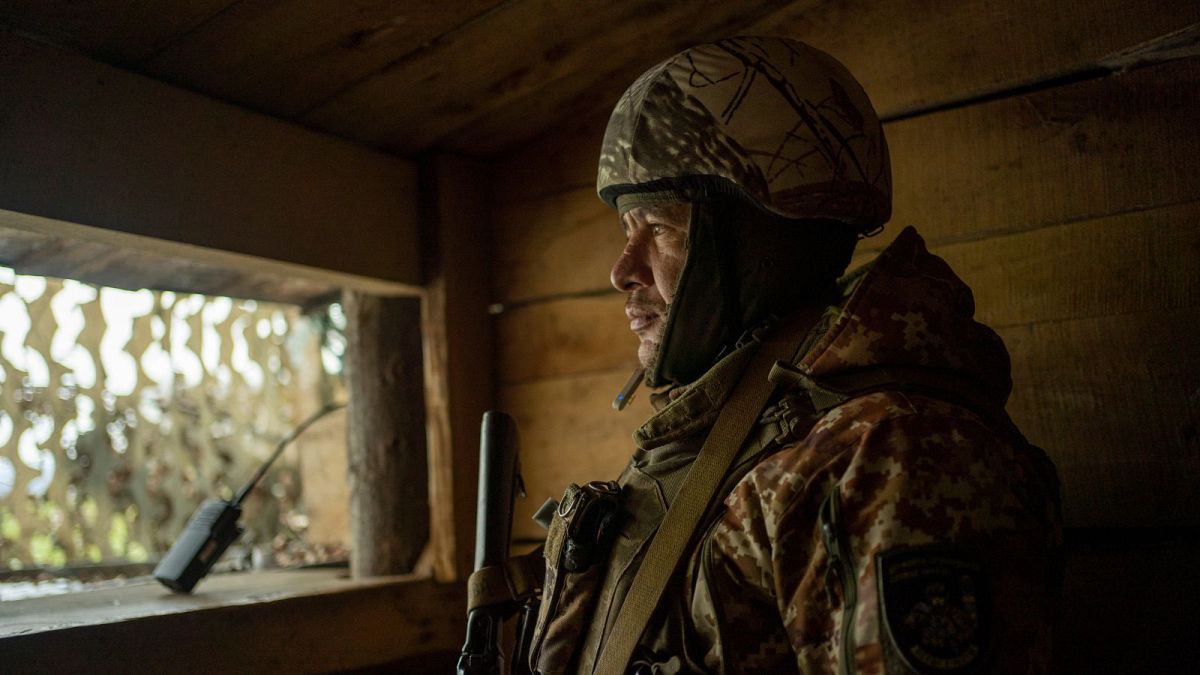
Source: euronews
As for the Huliaipole bridgehead, which Russian forces are attempting to establish along the Haichur River on the R-85 highway from Huliaipole to Pokrovske, this is a long-term bridgehead intended to form the basis for a future offensive against Zaporizhzhia. That is why maximum effort is being applied to create conditions both for a future offensive and for establishing positions from which Zaporizhzhia can be subjected to constant artillery, missile, and drone strikes, including FPV drones.
I would also note that the Russian command currently has the task of reaching the Slovyansk–Kramatorsk agglomeration from the former Siversk direction, that is, from east to west along the Siverskyi Donets River. This includes both the Lyman direction and the former Siversk direction. Pressure in this sector involves the 3rd Combined Arms Army, as well as the 25th and 20th Combined Arms Armies, effectively stretching from the former Siversk direction to Lyman.
Over the past week, there have been cases in which Russian raiding groups entered gray zones along the border with Ukraine and entrenched themselves in forested areas or abandoned villages located just 50–100 meters from the border. These settlements are completely destroyed and lie within gray zones, meaning there is virtually no control over them. Through such raids and entrenchments, the Russian command appears to be attempting to divert Ukrainian attention from more critical directions and disperse Ukrainian resources. At the same time, strikes are being carried out against Ukraine’s rear infrastructure, including energy facilities.
Overall, it cannot be said that Russian forces have achieved any significant results or major breakthroughs either over the past week or throughout January. In fact, both the intensity of their offensive actions and the amount of territory seized have declined. At the same time, their losses have not decreased and remain comparable to weekly and monthly figures recorded, for example, in 2025.
In other words, they are capturing less territory while continuing to expend manpower and suffer losses similar to those incurred during the active offensives of summer 2025 or the autumn period.
– Can it be said that the strategic initiative currently belongs to one of the sides? If so, in whose favor is the balance shifting, and why?
– At present, there is no strategic initiative on either side. Ukraine is holding purely defensive positions and has been doing so for quite some time, with its primary objective being the exhaustion of the enemy.
The enemy has been under strain since October 2023, when Russian forces launched their offensive campaign that set in motion everything that followed. Over this period, Russian forces have degraded from advancing with tank and armored columns to advancing almost exclusively with infantry, in small tactical groups composed solely of foot soldiers. While this strategy can work tactically, at this stage it does not allow for counteroffensive operations.
At the same time, the enemy is unable to achieve not only a strategic breakthrough but even operational or operational-tactical success. Most of their actions are limited to tactical attempts to seize forest belts, individual fields, or small villages of 10–15 houses that were destroyed by artillery long ago and effectively wiped off the map. They are limited to such actions.
![Russia's war on Ukraine six months on [What Think Tanks are thinking] | Epthinktank | European Parliament](https://i0.wp.com/epthinktank.eu/wp-content/uploads/2022/09/EPRS_BRIE_TT_733632_War_Ukraine_six_months_on_final.png?fit=1000%2C666&ssl=1)
Source: Reuters
As soon as Russian units enter large cities or major settlements, they immediately become bogged down. We can observe this clearly today. They are stalled in almost all the cities they entered last year, where urban fighting began, suffering heavy losses without making serious advances. This applies to Pokrovsk, Myrnohrad, Vovchansk, where fighting has continued for two years, and Chasiv Yar, where fighting has likewise dragged on for two years.
A separate case is, of course, Kupyansk, which the Russian General Staff has announced as captured six times, while in reality the situation is the opposite. Kupiansk remains under Ukrainian control, and Russian units that ended up on the right bank of the city are effectively encircled and isolated. Overall, this is a particularly embarrassing chapter for the Russian General Staff.
– How do you assess the current situation with arms and ammunition supplies to Ukraine? Are they sufficient to maintain the combat capability of the Armed Forces of Ukraine at this stage of the war?
– Ukraine’s defense forces would, of course, like supplies to be significantly larger and delivered much faster. However, Ukraine’s military-industrial complex has developed so rapidly that, to a certain extent, even some deficit items, such as ammunition and certain types of equipment other than heavy armor, can now be produced domestically. Excluding heavy armored vehicles like tanks, we are largely capable of supplying ourselves.
That said, this is still insufficient to create conditions for counteroffensive operations. It is adequate only for defensive tasks. Without Western support for counteroffensive operations, we simply cannot cope on our own at the current stage of development of our defense industry.
Under conditions of strategic defense, the main emphasis is on long-range strike capabilities, such as FPV drones and similar systems, other aerial strike platforms, and unmanned ground vehicles capable of delivering fire with small arms or other weapons. From a defensive standpoint, the situation can therefore be described as relatively manageable.
Source: CSIS
However, when it comes to protecting Ukraine’s rear areas, many serious concerns remain. Russia continues its strategy of energy terror against Ukraine and, frankly, genocide against the Ukrainian population. Strikes on energy infrastructure, especially in winter, when temperatures drop to minus 20–25 degrees Celsius, should be classified at the international level as acts of genocide.
To defend against these attacks, support in air defense systems is absolutely critical. Yet partners are not supplying sufficient quantities of ammunition even for the air defense systems Ukraine already possesses. The core problem in cooperation with partners is the lack of a full and adequate stock of air defense munitions. This remains the primary grievance.
One can speak at length about supplying Ukraine with Tomahawk missiles or other strike systems, but air defense systems play a far more critical role today in protecting civilians from nightly attacks by kamikaze drones such as Shahed-136, BM-35 Tolmaz, and various missile systems, including ballistic, cruise, and aeroballistic missiles. Ukraine does not have the capacity to produce interceptors for systems such as Patriot or comparable SAMs. In this regard, all hope rests with our partners.
– Do political debates and domestic political developments in Western countries affect the pace and volume of military assistance to Kyiv? How critical has this factor become?
– It can certainly be said that political dynamics differ significantly from the realities on the battlefield. Domestic political debates in Western countries do affect the pace and volume of military assistance to Ukraine. At this stage, the impact is partial, but there is concern that it may grow more significant.
Initially, problems arose with Hungary and Viktor Orbán, who is widely perceived in Ukraine as a proxy for Moscow within the European Union. His actions have severely damaged trust, not only in Ukraine but historically as well. Similar concerns have emerged with Robert Fico in Slovakia, who returned to power on populist slogans.
We also see internal political processes in the Czech Republic that complicate decision-making, despite the fact that Czech President Petr Pavel spearheaded the ammunition initiative for Ukraine, delivering one million rounds at a time when the pro-Trump wing of the U.S. Congress in 2023 was blocking aid to Ukraine, Israel, and Taiwan for domestic political reasons.

Source: ABC News
Thus, domestic political developments do affect Ukraine’s ability not only to defend itself but also to reclaim territory. As a result, the war is taking on a long-term character. Ukraine’s key objective is the exhaustion of the enemy to a level at which counteroffensive operations can be conducted without full reliance on Western support.
Western assistance remains extremely valuable and would significantly accelerate progress on the battlefield and save lives. However, realistically, Ukraine must reach a point where the enemy is incapable of attacking or defending effectively, even without continuous external support. This is not a near-term prospect.
– Which key military and political variables could decisively affect the situation at the front in the coming months?
– At present, there are no political changes likely to affect the situation on the front, except for a change in leadership in certain countries, namely the Russian Federation, the United States, or Ukraine. Beyond that, nothing appears capable of significantly altering the situation in the near term.
Technological factors also matter. For example, Russian forces were weakened after the shutdown of gray-market Starlink terminals smuggled in from other countries. Still, overall, I do not see any imminent political developments that could seriously influence the front.
In my view, the diplomatic arena exists largely separate from the reality of the battlefield. It influences public opinion and creates information waves, but most diplomatic efforts and political statements amount to distractions and rhetoric that have little to no impact on combat operations or Russia’s terror against Ukraine’s rear. I do not see this changing in the near future.


Similar news