An attempt to split BRICS: Why Merz is betting on India


Editor’s note: Alexander Rahr is a German political scientist and chairman of the Eurasian Society (Berlin). The views expressed in this article are those of the author and do not necessarily reflect the position of News.Az.
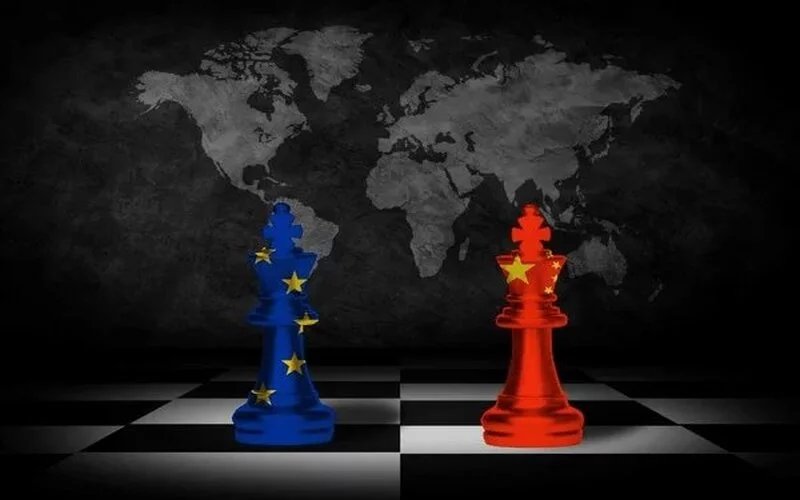
The German newspaper Die Welt reports that Chancellor Friedrich Merz is expected to make his first official visit to India in 2026. The planned trip reflects a broader political ambition: Merz is increasingly positioning himself as Europe’s leading advocate of "breaking" Russia’s ties with other BRICS countries. The strategic logic behind Berlin’s approach has become clearer in recent months. After failing to loosen China’s strategic partnership with Moscow, German policymakers are now redirecting their attention toward India — the second major pillar of the non-Western world, with vast economic and demographic potential.
In this context, Germany seeks not only to erode Moscow’s international standing but also to draw India into a newly emerging architecture of European foreign and trade policy in Asia. Merz is betting that Germany’s economic and technological appeal, combined with privileged access to the European market, could gradually influence New Delhi’s foreign policy orientation.
However, Berlin appears to be underestimating the depth and durability of Russian-Indian relations, which have been forged over decades and have endured more than one global crisis. These ties date back to the Cold War, when Moscow was not merely a partner for New Delhi but a key supplier of arms, technologies and political backing during periods of regional conflict and international pressure. They are not reducible to short-term expediency or situational deals; rather, they are embedded in the strategic thinking of India’s elites.

Source: Reuters
Equally significant is India’s position on Russia’s war in Ukraine. New Delhi has consistently refrained from directly condemning Moscow, stressing that the conflict has complex roots and that the West also bears part of the responsibility for its escalation. This stance reflects a core principle of Indian foreign policy: strategic autonomy and a refusal to align rigidly with global blocs.
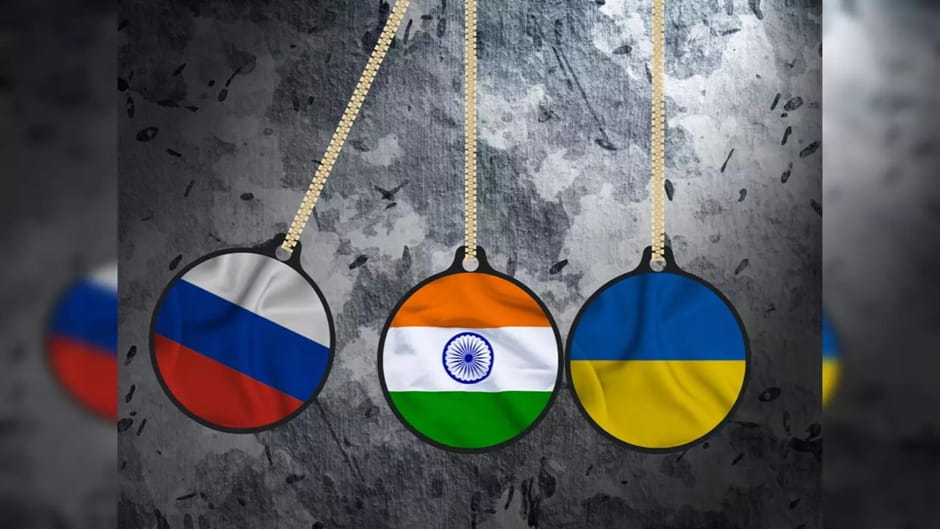
It is at this point that Merz’s calculations collide with reality. In contacts with Berlin, Prime Minister Narendra Modi has made it clear, albeit in the characteristically measured language of diplomacy, that India is open to exploring new formats of economic and military-technical cooperation with Germany, including arms purchases and joint projects. But this openness does not signal a revision of India’s fundamental foreign policy course. New Delhi has no intention of abandoning its multi-vector strategy or the principle of “being friends with everyone.” For India, diversification of partnerships is not a geopolitical instrument directed against any single country, but a way to reduce risks and increase resilience in a fragmented global order.
Source: natstrat
From this perspective, Germany is a potentially attractive, but by no means exclusive, partner. Russia, the BRICS countries, the Gulf states, the United States and the European Union are all viewed as components of a single, flexible system of external relations.
The military dimension that Berlin is highlighting also deserves close attention. Germany’s defense-industrial complex does possess a strong technological base, but in recent years it has faced serious challenges — from underfunding to limited production capacity. A large-scale ramp-up of arms production and a move toward levels comparable to those of India’s traditional suppliers will take time — measured not in months, but in years, if not a full decade.
For India, however, time is a critical factor. Its defense requirements are growing now, amid tensions with China, instability in the Indian Ocean region and the need to modernize its armed forces. Under these conditions, New Delhi is unlikely to pin its security strategy on the future potential of the German defense industry while sidelining proven and already functioning channels of cooperation.
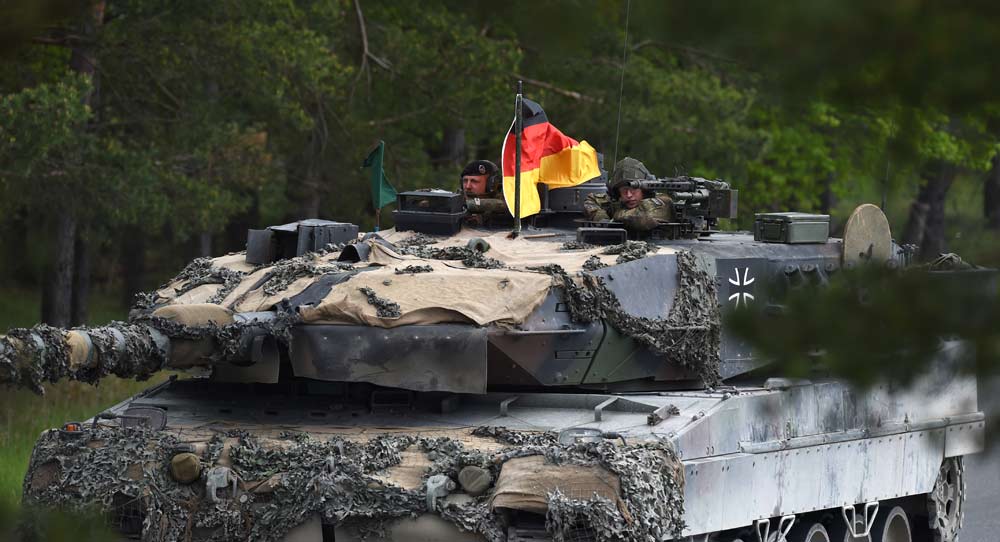
Source: The Deutsche Welle
As a result, Merz’s attempt to use India as an instrument to isolate Russia appears more like a political gesture than a realistic strategy. Germany may well strengthen its presence in the Indian market, expand economic and technological ties and even displace Russia in certain niches. But expecting India to revise the foundations of its foreign policy and sever its historical ties with Moscow would be a clear overestimation of European diplomatic leverage.
Ultimately, India remains guided by its own logic: avoiding rigid alliances, refusing to join anti-Russian or anti-Chinese coalitions and preserving freedom of maneuver. In this sense, Merz’s initiative merely highlights a simple reality — the world is no longer unipolar, and even Europe’s largest economies must now adapt to rules shaped by new centers of power.
(If you possess specialized knowledge and wish to contribute, please reach out to us at opinions@news.az).


Similar news