Armenia conducts military drills with Iran amid Trump's statements: A challenge to Azerbaijan or the US?


By Tural Heybatov
By holding joint military drills with Iran, Armenia may believe it's demonstrating regional strength — but in reality, it’s playing a dangerous game that risks alienating allies and angering powers far beyond its borders.
Earlier this week, Armenian and Iranian special forces concluded two days of joint exercises near Norduz, on the symbolic border between Armenia and Azerbaijan’s Nakhchivan Autonomous Republic. Grandly titled the “Peace Exercises,” the drills featured the use of light and heavy weapons, sniper operations, demolition work, and combat support. The stated goal: to bolster border security and counter terrorism.
Leading the drills was Brigadier General Valiollah Mani, Deputy Commander of the IRGC Ground Forces, who claimed that Iran’s priority is respect for the territorial integrity of all neighboring countries. But there’s little doubt these maneuvers were intended to send a message — and not just to terrorists.
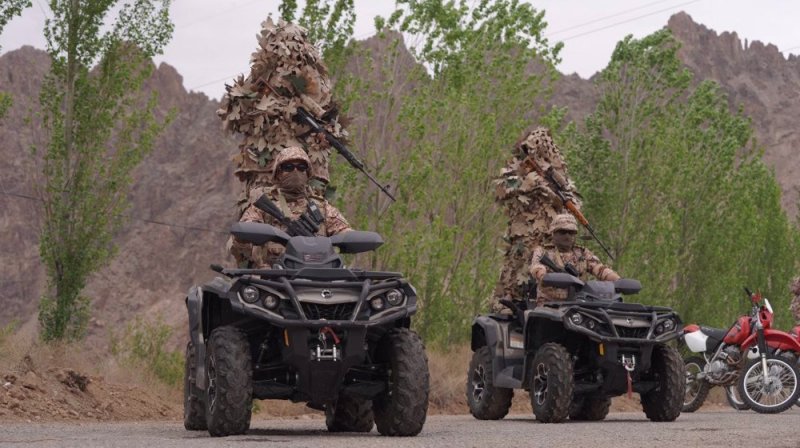
Unsurprisingly, Armenian analysts were quick to celebrate the drills as a message to Baku — and even to Washington. They see Iran’s participation as proof that Armenia enjoys the backing of a powerful regional ally. But that interpretation is naïve at best and reckless at worst.
What exactly do they mean by “military presence”? Unless Iranian troops have been quietly deployed to Armenian territory — something officials in Yerevan have never acknowledged — the claim is little more than political theater. And if Iran is now maintaining a military footprint inside Armenia, that’s not a point of pride — it’s a potential international scandal.
Armenia’s enthusiasm comes at a remarkably tone-deaf moment. On April 9, the U.S. Treasury announced new sanctions targeting individuals involved in Iran’s nuclear program. On April 12, U.S. and Iranian officials are scheduled to meet in Oman for indirect talks over Iran’s nuclear ambitions. These developments follow a warning from former President Donald Trump that the U.S. “will not allow Iran to have nuclear weapons” and is prepared to use military force if needed.

Source: Reuters / Iranian armed forces members march during the annual military parade in Tehran, Iran
This is the context in which Armenia has chosen to “flex” its muscles with Iran.
The drills come amid growing tensions between Armenia and the United States — a country with whom Yerevan has repeatedly sought stronger ties. And yet, instead of staying neutral, Armenia has chosen to align itself with Iran just as Washington is escalating pressure on Tehran. Whether this was a deliberate provocation or just poor judgment is unclear. Either way, it’s a geopolitical misfire.
Let’s be clear: Iran doesn’t view Armenia as an ally. It sees it as a tool — a pawn on a much larger chessboard. Tehran isn’t conducting these drills to protect Armenian interests; it’s doing so to protect its own. And it certainly isn’t trying to intimidate the U.S. by partnering with Yerevan. In fact, for Washington, Armenia is barely on the radar. If it garners any attention, it’s usually for getting in the way — not for contributing anything meaningful to regional security.
Tehran, for its part, likely has its own reasons for engaging in these drills — reasons that have little to do with defending Armenian sovereignty. Yet Armenia seems eager to interpret them as a show of loyalty. That’s a dangerous delusion. Iran is not going to war on Armenia’s behalf. Not when Azerbaijan is backed by some of the most capable and influential regional actors. And certainly not when Iran is facing the real possibility of direct confrontation with the United States.
But critical thinking has never been Yerevan’s strong suit. Instead of staying clear of escalating tensions, Armenia inserted itself right into the middle of a high-stakes diplomatic showdown. These drills weren’t just ill-timed — they were politically irrational.

Source: Al Arabiya
Some in Yerevan might argue this is just standard military cooperation between two sovereign nations. But sovereignty doesn’t operate in a vacuum. Armenia’s foreign policy decisions have always been shaped — and limited — by external pressures. Now, under the guise of exercising sovereignty, it has chosen the worst possible time to provoke both Azerbaijan and the United States.
International politics is not a game of symbols or sentiment. It’s about cold calculation and strategic balance. Armenia has once again miscalculated — badly. And with Trump back in the White House, Washington is no longer in the mood for patience. After the April 12 talks in Oman, Iran, too, may decide it has more pressing concerns than entertaining Armenia’s geopolitical fantasies.


Similar news