Austerity: Turkey comes up with new economic plan - Expert opinions from Ankara


By Bakhtiyar Mammadov
A few days ago, Turkey announced the "State Savings and Efficiency Package". According to Bloomberght , this package was introduced at a joint press conference held by Treasury and Finance Minister Mehmet Şimşek and Vice President Cevdet Yılmaz.
Mehmet Şimşek stated that, except for emergencies, no new state investment projects would be implemented, and vehicle purchases and rentals would be halted for three years. Vice President Cevdet Yılmaz added, "Increasing state savings and efficiency will reduce the budget deficit, lower public borrowing, decrease the interest burden, increase our macro savings rate, and reduce the current account deficit".
The key provisions of the package have sparked heated debates in the country. Under the programme, no new vehicles will be purchased or rented for three years, while the use of foreign vehicles will be prohibited, except for authorized entities and individuals, and vehicles that have completed their service life will be decommissioned. At the same time, personal transport services for personnel for whom public transport is available, excluding defence and security, will be removed.
The programme also provides for the suspension of the purchase and construction of new service buildings for three years, except in earthquake risk areas, and the development of flexible and remote working models in the public sector. Training programmes will be implemented only in public facilities, not hotels, while temporary overseas assignments will be restricted.
Under the programme, the use of renewable energy will secure savings. At the same time, penalty mechanisms will be enforced if violations of the State Savings and Efficiency Package are detected.
We sought the opinion of Turkish economist-expert Neşat Gündoğdu on the new savings and efficiency package.
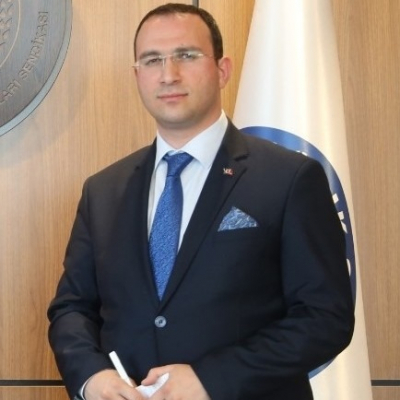
"Following the coup attempt in 2016, trust in Turkey experienced challenges. The transition to a presidential system, with its oversight dynamics, raised concerns. This situation, along with other issues, led to the withdrawal of dollars and funds from Turkey and affected relations with the United States," the expert said.
"During the pandemic, Turkey's reserves of over $130 billion and more than $20 billion in gold reserves were depleted, impacting the Turkish currency. In response, Turkey lowered interest rates and injected large sums into the markets, aiming for stability but facing economic challenges," he added.
He also noted that since May 2023, efforts have been underway to improve the economy. "While progress has been made, the economic situation remains difficult. Negative currency reserves have been reduced from $78 billion to $38 billion, but the real interest rate remains negative. However, it is expected that once energy costs normalize and inflation rates drop, the real interest rate will improve, leading to a potential inflow of foreign currency," he said.
"Discussions on state savings to support monetary policy have been ongoing for a year. However, local elections in March delayed some measures. The reduction in state purchases and economic participation has an anticipated impact, and a potential crisis during the summer is expected. There will likely be a contraction, and economic challenges may arise.
Some companies may face bankruptcy, leading to unemployment and economic contraction. Rising interest rates mean paying interest abroad, and to regain lost currency, positive real interest rates will be necessary. However, Turkey faces budget constraints in meeting these high-interest rates. Increasing state savings is essential to manage the interest rates of incoming foreign currency.
Maintaining an interest rate of around 8-10% could attract investors to Turkey. However, the negative reserve of $38 billion needs to be addressed, and reserves need to be rebuilt to stabilize the economy. Once this is achieved, interest rates can be gradually lowered to support market growth.
From a microeconomic perspective, the next three years may see a recession and unemployment. Solutions are needed to address these challenges, and a portion of the savings will be directed towards interest payments and aid programmes," the expert noted, adding that the specific details of the restrictions and which company tenders will be affected remain unclear and further clarification is needed on how resources will be allocated to beneficial investments.
According to investigative journalist Muhammet Kutlu, Ankara news editor of Yeni Akit newspaper, the root of the problem lies in the uncontrolled bureaucracy:

"A bureaucratic issue has emerged in Turkey, where some officials operate with significant autonomy. Those who view their positions as permanent can spend substantial amounts of money during their tenure, causing public concern," the expert noted.
"The Cumhur Alliance faced challenges in local elections due to high living costs. Recently, state expenditures have led to public dissatisfaction. There have been instances of unnecessary renting of large buildings, construction of additional buildings, and new headquarters for ministries. Significant sums have been spent, turning Turkey into a major market for Germany's automobile industry, with officials frequently using the latest models of cars. This system has put a strain on Turkey's resources, resulting in public reaction," he said.
"Budget oversight has been limited because annual budgets are predetermined, discussed in parliament, and approved. For instance, a ministry-affiliated institution might receive 10 billion liras but only spends 7 billion on operations. To avoid returning the remaining funds, it renews vehicles and conducts maintenance work, leading to unnecessary expenditures. This practice has become a tradition," the expert added.
"The government's recent decision aims to address public concerns and serve as a warning to the bureaucracy. Alongside the warning, various penalties will be imposed, likely leading to the dismissal of non-compliant officials. These warnings were made public to ensure compliance, and there is a belief that these measures are widely supported," the expert said, adding that the decision will be in effect for three years.
"If positive results are achieved during this period, such savings measures could become long-term and impact all sectors," Kutlu pointed out.
He also said Turkey's exports this year are projected to be $260 billion, with an annual income of $45-50 billion from tourism, resulting in over $300 billion in foreign currency inflow. This is a substantial amount. "Turkey has a well-established industry, ranking among the top three in Europe, with significant income and exports. However, due to the actions of some in the bureaucracy who spend without regard for state and national interests, Turkey has been spending like a wealthier nation. Until now, living within its means has been a challenge. Hopefully, these measures will help Turkey adopt more sustainable financial practices," he conclude.


Similar news