Beijing launches ‘offensive’ against Trump


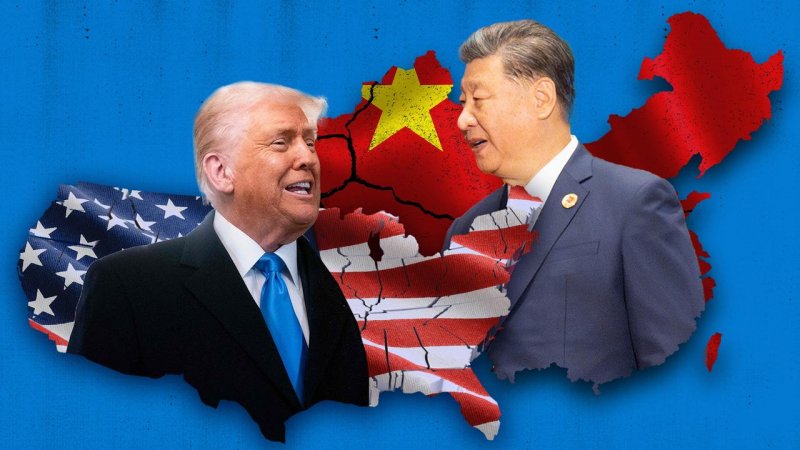
Relations between the United States and China after Donald Trump came to the White House took on the character of a bargain, and this has already become obvious to everyone. At first, many believed that Trump was determined to push the Chinese into a distant corner so that they would not step on America’s heels, and that he had the necessary resources to do so.
However, it soon became clear that the opponents were on equal footing, and in some sense Beijing’s position was even stronger, since China has always focused only on itself. Unlike the United States, which is used to pulling the strings of the whole world, those strings are slipping out of Washington’s hands one by one under the new geopolitical conditions. Trump cannot handle one task, jumps to another, loses control there as well, and then takes on a third.
Beijing watches all this calmly. Involved in the whirlpool of today’s chaotic world politics — where economic pressure alone is not enough — Trump was distracted from China for a time. First, he needs to deal with weaker and more dependent opponents to secure his rear. But Beijing is not merely waiting; it is moving into the offensive.
Source: Equitablegrowth
Xi Jinping is demanding from Trump a statement rejecting Taiwan’s independence as a condition for concluding a trade deal between the two countries, reports The Wall Street Journal, citing government sources. According to the publication, Xi Jinping wants to obtain from Trump an official declaration of opposition to Taiwan’s independence and plans to use the trade talks with America as leverage against the U.S. president. Beijing needs Washington not merely to refrain from support but to declare its position officially. This is the main and only condition for continuing trade agreement negotiations, which may take place at the APEC summit in South Korea.
Although the U.S. has recognized the “One China” principle, the Taiwan card is put on the table every time Washington feels the need to pressure Beijing. Despite not maintaining official relations with Taipei since 1979, after the UN recognized a unified China, the United States has continued to provide military assistance to the island.
Recall that in 1949, after the Kuomintang lost the civil war to the Chinese Communist Party, Chiang Kai-shek’s supporters fled to Taiwan. Business and informal relations between Taiwan and Beijing resumed in the late 1980s. From the early 1990s, relations warmed further. But in 2022, U.S. House Speaker Nancy Pelosi visited the island. This reignited tensions and brought Taiwan back into Washington’s anti-China toolkit. Still, as the media remind us, while Biden directly stated that the U.S. would defend Taiwan in the event of Chinese military aggression, such statements were almost always softened by the State Department. Donald Trump, meanwhile, makes no direct threats. However, his incoming national security adviser, Mike Waltz, said in January that the new White House administration plans to increase arms supplies to Taiwan and turn the island into a “porcupine.” After his September 19 conversation with Xi Jinping, Trump wrote on Truth Social that he plans to visit China next year.

Source: Getty Images
At the same time, Washington does not hide its desire to keep the Taiwan card to play against Beijing. Thus, U.S. Deputy Defense Secretary for Policy Elbridge Colby earlier stated that losing Taiwan would be catastrophic for American interests. Trump himself, however, seems to take a different approach. On September 19, The Washington Post reported on the suspension of another $400 million arms shipment to Taiwan. Instead, Taipei was allegedly offered to purchase weapons directly from American companies under commercial contracts. True, this may not be about warming ties with Beijing but rather about Trump’s demands that Taipei increase its defense spending. Notably, as of August 1, 20% tariffs were imposed on Taiwan. In addition, Trump previously accused the island of having “stolen” America’s status as the world’s leading microchip producer.
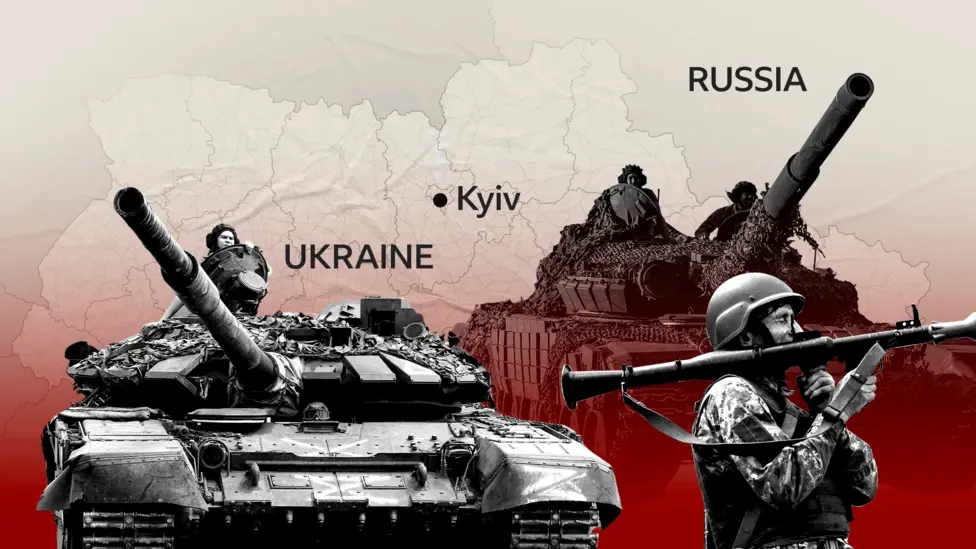
Overall, during Trump’s first term, U.S. military aid to Taiwan was greater than at any point in recent decades and exceeded the volumes under Biden — $18.3 billion compared to $8.4 billion. It is worth noting that Biden’s presidency coincided with the beginning of the war in Ukraine.
Source: BBC
Recently, the U.S. “embassy” in Taipei declared that the 1943 Cairo Declaration and the 1945 Potsdam Declaration did not determine the “final political status” of Taiwan. As Vedomosti writes, the Allies intended after the war to return Formosa (as the island was then called) to the Republic of China, which was under Kuomintang control. According to American institutions, the San Francisco Peace Treaty of 1951 is more significant, as it deprived Japan of rights to Taiwan but did not clearly define the island’s status.
On September 25, Chinese Defense Ministry spokesperson Zhang Xiaogang, according to Xinhua, opposed the words of U.S. representatives from the de facto embassy in Taiwan (formally, the American Institute in Taiwan, a nonprofit). Zhang emphasized that Taiwan’s return to China must be considered an “integral part of the results of victory in World War II and the post-war international order.”
According to experts, Beijing–Washington relations are currently uncertain. This uncertainty may carry risks, but it also provides opportunities for maneuver and for raising relations to a level that would avoid shaking the world with the confrontation of two leading powers. Hopes for a mutually beneficial outcome still remain.
By Tural Heybatov


Similar news