Cautious optimism marks latest round of US-Iran talks


.jpg)
Editor's note: Nijat Babayev is an Azerbaijan-based journalist. The article expresses the author's personal opinion and may not coincide with the view of News.Az.
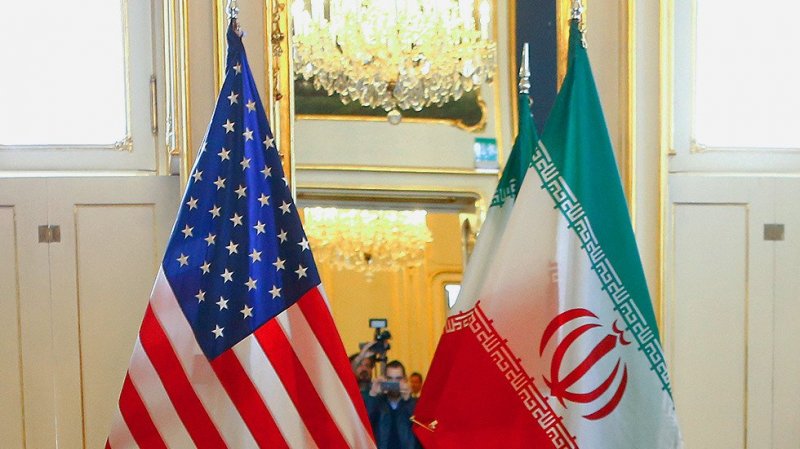
A second round of indirect negotiations between U.S. and Iranian officials over Tehran’s nuclear program wrapped up in Rome on April 19, signaling cautious hope for diplomatic progress.
The discussions followed the first round held the previous week in Muscat, Oman. While the latest talks took place in Italy, Oman once again played a mediating role. The U.S. delegation was led by Special Envoy Steve Witkoff, while Iranian Foreign Minister Abbas Araghchi headed his country's team.
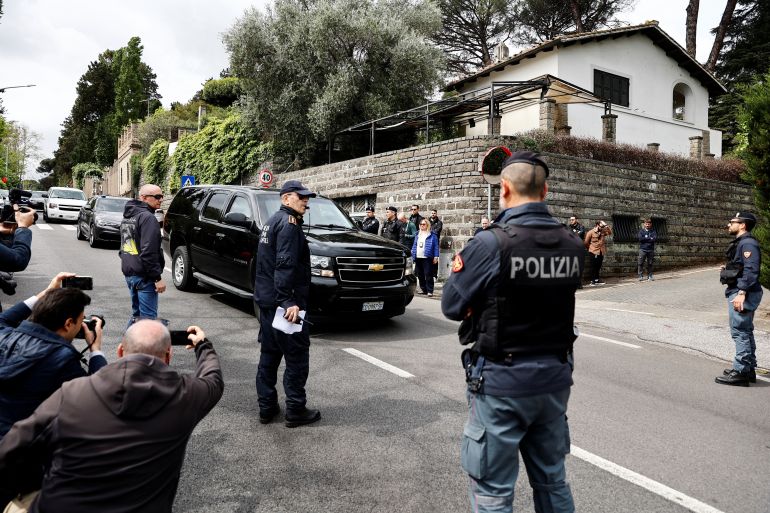 Police officers watch as a diplomatic vehicle arrives at the Omani embassy in Rome (Photo: Vincenzo Livieri/Reuters)
The top Iranian diplomat described the Rome talks as ‘constructive and promising’.
“Today's meeting was a good and promising meeting. This time we were able to reach a better understanding on a number of principles and goals. The talks will continue and expert meetings will begin,” Araghchi said.
For its part, the Trump administration expressed optimism following the talks, pointing to very good progress and that they had agreed to meet again next week.
Iran also expressed a willingness to accept limited restrictions on its nuclear activities in exchange for the lifting of international sanctions. However, key issues remain unresolved, particularly concerning uranium enrichment limits, ballistic missile oversight, and the sequencing of sanctions relief. The upcoming meetings, scheduled for April 26, 2025, in Muscat, Oman, will involve top negotiators assessing expert contributions and measuring alignment with the principles of a potential agreement.
IAEA’s potential involvement in Tehran-Washington talks
Tehran stated that it is too early for the International Atomic Energy Agency (IAEA) to join talks with Washington.
“The IAEA will eventually play a constructive role in resolving the crisis over Iran's nuclear program. However, it is premature for the agency to participate in ongoing negotiations with the US at this stage,” Araghchi stated.
He also emphasized that Iran continues to grant the IAEA access to nuclear sites, reaffirming that the organization holds full responsibility for monitoring and verification efforts.
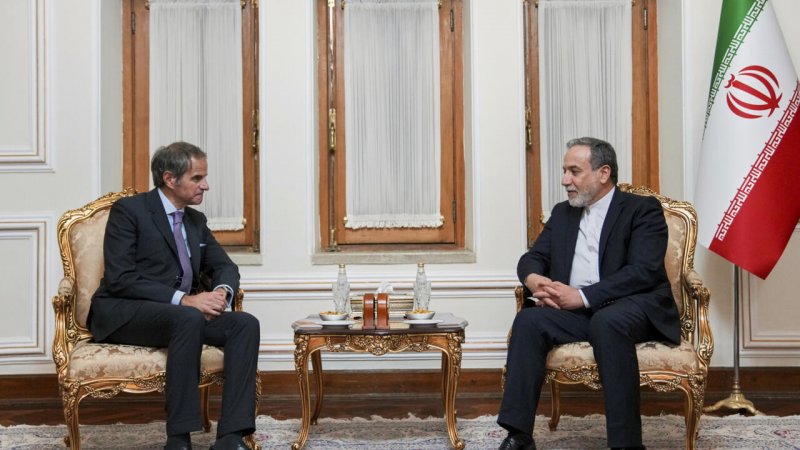 In this photo released by the Iranian Foreign Ministry, Foreign Minister Abbas Araghchi, right, speaks with International Atomic Energy Agency (IAEA) Director General Rafael Mariano Grossi during their meeting in Tehran, Iran, Wednesday, April 16, 2025.
Iran accuses Israel of trying to undermine talks with US
On April 21, Iran accused Israel of attempting to undermine its ongoing nuclear negotiations with the US.
“A kind of coalition is forming… to undermine and disrupt the diplomatic process,” Iranian foreign ministry spokesman Esmail Baqaei said, stressing that Israel was behind the effort.
“Alongside it are a series of warmongering currents in the US and figures from different factions,” the spokesman stated.
Prime Minister Benjamin Netanyahu has long insisted that Israel will not allow Iran to possess nuclear weapons, and has been vocally opposed to any talks that don’t lead Iran to agree to a “a Libya-style agreement,” under which Tehran’s entire nuclear program, both military and civilian, would be dismantled completely. However, this position does not appear to align with that of the US administration.
Israel has not made any official statements on its position on the US-Iran talks, but if the talks don’t fall apart on their own, it may look to more hawkish US officials like National Security Adviser Mike Waltz Waltz and Secretary of State Marco Rubio to push Trump to use the leverage he has created to compel Iran into a far stricter deal than it wants.
A few days ago, Araghchi announced his country’s intention to add another 19 nuclear reactors to the one operating at the Bushehr Nuclear Power Plant (NPP).
"Iran currently operates one reactor at the Bushehr Nuclear Power Plant. Our longstanding game plan is to build at least 19 more reactors, meaning that tens of billions of dollars in potential contracts are up for grabs," he pointed out.
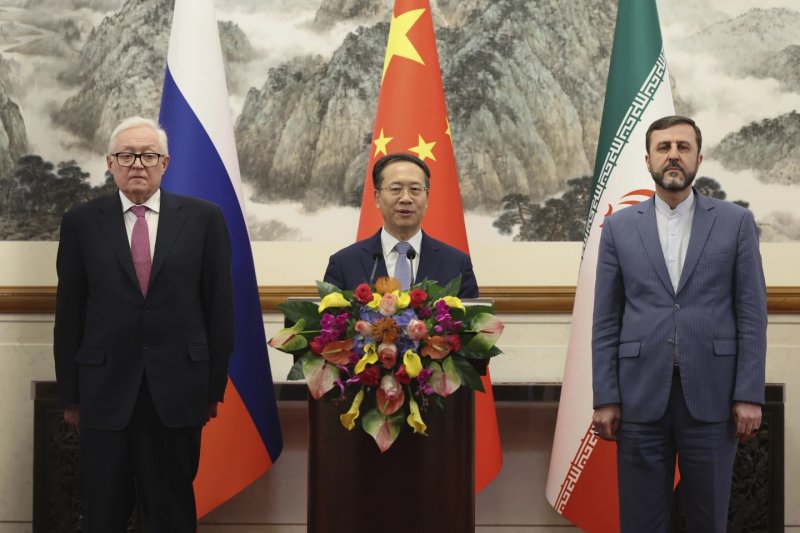 Chinese Foreign Minister Wang Yi stands with Russian Deputy Foreign Minister Sergey Ryabkov (left) and Iranian Deputy Foreign Minister Kazem Gharibabadi (right) before a meeting regarding the Iranian nuclear issue at Diaoyutai State Guest House in Beijing on March 14. (Photo: AP)
Iran’s commitment to expanding nuclear talks with China and Russia
On April 21, the Iranian foreign minister affirmed his country’s commitment to further expanding the trilateral nuclear talks with China and Russia.
Aragchi stated: “We have started trilateral talks between Iran, Russia, and China on the issue of Iran’s nuclear program for some time now. “We are ready to continue these talks and expand them to other issues.”
On March 14, senior diplomats from China, Iran and Russia held the first round of trilateral talks in Beijing, reinforcing collaborative efforts to address challenges surrounding Tehran’s nuclear program and counter Western pressure. The talks were resumed in Moscow on April 8, during which the three nations reportedly agreed to end unilateral sanctions, support peaceful nuclear development, and favor dialogue over intervention.
Earlier, Kremlin spokesman Dmitry Peskov reaffirmed Russia’s support for the upcoming US-Iran talks in saying: “Russia absolutely supports the initiative. This can only be welcomed, as it could lead to a de-escalation of tensions around Iran.”
China, meanwhile, issued pointed criticism of the United States. “As the country that unilaterally withdrew from the comprehensive agreement on the Iran nuclear issue and caused the current situation, the United States should demonstrate political sincerity and mutual respect,” stated Chinese Foreign Ministry spokesman Lin Jian.
Conclusion: Cautious hope emerges as US and Iran edge closer through dialogue
As indirect talks between the US and Iran inch forward, the tone of cautious optimism reflects both the progress achieved and the obstacles that lie ahead.
The willingness of both sides to engage in back-to-back rounds of diplomacy, alongside parallel discussions with China and Russia, marks a notable shift from past stalemates. Yet, the path to a sustainable agreement remains precarious. Key issues like uranium enrichment, missile oversight, and the sequencing of sanctions relief could still derail talks. Still, the fact that dialogue continues at all is a testament to the enduring value of diplomacy—even when hope is cautious, and progress incremental.
(If you possess specialized knowledge and wish to contribute, please reach out to us at opinions@news.az).


Similar news