Disappearing islands: How climate change reshapes our world


By Asif Aydinli
Climate change today is not an abstract issue but a reality impacting millions. Rising temperatures, melting glaciers, and the increase in global sea levels threaten not only an uptick in natural disasters but also the disappearance of entire land areas. Small islands, which face erosion, flooding, and permafrost melt, are among those at the highest risk. The story of Mesyatsev island in the Franz Josef Land archipelago is just one example of how rapid warming is reshaping Earth's landscape.Mesyatsev island: A vanished patch of land in the Arctic
Until recently, Mesyatsev island in the Arctic’s Franz Josef Land covered about 53 hectares. However, in just eight years, its area shrank to three hectares before it fully disappeared in September 2023. According to Alexei Kucheiko, an associate professor at Moscow Aviation Institute, the island had been closely monitored, with specialists noting its rapid decline due to glacier melt and rising temperatures. Now, this once-mapped island has vanished, replaced by Arctic waters.
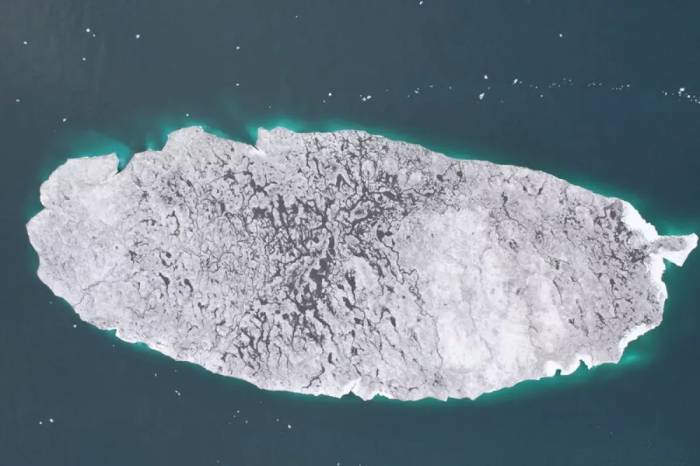
The example of Mesyatsev island is particularly significant as even in the coldest parts of the planet, glaciers can no longer withstand the accelerating climate changes. Melting ice exposes open water, which accelerates the breakdown of remaining ice islands. This leads to necessary adjustments to navigation maps, and shipping routes must be planned to adapt to new conditions.
Maldives: On the brink of disappearance
The Maldives, a nation of over 1,200 coral islands in the Indian Ocean, faces a constant threat of vanishing. The islands’ average height above sea level is only about one meter, making them highly vulnerable to rising waves and sea levels. The UN and international environmental organizations warn that by 2100, the Maldives could be entirely submerged if global warming isn’t slowed.
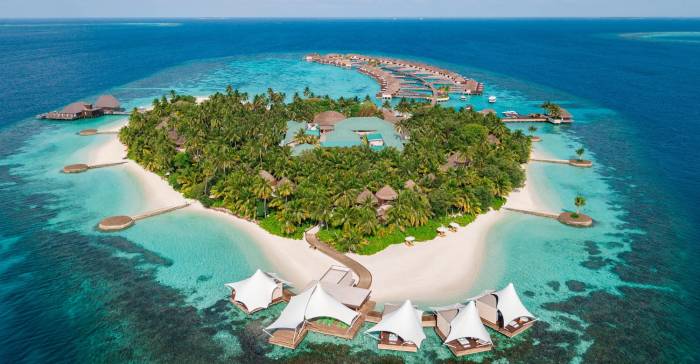
This scenario represents not only an environmental disaster but also a humanitarian crisis. Losing the nation means the loss of territories, cultural identity, and historical heritage. In response, the Maldives government is actively pursuing solutions, including resettlement programs and constructing sea barriers. Yet, these are temporary measures, whose efficacy may be limited if climate changes continue unabated.
Shishmaref, Alaska: Permafrost is no longer permanent
The northern settlement of Shishmaref in Alaska is one of the most notable "victims" of permafrost thaw. This Inuit village, situated on a barrier island, is losing stability as the permafrost that supports it crumbles under heat. For years, residents have battled shoreline erosion, but nature’s forces often outmatch their efforts.
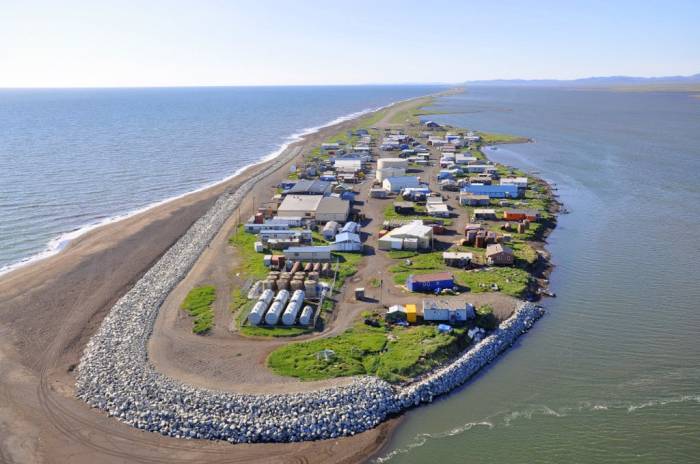
With reduced federal funds for relocation, Shishmaref may need international support to avoid moving to the mainland and abandoning their way of life. Such examples highlight the necessity for governments and regions to plan proactively for climate adaptation, as many northern communities are already at risk of vanishing.
Marshall islands: Fight for survival
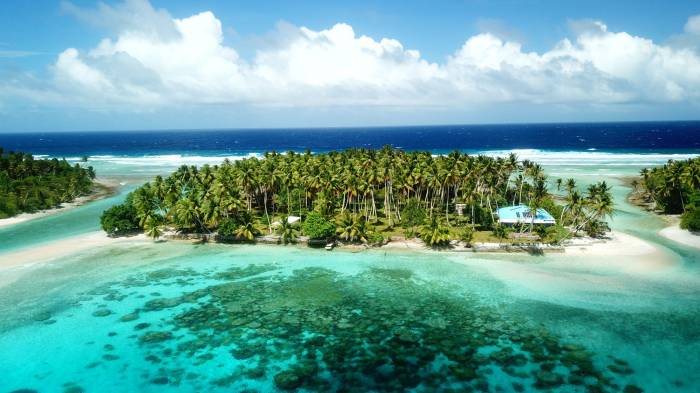
Located in the Pacific, the Marshall Islands face similar threats. Rising sea levels and increased storm activity lead to frequent flooding, damaging infrastructure and endangering lives. The Marshall Islands’ situation is a stark reminder that climate change has impacts globally—from the Arctic to the tropics. The government is implementing dike-building programs, but they are insufficient to protect all islands. Relocation may soon become inevitable, forcing thousands into migration.
Polynesia and the loss of cultural heritage
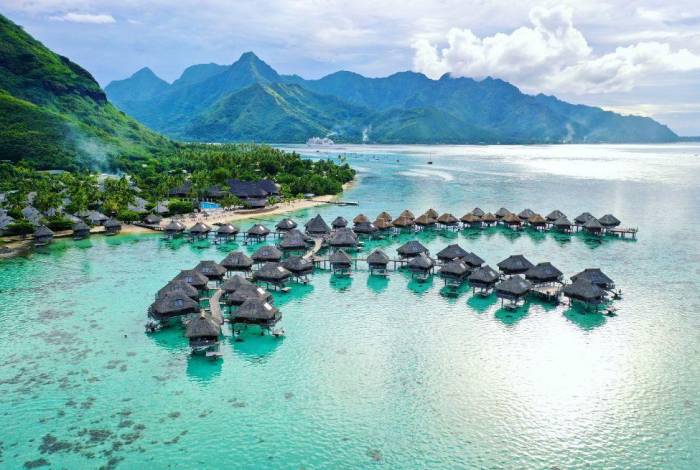
For the indigenous peoples of Polynesia, who have lived on the islands for centuries, rising sea levels pose both a physical and cultural catastrophe. The disappearance of islands threatens the loss of traditional territories and unique natural landscapes that are integral to their cultural identity. Polynesian tribes are already relocating in search of safer land, but they cannot bring along the legacy that has been tied to these islands for generations. This phenomenon serves as a warning to the world that island disappearance signifies not only a loss of land but also a loss of an entire cultural dimension.
Global consequences of island disappearance
The mass disappearance of islands has enormous repercussions not only for ecology but also for global politics and the economy. Nations losing their territories risk losing access to marine resources and underwater mineral reserves. The threat of submersion is prompting many states to alter policies and adopt measures to reduce carbon emissions. Furthermore, climate-driven shifts increase migration flows, creating challenges for the social and economic adaptation of displaced populations.
The climate crisis affects all layers of society, and its impact cannot be ignored. The loss of islands, along with many other natural wonders, highlights a global issue requiring urgent attention and a comprehensive approach. The actions taken today will shape the planet’s future and determine whether humanity can adapt to these changes or witness a massive loss of natural and cultural heritage.


Similar news