France's political games: Analyzing the Defferre law and the 1958 referendum



By Tural Heybatov
In his report , "The Evolution of French Colonialism: Political and Constitutional Analysis," international governance expert Carlyle Corbin takes a deep dive into how French policy towards its former colonies has evolved over time. She highlights how France's attempts to modernize its influence and promote democratic principles in its overseas territories often ended up tightening the grip of the metropole. Complex policies like the Defferre Law of 1956 and the 1958 referendum show that what appeared to be efforts at modernization were actually just new forms of neocolonialism, where the promise of autonomy and democratic rights hid a strategy to keep control. This article, building on Corbin’s insights, explores France’s strategy of "modernizing dependency" and its impact on African colonies and other overseas territories.From the mid-20th century, France made several moves to "modernize" its relationships with former colonies, trying to adjust its influence to the new realities of a postcolonial world. On the surface, actions like passing the Defferre Law in 1956 and holding the 1958 referendum seemed like steps toward decentralization and political liberalization. However, a closer look reveals that these actions were often not genuine attempts to decentralize power but rather strategic moves to maintain French influence.

The defferre law of 1956: A move for modernization or just more control?
The Defferre Law, also known as the "Framework Law," was passed in 1956 as an attempt to rethink how France governed its colonies under the French Union. It was presented as a step towards decentralization and democratization in overseas territories, but the real effects were more mixed. The law granted limited autonomy to former colonies, allowing local governments to make decisions on certain issues. However, critical areas like defense, foreign policy, and finance stayed under French control.
According to Smith, this law allowed the French to "implement any part of the law that suited their national interests whenever they felt like it, effectively bypassing the legislative process." This meant France could create the appearance of decentralization without losing actual control. As a result, the colonies remained dependent on Paris despite having nominal autonomy.
The 1958 referendum: A tool for political manipulation
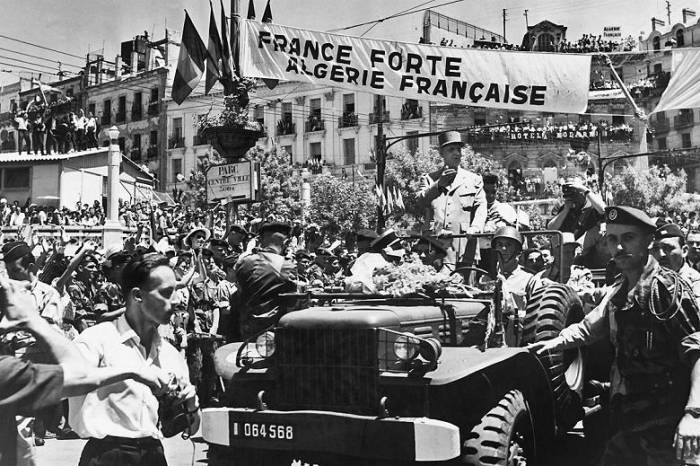
Building on the framework of the Defferre Law, the 1958 referendum was a pivotal moment in determining the future of France’s former colonies. The referendum offered overseas territories three options: remain an overseas territory, become an associated state within the French Community, or integrate into France as an overseas department.
However, the 1958 referendum was plagued by serious violations and manipulations, especially in African and Pacific colonies. For instance, in Guinea, the only country that voted against the new constitution, France responded harshly: it withdrew its civil servants and technicians, took back equipment, and even confiscated archives. This was a punishment for Guinea's defiance and served as a warning to other colonies that might consider resisting.

Political uncertainty and neocolonial ambitions
Despite appearances of decentralization, the Defferre Law and subsequent constitutional changes were more about adapting French control to new circumstances. While African colonies used the status of associated states as a step toward independence, France took a different approach in the Pacific region. In places like French Polynesia and New Caledonia, autonomy was minimal and tightly controlled by Paris.
France clearly wanted to keep a strong grip on its strategically important overseas territories. This was especially true when it came to using French Polynesia for nuclear testing. Here, "limited self-governance" quickly became a sham when France started nuclear tests despite local protests and cracked down on anti-colonial movements. Political leaders like Pouvanaa a Oopa, who opposed French policies, were arrested and convicted on trumped-up charges. These events clearly show that France's real aim was not decentralization or granting independence, but maintaining strategic control.
Defferre, Association, and the French community: The new face of an old empire
The 1958 referendum and the creation of the French Community were the next steps in France's strategy to modernize dependency. The Fifth Republic's constitution declared the "populations of the overseas territories" part of the "French people," effectively refusing to recognize them as separate nations with the right to self-determination. This allowed France to continue a policy of integration and assimilation, maintaining control over these territories under the guise of unity and equality.
This policy also applied to the status of overseas departments and associated states. These territories were given some self-governing rights, but key areas like foreign policy and defense remained under French control. Thus, association within the French Community was not genuine independence but a form of limited sovereignty where the metropole continued to call the shots.

Pacific strategy: Double standards and nuclear ambitions
France’s strategy in the Pacific was especially contradictory and revealing. In 1958, when French Polynesia voted to remain an overseas territory, this decision came with a promise of expanded autonomy. However, instead of more freedom, France imposed new restrictions aimed at keeping control.
The main reason for this was the region's strategic importance to France, both geopolitically and for nuclear testing. After closing its nuclear site in Algeria, France needed a new location and found it in French Polynesia. Contrary to local expectations, the referendum did not lead to greater autonomy but rather reinforced French control, which was necessary for carrying out the nuclear program. This is an example of how France used political manipulation and promises of decentralization to achieve its own strategic goals, ignoring the will of the local population.
The history of France's relations with its former colonies in Africa and other regions is a complex story where modernization of dependency intertwined with neocolonial ambitions. The Defferre Law and subsequent constitutional reforms were presented as steps toward decentralization and democratization but often served as tools for maintaining French control.
France continued to use political and economic leverage to secure its interests, even if it meant suppressing anti-colonial movements and manipulating political processes. As a result, many former colonies remained dependent despite formal independence, and their political and economic futures were still heavily tied to Paris.
In the 21st century, this situation remains relevant, especially for overseas territories still fighting for real self-governance and recognition of their right to self-determination. French policy towards its former colonies remains complex and contradictory, and its effects are still felt today.


Similar news