G7 expands influence: $200 billion for Central Asia's development


By Sabina Alizade
Central Asia, with its strategic location and immense economic potential, is emerging as a hotspot for international investment and infrastructure development. Global leaders and international organizations have increasingly focused on the region, heralding new opportunities for its integration into the global economy.
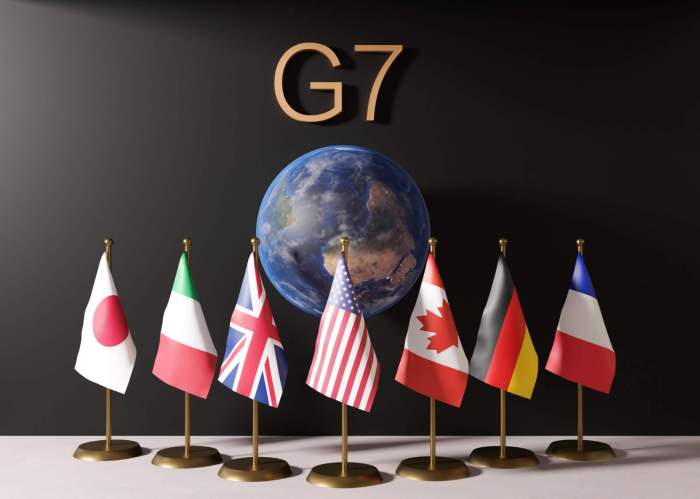
The primary aim of this partnership program is to diversify supply chains and ensure global food and energy security. G7 countries—Canada, France, Germany, Italy, Japan, the United Kingdom, and the United States—intend to invest a total of $600 billion in developing countries by 2027, with $200 billion specifically allocated for Central Asia.
This significant investment will focus on developing transport and logistics infrastructure, clean energy production, and the extraction and processing of rare earth metals. Kazakhstan has been identified as a crucial area for implementing these ambitious projects.
During the meeting, the Kazakh delegation discussed with Helaina Matza the potential for U.S. investments in Kazakhstan's projects, including transport and logistics, clean energy production, agricultural products, and rare earth metal extraction and processing.
The European Union is also stepping up its efforts. As part of its Global Gateway strategy , the EU plans to heavily invest in Central Asia’s transport connections, including support for the Trans-Caspian route. The EU has committed to investing 10 billion euros in the region's transport infrastructure. The European Commission is developing a regional transport program under the Global Gateway strategy to support the Trans-Caspian route, which traverses China, Kazakhstan, the Caspian Sea, Azerbaijan, Georgia, and Turkey. This project is vital for increasing transit volumes and stimulating economic growth in the region.
The European Bank for Reconstruction and Development (EBRD) estimates that improving Central Asia's transport infrastructure requires 18.5 billion euros in investments for 33 infrastructure projects. Kazakhstan is responsible for 13 projects worth 5.5 billion euros. Successful implementation could increase the Trans-Caspian route's capacity from 6 million tons to 26 million tons by 2040.
EBRD experts emphasize that developing Central Asia’s transport infrastructure demands substantial investments. Kazakhstan plays a pivotal role, providing a platform for projects aimed at enhancing transport accessibility and expanding trade routes between Asia and Europe.
Maqbat Spanov, an expert at the Institute of Innovative Economy and professor at KazNU, told News.Az that Central Asia is becoming a crucial element in the competition between Eastern and Western countries. "Given its location between Russia and China, Central Asia remains quite distant from Europe, creating political risks and instability," he noted.
"As a result, we must compete with both Eastern countries and Western Europe. Russia and China are advancing their projects in response to this competition. China is particularly active with its Belt and Road Initiative , and all Central Asian countries are interested in this project, especially regarding transport corridors and the potential for additional products and dividends for global markets," Spanov explained.
Spanov believes that the primary threat in the region is geopolitical competition. "Our countries must navigate this challenge carefully, considering their cultural and economic dependencies. We must be cautious in our relations with both Russia and China," he emphasized.
Investments by the G7 and the European Union in Central Asia's infrastructure open new avenues for sustainable economic development and improving the region's living standards. However, the successful implementation of these projects will require not only financial support but also strategic partnerships between states and private investors, adapted to the evolving global landscape and the challenges of modern globalization.


Similar news