Geopolitical shifts in South Caucasus: What Armenia’s deal with the U.S. means for its neighbors?


.png)

@Mediamax
On January 14, 2025, Armenian Foreign Minister Ararat Mirzoyan and U.S. Secretary of State Antony Blinken signed a strategic partnership agreement , marking a significant milestone in Yerevan-Washington relations. Blinken described the agreement as a landmark achievement, emphasizing its importance for deepening bilateral ties. He also announced the upcoming visit of a specialized U.S. border security team to Armenia next week to collaborate on securing borders and enhancing safety measures.
The analytical portal News.az examined how this agreement might impact Armenia-Russia relations and reshape the geopolitical landscape of the South Caucasus region.
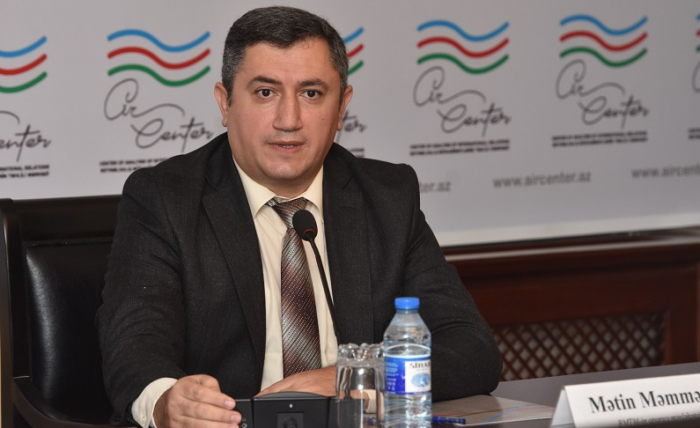
From Baku, political scientist Matin Mammadli provided a different perspective, emphasizing that the signing of the strategic partnership agreement was anticipated: “The Biden administration has pursued an Armenia-centric policy in the region for the past four years. Therefore, the signing of this document was expected. It aims to deepen bilateral relations across political, economic, energy, security, defense, and even social spheres. In recent years, these ties have significantly strengthened.”
Mammadli pointed out the timing of the agreement: “Logically, the Armenian government should have signed this agreement with the Trump administration, which takes office on January 20. However, it appears that they doubted their ability to achieve this under Trump, so the outgoing Biden administration expedited the process. Armenia aims to institutionalize its relationship with the U.S. and leave a legacy for the next administration.”
However, Mammadli stressed that the document is not a defense pact: “This agreement is a partnership framework, similar to those the U.S. has signed with many other nations, including several post-Soviet states. It offers no security guarantees or commitments for arms sales. Therefore, its strategic importance should not be overstated.”
Regarding potential implications for Azerbaijan, Mammadli acknowledged certain concerns: “While this agreement does not pose a direct threat to Azerbaijan, it may indirectly impact the Azerbaijan-Armenia negotiation process. Armenia, emboldened by U.S. support, could adopt a more rigid and unconstructive stance in peace talks. Additionally, while the agreement does not explicitly address arms sales, it may indirectly facilitate Armenia’s military build-up. This could exacerbate geopolitical polarization in the region. We hope that the new U.S. administration will adopt a more pragmatic and balanced approach to the South Caucasus.”
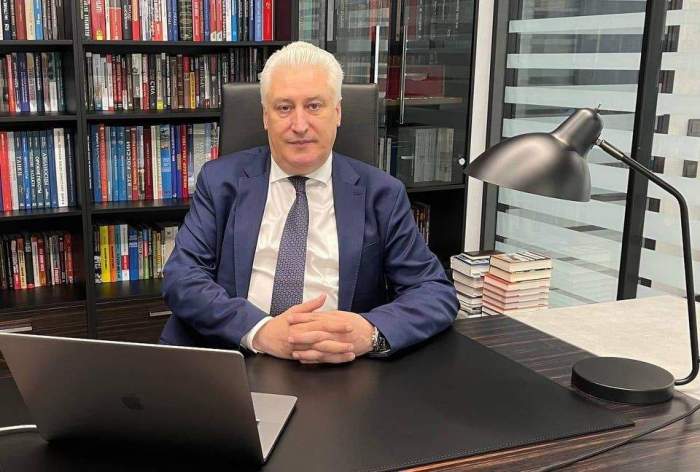
Igor Korotchenko, Director General of the Caspian Institute for Strategic Studies (Russia) , characterized the signing of the strategic partnership agreement as a significant blow to Russian-Armenian relations. Speaking to News.Az, he remarked: “Yerevan has chosen a new strategic partner in the military and defense sphere, and today, that partner is no longer Moscow but Washington. Practically speaking, we can anticipate Armenia’s official withdrawal from the CSTO and a rejection of allied relations with Russia, which currently include the presence of Russian border guards and military personnel stationed at a base in Armenia. These forces are likely to be replaced by Western military contingents, primarily American.”
Korotchenko further explained the economic dimension of this shift: “In recent years, Armenia has been a significant beneficiary of economic preferences provided through its membership in various post-Soviet integration projects, particularly the Eurasian Economic Union (EAEU). Armenia’s foreign trade turnover has seen exponential growth since the beginning of Russia’s special military operation in 2022. However, Yerevan’s alignment with the West could prompt Moscow to impose restrictive measures, including potential sanctions, against Armenia as a hostile and unfriendly state.”
Highlighting broader regional implications, Korotchenko warned of Armenia’s role as a “Trojan horse” for Western powers in the South Caucasus: “The presence of non-regional players like the U.S., France, and the EU is transforming Armenia into a platform for Western geopolitical ambitions. This could lead to the deployment of American and French military bases in Armenia and the conversion of the EU observer mission into a NATO military mission. Such developments create a new geopolitical reality in the South Caucasus, raising concerns for all regional states, including Russia, Azerbaijan, Turkey, Georgia, and Iran. A joint response to this emerging reality is imperative.”
Korotchenko underscored the need for coordinated efforts among South Caucasus nations to counteract Western influence: “Think tanks and expert diplomacy must urgently analyze this new reality and develop measures to neutralize attempts by non-regional actors to deploy military contingents in Armenia, which could plunge the region into instability and potential military upheavals.”
The Russian analyst also noted that Armenia’s reliance on the U.S. and France is likely to undermine the peace process with Azerbaijan: “Armenia’s growing involvement in Western security alliances poses a collective threat to the South Caucasus states. This could jeopardize the sustainable operation of vital logistics and transport corridors in the region, such as the North-South and East-West routes. Yerevan’s actions represent a challenge to all neighboring countries, which must find a unified response to this destructive behavior.”

Russian political scientist Andrey Nikulin told News.az that Russian-Armenian relations are already experiencing a significant crisis: "This document, even without imposing any substantial obligations and signed with an outgoing administration, will not alleviate the situation. Moscow views any U.S. involvement in regions it considers within its sphere of influence, including Transcaucasia, with suspicion and resentment. Therefore, it is likely that this agreement will serve as yet another stumbling block in Russian-Armenian diplomacy."
Mr. Nikulin further noted that, with the Biden administration on its way out and the Trump administration preparing to assume power, a sharp intensification of relations between Yerevan and Washington should not be expected: “This did not occur during Trump’s first term in office, and it is unlikely to happen now. Nowhere in his campaign has the Republican presidential candidate demonstrated a marked interest in developments within Transcaucasia. Even if he does take an interest in the region, the style, priorities, and interests of the new administration are more likely to align with Azerbaijan. With its abundant oil and gas resources and capacity for behind-the-scenes diplomacy, Azerbaijan holds a strategic appeal that could shape Washington's approach.”


Similar news