How the Houthis became a flashpoint for a U.S.-Iran confrontation


Editor's note: Russian military-political analyst, expert in the field of strategic security, specialist in the Middle East and Africa Vladimir Bekish. The article expresses the personal opinion of the author and may not coincide with the view of News.Az.
So now, following Hezbollah’s example, Trump is determined to send Yemen’s Houthis straight to hell. And at the same time—Iran too, if it refuses to obey Trump’s order and continues to support and supply the Houthis in their operations.
One could go into detail about who the Houthis are—how they are part of the Zaidi sect of the Yemeni population, how they differ fundamentally from other Muslims such as the Sunni Wahhabis of Saudi Arabia, how they staged a rebellion in Yemen that plunged the country into civil war. But the events unfolding now in and around the Houthis carry deeply contradictory signs—and could have extremely serious consequences for the entire world.
In their foreign policy ideology, the Houthis take an openly radical anti-Western stance, championing the slogan: “Death to America, death to Israel, curse the Jews, victory to Islam.”
They view themselves as part of the Iran-led “Axis of Resistance” against Israel, the United States, and the West as a whole—acting in coordination with Hamas and Hezbollah.
It’s also worth recalling that several years ago, amid conflicts with other Muslim countries, the Houthis began launching missile and drone attacks on Saudi Arabia and the UAE. This triggered the military operation “Operation Decisive Storm” against Yemen’s Houthis, with forces from Saudi Arabia, the UAE, and Bahrain involved.
The Houthis suffered significant damage—but no one achieved a decisive victory. A truce was brokered by the UN, and it remains in place within Yemen to this day.
However, the Houthis are highly determined, militarized, and heavily armed. When people speak of the Houthis, they usually refer to “Ansar Allah,” the military wing of the movement, which fights inside Yemen and beyond against its ideological enemies. When war broke out in the Gaza Strip, the Houthis immediately joined in against Israel and the West—actively targeting all they consider enemies, even if those enemies are far from Yemen. In particular, they began attacking “enemy” vessels in the Gulf of Aden. Targets have included American naval ships—both destroyers and aircraft carriers—as well as commercial vessels linked to Israel or delivering cargo to Israel or other countries the Houthis oppose. They’ve also launched missile strikes directly at Israel.
Let’s remember: Iran has consistently and actively supported and supplied the Houthis, especially in operations against Iran’s own enemies. And at the top of that list is Israel—followed by the U.S., Saudi Arabia, and the UAE. Which brings us back to Trump’s ultimatum to Iran. And here is where things get interesting—and alarming.
It is highly unlikely that the Houthis will stop or cease their attacks. They’ve already declared their firm refusal to follow Trump’s orders. In response to U.S. strikes on Yemen, they’ve launched counterattacks on American warships and on Israel.
Even less likely is that Iran will yield to Trump’s ultimatum. Iran has recently lost Syria (even if only temporarily)—a country into which it invested vast sums of money, arms, and resources. To lose another zone of influence now, and watch yet another major investment go to waste, would be unacceptable.
This means Iran will resist—will push back. Against America. Against Israel. Iran will likely double down on its support for Hamas and do everything possible to hold its ground in Syria. All while understanding that retaliation from both Israel and the U.S. is inevitable—likely in the form of direct strikes against Iran.
At this point, we must remember that just days ago, naval drills were held in the Strait of Hormuz—very close to Iran and the UAE. These exercises involved Iran’s navy, as well as the navies of Russia and China. This fact underscores not only Iran’s military cooperation with Russia, but also the geographical proximity to Yemen.
It’s also worth briefly noting that if not a "mutual love affair," then at least a close friendship has recently begun to blossom between the U.S. and Russia. And not just in the context of exploring Mars, but also in reshaping and controlling the world order—seeking influence, making demands, and claiming what they believe is theirs.
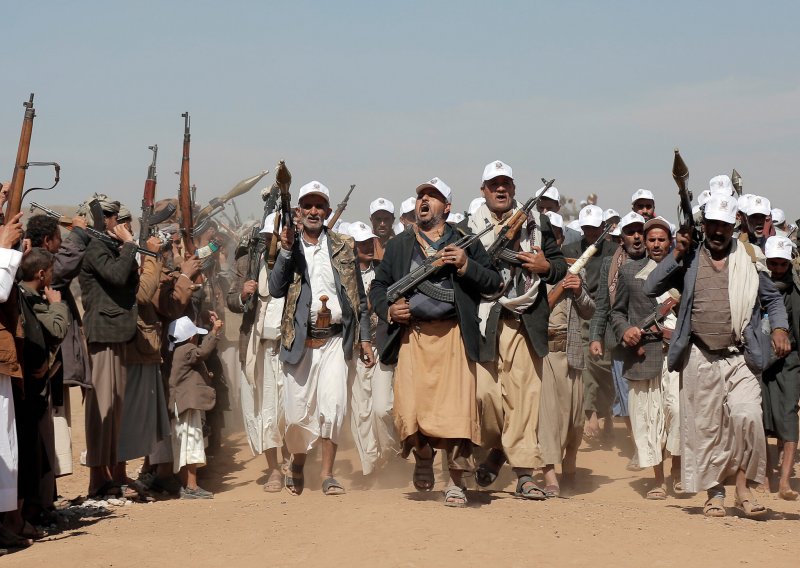
Image: www.nytimes.com
In this light, I have no doubt that, as part of the Middle East situation, Trump will ask Putin to pressure Iran into complying. And if Putin refuses, Trump will likely respond by stepping up U.S. support for Ukraine—especially given reports that Russia is actively using Iranian drones in the conflict there.
Conversely, I have no doubt that Iran will turn (if it hasn’t already) to Putin with a demand: since he’s now supposedly close with Trump, he should ask Trump to stop threatening Iran—and make sure no strike is carried out. Because Iran and Russia are friends and allies! And Russia must support Iran!
So what is Russia supposed to do in this situation?
It’s clear that putting pressure on Trump is pointless—it would only provoke a harsher response, and Iran would be torn to shreds. But putting pressure on Iran would also be a disaster. At best, Iran will feign compliance, take a short pause, and during that pause finish developing its nuclear weapon—which it would likely use against Israel immediately. The consequences? Well, hello Mars—because goodbye Earth… for anyone still left on it.
Of course, we can hope the consequences won’t be that apocalyptic. And yes, for Russia, breaking ties with Iran would be bad—but not nearly as bad as the consequences of a rift with Trump. So perhaps that’s the way it will go.
In short, playing the mediator between two powerful and stubborn players might sound appealing. But it could result in something so devastating, you’d be terrified even to imagine it. Because in the end, both of these players won’t blame each other—they’ll blame you.
(If you possess specialized knowledge and wish to contribute, please reach out to us at opinions@news.az).


Similar news