India’s calculated escalation against Pakistan risks regional catastrophe


Tural Heybatov
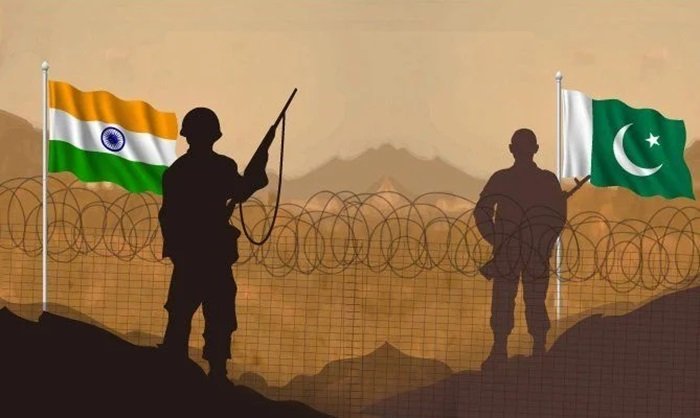
By all appearances, India is consciously pushing South Asia toward a dangerous military confrontation — one that could destabilize the region for years to come.
On April 30, Pakistan’s Minister of Information and Broadcasting, Attaullah Tarar, issued a grave warning: India was preparing to strike Pakistani territory within 24 to 36 hours. “Pakistan has credible intelligence that India intends to carry out a military operation within the next 24–36 hours using the Pahalgam incident as a false pretext. Any act of aggression will meet a decisive response,” he wrote on X (formerly Twitter), adding that New Delhi would bear full responsibility for the consequences.
The warning comes after the brutal April 22 terrorist attack in Indian-occupied Kashmir that claimed 26 lives, mostly tourists — the deadliest such attack since 2000. India immediately pointed the finger at Pakistan, insinuating that a group allegedly linked to Pakistan was behind the atrocity. The group, notably, first claimed responsibility before denying any involvement. Regardless, the Indian government seized the moment to ratchet up tensions, as if it had been awaiting a trigger.
Pakistani Prime Minister Shehbaz Sharif swiftly condemned the attack and called for a neutral investigation. But India showed no interest in dialogue. Instead, it responded with sweeping military drills and inflammatory rhetoric aimed at Islamabad. Across India, the military was placed on high alert, and senior officials made bellicose statements — a clear indication that New Delhi was preparing for escalation. In response, Pakistan was forced to raise its own alert level. Discussion of potential war began circulating at the highest levels of Pakistani government.
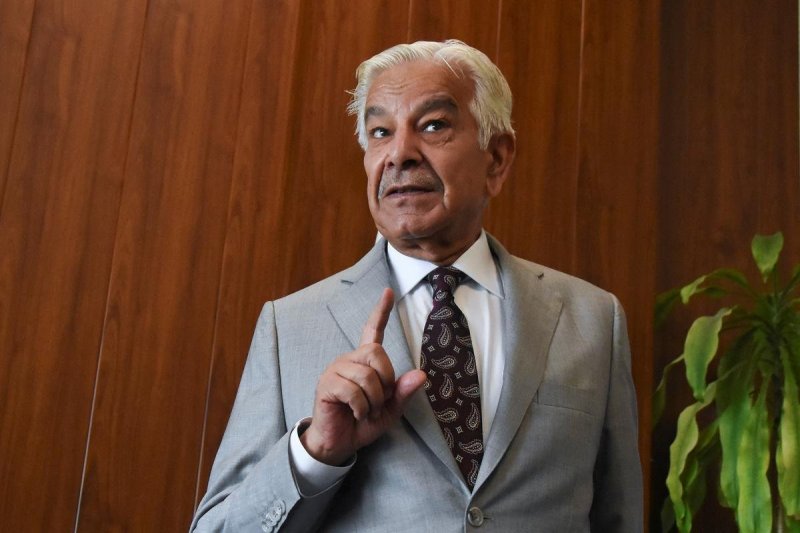
Pakistan’s Defense Minister Khawaja Asif, speaking to Samaa TV, stated plainly: “We must be morally prepared for the possibility that war may erupt.”
But it wasn’t just rhetoric. On the night of April 29–30, Indian forces carried out armed provocations along the Line of Control, specifically in the Kiani and Mandal sectors. According to Pakistani sources, the country’s armed forces responded decisively. As reported by Pakistani media, the military conducted accurate strikes that silenced Indian fire, destroyed several enemy bunkers, and neutralized threats, including the Indian Chakpura post in Jammu and Kashmir.
More than a week after the Pahalgam incident, India has yet to present any evidence of Pakistani involvement. Its accusations are presented as unquestionable fact, and its refusal to allow time for investigation suggests the attack serves New Delhi’s broader objectives. It seems increasingly likely that the tragedy is being exploited to justify long-cherished plans against Islamabad.
India is also pushing a narrative that portrays Pakistan — as an Islamic republic — as a breeding ground for terrorism. This is a cynical attempt to manipulate Islamophobic tropes that resonate in parts of the West. Yet it is Pakistan, not India, that suffers most from terrorism — much of it, Islamabad claims, planned and financed by Indian agencies. Moreover, Indian state terror is a daily reality for millions living in occupied Jammu and Kashmir, where more than 700,000 Indian troops are stationed. This overwhelming military presence has turned the region into a security nightmare for civilians, who live under constant threat of violence.
What truly happened in Pahalgam may never be known — not because it cannot be discovered, but because India is determined to control the narrative. Even without a transparent investigation, it is clear the tragedy stems, in part, from India’s own internal fractures. Despite its position as the world's third-largest economy by nominal GDP, India remains plagued by systemic poverty, poor sanitation, and deeply entrenched religious extremism — often Hindu nationalist in nature.
Over 80% of India’s population lives below the poverty line. Vast slums, lack of healthcare, and caste-based discrimination remain persistent challenges. Yet instead of addressing these urgent issues, New Delhi chooses to invest heavily in military expansion — spending hundreds of billions on weapons procurement. Behind the numbers touted by government officials lies an economic model that leaves the majority of citizens behind.
Meanwhile, Pakistan, though moving more slowly, is developing steadily in line with its actual capabilities. Its economic growth, though modest, is accompanied by a gradual modernization of its armed forces. It has no illusions about parity with India’s GDP — but also no ambitions to provoke conflict.
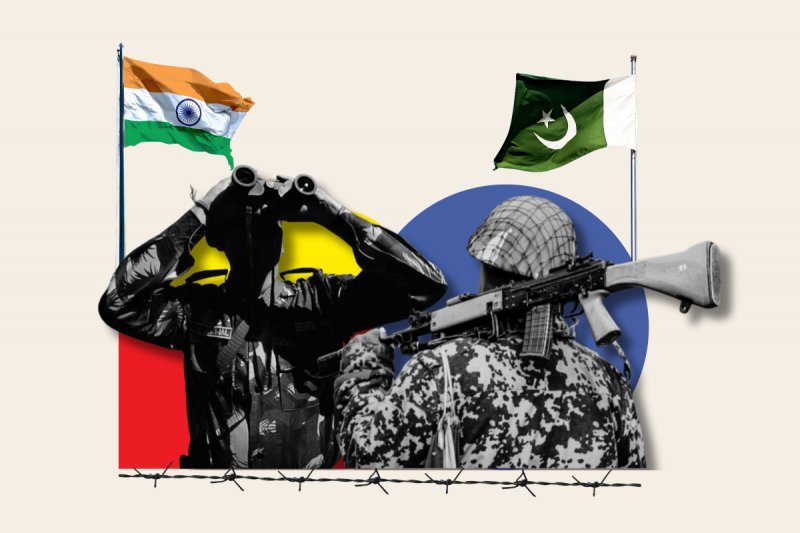
India, on the other hand, seems determined to resolve the Kashmir issue through force. Having failed to suppress the Kashmiri people’s aspirations for freedom, New Delhi appears ready to escalate militarily. The most alarming signal of this came when India announced its intention to suspend the Indus Waters Treaty — a 1960 agreement that has survived wars, serving as a cornerstone of water security in the region. The treaty governs six rivers shared between the two countries, with 80% of Pakistan’s agriculture relying on water from the western tributaries: the Indus, Jhelum, and Chenab.
India’s upstream position gives it geographic leverage, but its infrastructure is ill-suited for water blackmail. According to Indian experts cited by the BBC, India lacks the dams and canal networks required to hold back the massive volumes of water that flow downstream to Pakistan. In fact, New Delhi reportedly struggles to fully utilize even its own 20% allocation under the treaty. Exiting the agreement would force India to build such infrastructure from scratch — a costly and time-consuming endeavor.
Nonetheless, the threat itself sets a dangerous precedent. If India succeeds in politicizing transboundary water access, it could encourage similar behavior elsewhere. Nearly every continent depends on shared rivers. For this reason, international organizations must take India’s statements seriously and intervene diplomatically to prevent the erosion of long-standing legal frameworks governing water cooperation.
Blackmail, especially when it involves life-sustaining resources like water, is one of the most dishonorable tools in international politics. It is typically wielded by powers uncertain of their position, seeking to extract concessions through coercion rather than consensus.
It is critical to note that throughout this unfolding crisis, Pakistan has avoided warmongering. It has not mobilized for media theatrics. It has not issued ultimatums. But this restraint must not be interpreted as weakness. Unlike India, Pakistan’s strength does not lie in performative nationalism or inflated GDP statistics. Its strength lies in its strategic patience, its national resilience, and its capacity for measured response — even under direct threat.
If India continues down this reckless path, it will not merely destabilize bilateral relations with Pakistan — it will bring South Asia to the edge of nuclear catastrophe. This is not an accidental drift toward conflict; it is a deliberate policy rooted in arrogance, impunity, and disregard for international norms. With two nuclear-armed nations on alert, one miscalculation could ignite a chain reaction with global consequences. The international community can no longer remain silent. It must act swiftly to restrain India, denounce its provocations, and prevent a regional flashpoint from becoming the epicenter of the world’s next great crisis. India must be stopped — before its pursuit of dominance unleashes irreversible devastation.


Similar news