India’s provocations against Pakistan push the region toward dangerous confrontation


.jpg)

Editor's note: Nijat Babayev is an Azerbaijan-based journalist. The article expresses the author's personal opinion and may not coincide with the view of News.Az.
Tensions between Pakistan and India have long been a fixture of South Asian geopolitics, but recent developments suggest a worrying pattern of persistent hostility with few pathways to meaningful resolution. The fact that both nations possess nuclear capabilities makes the prospect of a large-scale war existentially dangerous.
A deadly attack in the Pahalgam valley of Kashmir on April 22 has further inflamed the long-standing conflict between the two nuclear-armed neighbors. The assault, which claimed the lives of 26 Indian tourists, has triggered a sharp escalation in both diplomatic and military responses from both sides.
Within hours of the attack, and without presenting evidence, New Delhi announced that it was suspending the five-decade-old Indus Waters Treaty—an agreement brokered by the World Bank and vital to Pakistan, which relies on it for around 80% of its irrigation needs.
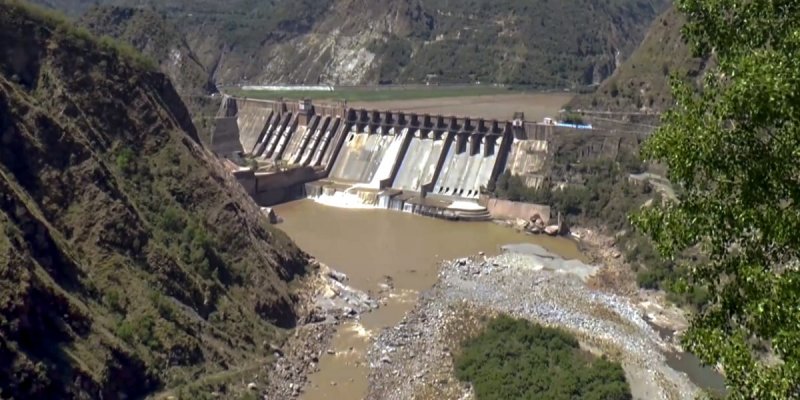 A dam on the Indus river system, in Reasi, Jammu and Kashmir. Photo: PTI
In response, Islamabad closed its airspace, suspended bilateral trade, and suggested it may withdraw from the 1972 Simla Agreement, a longstanding framework that has supported ceasefire protocols between the two nations for over 50 years.
Pakistani Prime Minister Shehbaz Sharif slammed India for its “baseless allegations” following the Pahalgam incident. He noted that the accusations were made “without credible investigation or verifiable evidence,” calling for a neutral probe into the Pahalgam incident.
On April 25, the United Nations urged both countries to show maximum restraint.
"We very much appeal to the Indian and Pakistani governments to exercise maximum restraint, and to ensure that the situation and the developments we've seen do not deteriorate any further," UN spokesman Stephane Dujarric told journalists in New York.
On the same day, US President Donald Trump called on India and Pakistan to figure out relations between themselves.
“They'll get it figured out one way or the other. There's great tension between Pakistan and India, but there always has been,” Trump told journalists aboard Air Force One.
Over the past days, India resorted to several provocations by opening fire at Pakistani side, attempting to carry out recoinnance flights over Jammu and Kashmir along the Line of Contact (LoC).
In a show of force, Pakistan responded to India's actions on April 29 by announcing that its military had shot down two Indian quadcopters for airspace violations along the LoC. Additionally, Pakistani forces claimed to have destroyed multiple Indian checkposts in the area.
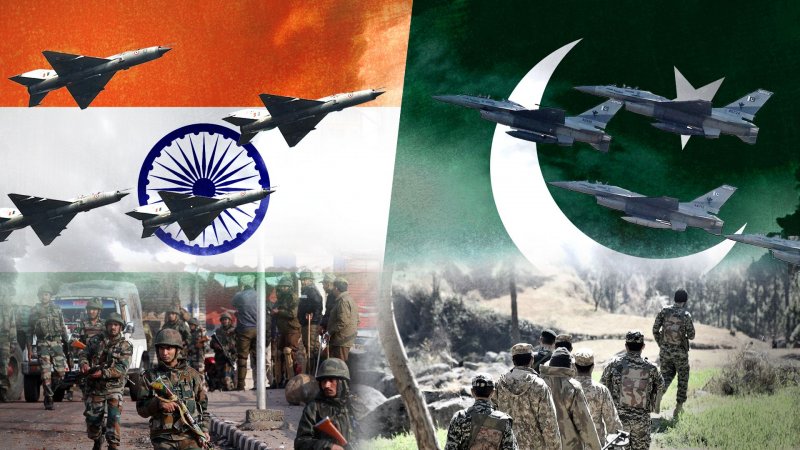 Photo: CNN
Rising fears of nuclear confrontation
The rising tensions have brought nuclear fears back into focus, as both India and Pakistan maintain significant stockpiles of nuclear warheads and advanced missile delivery systems. The risk of miscalculation or escalation has become a central concern among observers.
What makes the current moment especially dangerous is not only the scale of the violence, but the erosion of diplomatic restraint. The suspension of the Indus Waters Treaty by India, and Pakistan's retaliatory threats to abandon the Simla Agreement, suggest a breakdown of the very frameworks that have historically prevented escalation.
It is essential for global actors, especially those with close ties to either nation, to press for de-escalation—not just militarily, but diplomatically.
What India’s suspension of Indus Waters Treaty means for Pakistan
Signed in 1960 after prolonged negotiations—with the World Bank acting as mediator—the Indus Waters Treaty stands as one of the world’s most enduring transboundary water-sharing agreements. It divided the six rivers of the Indus Basin between India and Pakistan: India was granted control over the three eastern rivers (Ravi, Beas, and Sutlej), while Pakistan received rights to the three western rivers (Indus, Jhelum, and Chenab), which provide nearly 80% of the basin's total water supply.
For Pakistan, the treaty has offered more than water security—it has allowed the development of one of the world’s largest irrigation systems, based on the reliable flow of the western rivers. Farmers align their planting cycles with these flows, and canal operations are scheduled around longstanding assumptions. Any disruption to this rhythm, even minor, threatens to undermine the entire water management system.
The most pressing concern is the unpredictability of water flows. While the overall amount of water entering Pakistan may not change drastically right away, even slight shifts in timing can create significant issues. A delay in water arrival during the wheat planting season, or an unexpected drop in flow during the dry winter months, could result in missed planting opportunities, lower crop yields, and increased costs. The Indus Delta is already shrinking due to decreased freshwater outflows, and further uncertainty in upstream water flows could speed up this decline, threatening coastal livelihoods and fisheries.
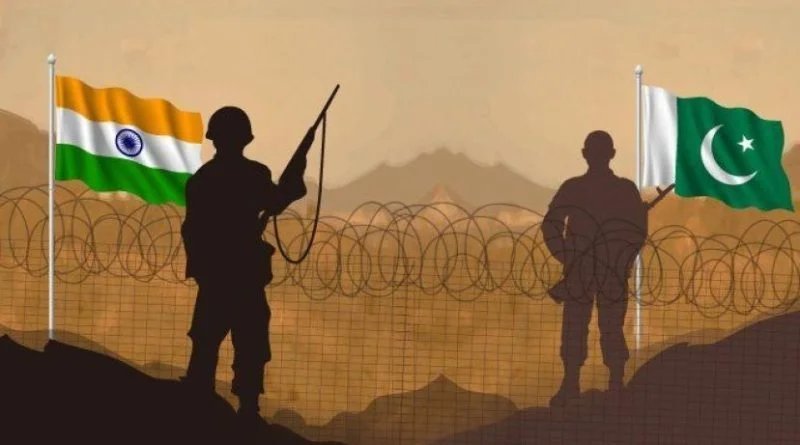 Photo: Kashmir Observer
Pakistan steps up diplomatic efforts
As Pakistan intensifies its diplomatic efforts to address rising tensions with India, the international community's involvement becomes crucial in averting further escalation. With Pakistan calling for a transparent investigation into the deadly attack and engaging with global partners, including Qatar, China, and the United States, the hope for a peaceful resolution remains central to these discussions. As world powers, including the United States and neighboring countries, express concerns about the potential for conflict, the focus now shifts to de-escalation and dialogue in order to ensure stability in the region. The ongoing diplomatic outreach underscores the urgency of a united global response to maintain peace and security in South Asia.
The world must not wait for a nuclear flashpoint to take these tensions seriously. The time to act is now—through dialogue, pressure, and the reinforcement of regional and international peace mechanisms.
(If you possess specialized knowledge and wish to contribute, please reach out to us at opinions@news.az).


Similar news