INTERVIEW: The Kremlin will definitely use nuclear weapons in such a situation


By Tural Tagiyev
Poland and the Baltic States Continue "Fencing" policies at the border with Belarus and Russia. Lithuania has requested financial support from the European Commission to strengthen its border with Russia. Estonia, on its part, announced the construction of 600 concrete bunkers on its eastern border, which will serve as a line of defense against "possible aggression." At the same time, Poland will allocate tens of millions of dollars for the "modernization" of barriers on the Belarusian border.These actions by the border countries are driven by concerns about security and stability in the region. Rising tensions in international relations and military actions in neighboring countries are pushing governments to strengthen their borders. They aim to create more reliable and effective barriers to prevent potential threats. The analysis of the motives and consequences of such measures was conducted by former Foreign Minister and political analyst Tofig Zulfugarov.
- These measures should be taken seriously as they are part of a larger process. The measures on the borders taken by the Baltic countries and Poland are indicative of the ongoing tension between the West and Russia. These countries are geographically much closer to Russia, and their defense capabilities are insufficient. There is a concept that if Russia attacks these countries, they will be able to offer temporary resistance. After brief resistance, they will have to await help from other NATO countries. The Baltic countries and Poland constantly call on NATO leadership to deploy military contingents from other countries near the borders. However, the situation has partly changed now, as Finland and Sweden have already become NATO members. In this context, defense concepts within the alliance will be revised, and they are likely to change. Overall, protective measures are expanding, and events at the border are part of a general process rather than related to any specific country.
- How do you assess Russia's reaction to these measures?
- Russia's opposition to these measures is natural. Moscow has a standard position on these issues: in the mid-90s, Russia was promised that the NATO expansion process would stop, etc. But events show the opposite. Currently, the border issue is reminiscent of the events that occurred on the eve of the war in Ukraine. At that time, the expansion of the alliance was also assessed as dangerous. Negotiations on this issue were also conducted several months before the war, but they did not yield results. Currently, the Kremlin is not particularly concerned about border issues. They are worried that tactical nuclear weapons are now significantly closer to Russia's political and economic centers. The flight time, i.e., the time to reach targets, has been reduced to 7-8 minutes. In such a situation, real resistance is difficult. Thus, more serious issues than border events are occurring, and general security problems arise, not just those of four countries.
- What could be the consequences of a statement about the possibility of completely closing the borders?
- Official-level statements about the possibility of completely closing the borders are a type of tension. This can be seen as a signal that the situation is acute. It is an attempt to show that even such radical measures are being considered. Both Russia and NATO countries are consistently expanding their defensive capabilities regarding border issues. All this will lead to a certain point, to a certain limit. The problem should not be limited to border issues. There is also a demonstration of strength now. Speaking of conventional weapons, one can say that it is possible to compete with Russia in this matter. But if border events escalate and processes get out of control, at some stage, military operations using conventional weapons may be replaced by the use of nuclear weapons. This is the logical conclusion of the current normal process. If the losing side sees that its conventional weapons are exhausted and it is significantly behind the opponent, it will resort to nuclear weapons. The use of nuclear weapons can completely change the situation, which began with border issues and continued with battles.
- What global consequences do you see in this context?
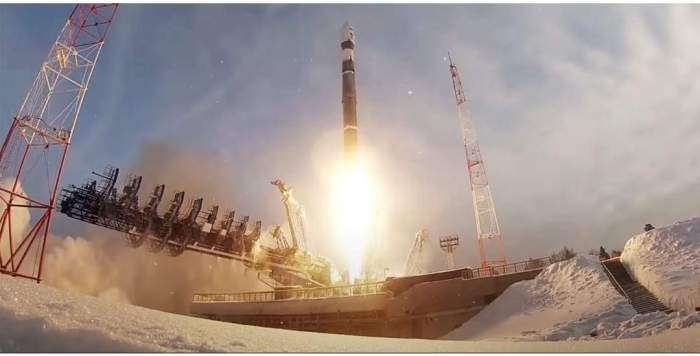
- The situation in Ukraine can lead to consequences in other directions. If Ukraine is provided with many weapons and Kyiv is ready to defeat Russia, receiving broad opportunities for this, the losing country will not be an ordinary state. The Kremlin in such a situation will certainly use nuclear weapons. If events develop this way, not only the Baltic countries, Ukraine, and Poland, but the entire world will be under serious threat. The use of nuclear weapons will lead not only to massive human casualties but also to serious climate changes. The existence of humanity will be in question. In short, there are many problems in the region that can lead to serious consequences, and one of them is the demonstration of strength at the borders. Accumulating something at the borders, fortification, and defense work are political moves and speculations related to conventional weapons. But I repeat again, all this can lead to a threat to humanity. Even if Russia uses its advantages and attacks the Baltic countries, NATO may also use nuclear weapons.


Similar news