Israel strikes: Iran loses allies


Editor's note: Moses Becker is a special commentator on political issues for News.Az, a PhD in political science and an expert on interethnic and interreligious relations. The article expresses the personal opinion of the author and may not coincide with the view of News.Az.
Today, the world waits in tense anticipation. All eyes are on the upcoming U.S. presidential elections and the ongoing conflict between Israel and Iran. Until recently, the Islamic Republic’s power and influence in the region were largely rooted in its alliances with groups such as Hamas, now defeated; Hezbollah, facing major setbacks; as well as Shiite militias in Iraq and the Houthi rebels in Yemen. After several exchanges of strikes between Tehran and Jerusalem, with the latest occurring on October 1 (Iran) and October 26 (Israel), a temporary calm has settled.According to reports, Israel has inflicted significant damage on Iran’s air defense systems, military sites, and defense industry facilities. Naturally, Iran is preparing its response. Meanwhile, Israel is systematically dismantling Hezbollah’s military infrastructure, especially after the elimination of its secretary-general, Hassan Nasrallah, which led to a prolonged search for a new leader. On October 30, the Israeli Air Force targeted Hezbollah warehouses in the Bekaa Valley in eastern Lebanon.
The escalation between Israel and Hezbollah intensified following events on September 17 and 18, when “pager explosions” were reported. On October 1, 2024, Israel launched a ground operation against the terrorist organization, simultaneously continuing airstrikes in Lebanon, which have already resulted in the deaths of over a thousand fighters, including nearly all Hezbollah leaders. Tens of thousands of Shiites have fled southern Lebanon. The Israel Defense Forces (IDF) are systematically eliminating terror infrastructure in the border areas. Despite heavy losses, Hezbollah has not ceased its rocket attacks on Israeli territory. Its fighters have retreated from towns south of the Litani River with minimal resistance. As Israel’s operations alter the demographic and military-political landscape, they may exert significant influence on Lebanon’s political and ethno-religious balance.
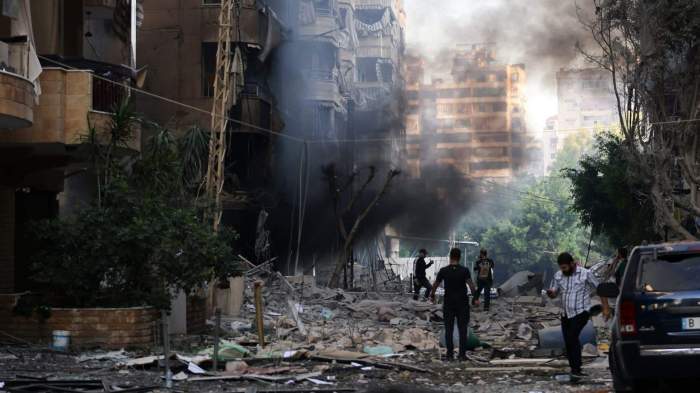
On October 29, 2024, Hezbollah finally elected Naeem Qassem as its new leader. For the first time since the start of the unprovoked aggression against Israel, Hezbollah’s leadership has discussed the possibility of peace independently of Gaza. Under a U.S. proposal, control of the border zone would be handed over to the Lebanese army, and Hezbollah militants would withdraw from the area—though they have largely abandoned their bunkers and tunnels already. Israel is open to a peace settlement on the condition that no Hezbollah fighters remain in the border region up to the Litani River and that the IDF retains treaty-guaranteed rights to monitor and control this Hezbollah-free territory.
On October 31, a meeting was held in Jerusalem between American envoys Amos Hochstein and Brett McGurk. Sources indicate that the negotiations with Israeli representatives yielded positive outcomes. In Lebanon, however, there are concerns that Israel’s conditions could undermine the country’s sovereignty. Hezbollah’s leadership concluded that Hochstein’s mission had failed and that the resolution of the conflict would hinge on the course of military actions.
Yet, recent events in and around Lebanon suggest that Hezbollah’s influence in the country may wane significantly, even to the point of exiting the political arena altogether. Already, internal tensions are rising between Shiites and other religious communities. Here are some examples:
Christians and Druze in Lebanon refuse to submit to Hezbollah. Dozens of recruitment posters have appeared on churches nationwide, calling for mobilization into a resistance force known as “Marad.” This group seeks to challenge and counter Hezbollah’s presence in Lebanon. These forces have long awaited the moment to retaliate against Iran’s supporters for the devastation they’ve wrought upon the once-thriving nation. Druze and even Sunni Muslims are expected to join Christian armed formations. Israel must establish connections with these groups and support them in the fight against their shared enemy. Recently, thousands of Shiites in Baalbek in eastern Lebanon have begun leaving their homes following IDF warnings of imminent strikes on residential areas.
According to Lebanese sources linked to Hezbollah, residents of the Christian village of Qaliya in southern Lebanon have taken up arms against Hezbollah militants. During clashes in the Al-Khiam area, local residents shot one Hezbollah fighter and set fire to a vehicle carrying other members involved in skirmishes with IDF forces.
Qaliya’s elevated topography, overlooking the plain separating it from Al-Khiam, gives its residents a strategic advantage. This incident resonated on social media, where Hezbollah supporters openly voiced anger and issued threats against the village’s inhabitants.
In early October, the American website Axios, citing Washington sources, reported that the White House intends to capitalize on Israel’s massive assault on Hezbollah’s leadership and infrastructure to expedite the election of a new Lebanese president independent of the group and its allies. Lebanon’s opposition has also called for prompt elections. The U.S., France, and several Arab countries hope to see General Joseph Aoun, the current commander of the Lebanese armed forces, assume the presidency.
Presently, the army is the only institution that still holds the trust of the Lebanese people, yet it has lacked the resources to oppose Hezbollah. The depth of Lebanon’s crisis is underscored by the fact that Qatari aid is currently necessary to fund soldiers’ salaries and provisions. In such a situation, can Lebanon’s sovereignty truly be upheld? Israel is likely the most interested party in a strong, independent, and united state on its northern border. Only Hezbollah’s defeat can restore peace, freedom, and prosperity to the people of Lebanon. At present, Israel estimates that about half of Hezbollah’s medium- and long-range rockets have been destroyed. The organization is reportedly experiencing a shortage of weapons. It appears that a turning point is near, and with the combined efforts of the IDF and the Christian, Druze, and Sunni armed groups, it may soon be possible to eradicate foreign influence not only in Lebanon but throughout the region.
(If you possess specialized knowledge and wish to contribute, please reach out to us at opinions@news.az).


Similar news