PKK surrenders after 40 years. Is peace finally coming to Türkiye?


.png)
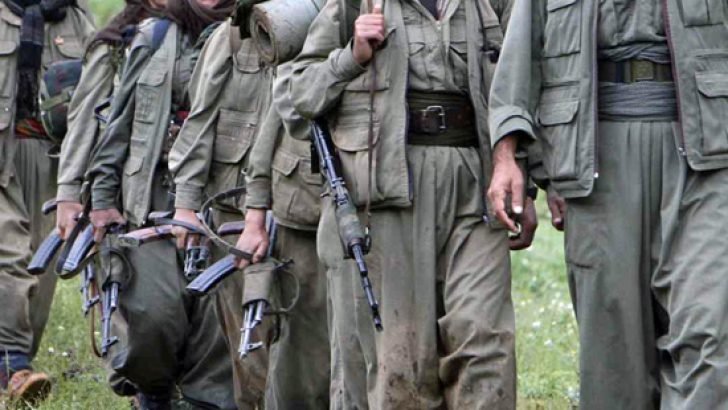
The Kurdistan Workers' Party (PKK) has announced its decision to disband and end its armed struggle, potentially bringing an end to a conflict with Türkiye that has lasted more than four decades. Since 1984, the PKK has waged an insurgency primarily in southeastern Türkiye, resulting in the deaths of more than 40,000 people. The group, designated a terrorist organization by Türkiye, the United States, and the European Union, stated that it will now pursue Kurdish rights through political and peaceful means.
In response, Turkish authorities acknowledged the development, emphasizing the importance of preserving national unity and strengthening democratic processes. The move has generated cautious optimism among observers who see a chance for lasting peace and stability in the region. However, achieving meaningful reconciliation will require sustained dialogue, mutual trust, and genuine efforts to address long-standing social and political grievances.

News.Az reached out to Javid Valiyev, Member of the Board of the Center for the Analysis of International Relations (AIR Center), to clarify the implications of the PKK’s decision.
Mr. Valiyev explained that the PKK's decision to disarm followed a year-long process supported by President Recep Tayyip Erdoğan and Nationalist Movement Party leader Devlet Bahçeli. He noted that Türkiye’s military and political pressure, the PKK’s weakened position, and Abdullah Öcalan’s endorsement of a political resolution were key factors behind the move.
“The process to neutralize the PKK began a year ago. As you know, it had the backing of both Devlet Bahçeli and President Erdoğan. Following a series of continued meetings, the PKK made this decision. In my view, the organization was left with no other option after Türkiye dealt heavy military and diplomatic blows, bringing the PKK to the brink of collapse. One of the most decisive factors was Abdullah Öcalan’s support for disarmament. After a series of meetings between representatives of the DEM Party and Öcalan, he called on the PKK to lay down its arms. From now on, the process is expected to continue through political channels,” he stated.
 Source: APA
Mr. Valiyev added that politically, the next step is to eliminate terrorism and continue discussions in the Turkish Parliament:
“There will be serious debates in the Grand National Assembly of Türkiye. Among the expectations are the withdrawal of PKK leaders from the region, their complete exit, and the possible release of PKK members who were not involved in crimes. These are still just speculations—no official announcements have been made yet. Any such actions would require legislation to be passed by the Turkish Parliament. The removal of terrorism from Türkiye’s agenda would be a major achievement. However, the durability of this policy will depend on future developments. It’s worth noting that the PKK has announced similar decisions 11 times in the past without following through. Whether this time will be different remains to be seen.”
Addressing the broader Kurdish issue, Mr. Valiyev highlighted that Türkiye’s ruling Justice and Development Party has taken several positive steps in recent years:
“Notably, the DEM Party, which advocates for Kurdish rights, continues its activities in Parliament. Future discussions could range from constitutional reforms to legislative changes. However, these are still in the early stages. Any move related to the PKK or the broader Kurdish issue deeply affects nationalist segments of Turkish society, making it essential to strike a delicate balance. Reconciliation between communities and the integration of former PKK members into society are key priorities. Public acceptance of the process is critical. In the past, public reaction to such developments was largely negative. If the PKK genuinely disarms and dissolves, it could shift public opinion, particularly among Türkiye’s Turkish majority.”

Mr. Valiyev also pointed out the positive aspect that no foreign power interfered in this process, which was conducted indirectly between the Turkish state and the PKK:
“The next step is for the PKK to surrender its weapons and leave the territories it temporarily occupies. The timeline for this process remains uncertain, and it is unclear whether all PKK members, including affiliated groups and radical factions, will comply. Only time will tell. This is undeniably a positive development, but its success will depend on whether the declared commitments are fully implemented. As you know, Devlet Bahçeli publicly called on Abdullah Öcalan to play a role in this process, and Öcalan responded by urging the PKK to lay down its arms.”
Finally, Mr. Valiyev commented on Öcalan’s role, noting that while he retains significant influence over the PKK, his legal status is unlikely to change:
“Öcalan’s influence is evident, but I do not believe he will be released from prison. Some easing of his conditions—such as more visitation rights or increased contact with his family—might be considered. However, I do not expect him to be placed under house arrest or released entirely, as that would have very serious political implications in Türkiye.”


Similar news