Smarter than war: How AI-driven drones crippled Russia’s strategic aviation - INTERVIEW


.png)

In a bold and unprecedented military operation, Ukraine has launched a large-scale drone strike deep inside Russian territory, targeting strategic airbases housing nuclear-capable bombers such as the Tu-95MS, Tu-160, and Tu-22M3, as well as A-50 early warning aircraft. Analysts have described the operation as a milestone in modern warfare, signaling a major shift in the dynamics of the Russia–Ukraine conflict.

In this exclusive interview with News.Az, Ukrainian military expert Oleksandr Kovalenko offers a detailed account of how Ukraine’s Security Service (SBU) planned and executed the high-risk mission—leveraging advanced artificial intelligence, indigenous drone technologies, and clandestine logistics. The conversation explores the operation’s scope, precision, and its far-reaching geopolitical implications, raising critical questions about the future of strategic deterrence, Russia’s nuclear triad, and the evolving role of unmanned systems in modern conflict.
– Could you elaborate on Ukraine’s strike against airbases located deep within Russia’s strategic heartland?
– First and foremost, these strikes were directed at Russia’s strategic missile-carrying bombers—Tu-95MS, Tu-160, and Tu-22M3—as well as A-50 early warning aircraft. These are integral to the aerial component of Russia’s nuclear triad and serve primarily as instruments of strategic deterrence, especially in the context of nuclear retaliation.
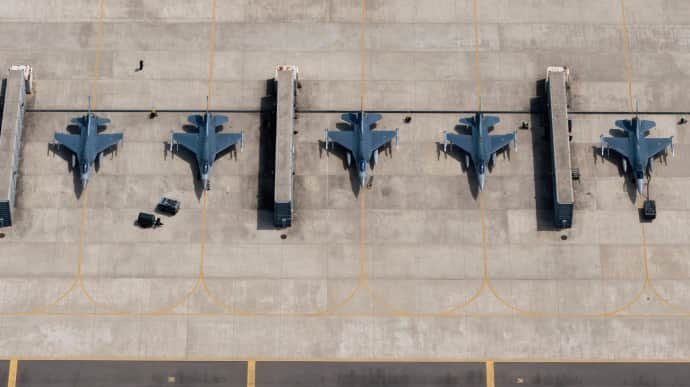
Source: BBC
However, during the full-scale war against Ukraine, Russia has used these platforms not for deterrence, but for terror—launching missiles such as the Kh-101, Kh-555, Kh-55 (from the Tu-95MS and Tu-160) and Kh-22, Kh-32 (from the Tu-22M3) at civilian infrastructure, residential areas, and Ukraine’s energy grid. This misuse amounts to the de facto genocide of the Ukrainian population.
The goal of this operation was to destroy these aircraft—assets that Russia possesses in very limited numbers. The Tu-95MS is no longer in production. As for the Tu-160 and Tu-22M3, what is happening at the Kazan Aviation Plant is not true production but rather assembly using Soviet-era fuselages dating back to the late 1980s and early 1990s. Once those fuselages are exhausted, production will come to a halt. These losses are, therefore, irreplaceable.
For a nuclear power, losing such assets in an attack on its own territory is especially painful—especially in a country like Russia, where the security services are omnipresent. This is a dictatorship, a totalitarian regime, where someone can be arrested and sentenced to seven years in a penal colony simply for liking an anti-war post. For such a sophisticated operation to succeed under these conditions is nothing short of phenomenal.
There is no precedent for an operation like this anywhere in the world. Until now, operations by Mossad—such as the use of disguised pagers against Hezbollah—were considered the gold standard. But this is a different league altogether. These weren’t guerrilla fighters in sandals; these were high-value strategic assets on the territory of a nuclear-armed state.
– How was such an audacious and successful operation even possible?
– I believe the SBU will gradually reveal more details. Even now, this operation already stands as a benchmark in the field of global intelligence. I expect we’ll eventually see documentaries and in-depth expert analysis dedicated to it.
From what we know, preparations took about 18 months and were carried out inside Russian territory. During that time, munitions—specifically FPV drones—were stockpiled, and artificial intelligence software was developed to control them. Direct remote control wasn’t feasible due to Russian electronic warfare and jamming. That’s why the drones operated autonomously using AI.
This AI was trained to recognize and prioritize strategic targets—Tu-95MS, Tu-160, Tu-22M3, and A-50 aircraft. It ensured that if an aircraft had already been hit, any approaching drone would automatically divert to a different target, thereby maximizing the efficiency of each strike. That’s a significant technological achievement.
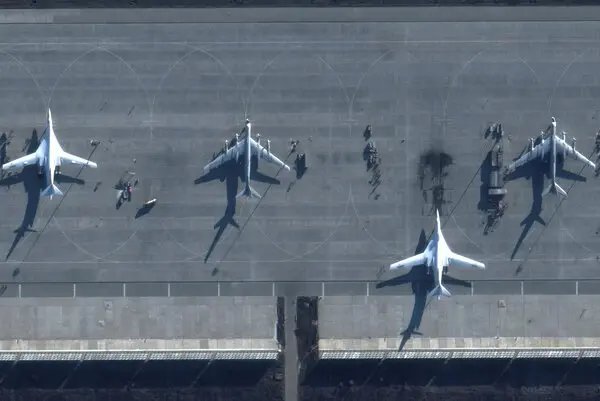
Source: Reuters
– Does Ukraine have the capacity to carry out similar attacks in the future?
– I believe such operations will continue—but with entirely different tactics. This one-off mission will be nearly impossible to replicate in the near term. Russia’s intelligence and security services will now panic about trucks, warehouses, and logistical operations. Mass inspections are likely. A repeat is only possible if Russia once again lets its guard down, which is unlikely for now.
However, I have no doubt that Ukraine’s intelligence community is planning other special operations on Russian territory—using completely different methods, equally unpredictable. We’ll only learn about them after they happen. These operations require long-term planning. As we’ve seen, this one took a year and a half.

Source: KyivPost
– What can you tell us about the drones? Were they Ukrainian-made or based on foreign technology?
– I believe these drones were assembled by the SBU itself and then smuggled into Russian territory—possibly via third countries. They incorporated sophisticated AI and were even equipped with self-destruction protocols in case the mission failed. Even the transport containers were designed to self-destruct to erase any trace of the logistical chain.
That’s part of what makes this operation so remarkable. I’m certain it was developed entirely by the SBU. Of course, like any piece of modern technology, the drones probably contained foreign-made components—likely Western. While we don’t have full details, it’s reasonable to assume that imported technology played a significant role.
Nonetheless, these were relatively inexpensive FPV drones—costing around $500—used to destroy aircraft worth over $100 million each. And that’s a conservative estimate, given that the aircraft in question are no longer being manufactured. These are irreplaceable national assets for Russia.
If all of these aircraft were destroyed, Russia would effectively lose its nuclear triad. That scenario is not out of the question. What we know for sure is that this strike has severely undermined Russia’s strategic aviation capabilities—and demonstrated that no airbase housing these bombers is safe anymore.
In summary, while the drones may have included foreign parts, their true strength lay in the integration of cutting-edge artificial intelligence—enabling a precise, high-impact operation with global implications.


Similar news