The U.S. takes control of Ukraine’s natural resources: A new form of resource management


By Asif Aydinly
On April 30, 2025, an event took place that, in another era, would have been deemed historic. The United States and Ukraine signed an agreement on the joint management of revenues from the sale of Ukrainian natural resources. Stripped of ceremonial phrases and diplomatic formalities, this is not just a partnership—it is a sophisticated mechanism to rewrite control over Eastern Europe’s raw materials under the banner of “reconstruction.” A subtle, distinctly American approach: no battles, no tanks—just signatures and investment funds.
According to U.S. Treasury Secretary Susan Bessent, the agreement concerns the “long-term development of Ukraine” and “support for peace.” In the language of the global financial elite, this is how the redistribution of ownership is framed. The Reconstruction Investment Fund, negotiations over which began in February 2025, is now a reality—though, as expected, the text of the agreement remains undisclosed. As the saying goes, if you have nothing to hide, you’re probably not working in the U.S. administration.
This initiative is being presented as a Republican triumph. For Donald Trump—whose foreign policy oscillates between reality show spectacle and cynical pragmatism—this is a political win, and a timely one ahead of the elections. A positive signal: box checked. Yet behind the scenes of this “victory” lies an unsettling shadow.
First, the agreement was signed bypassing Ukraine’s traditional bureaucratic hierarchy. It was not President Zelensky—despite his increasingly shaky legitimacy—but Economy Minister Yulia Svyrydenko who held the pen. Her press release was as verbose as it was empty: nothing about privatization, nothing about debt, and most importantly, a reassuring line that “natural resources will remain under Ukrainian control.” Of course. True control means the ability to pause or halt any process. But here, we have a fund where no one holds decisive power. In other words, no one is in charge—which means anyone could be.
On paper, the fund will draw revenues from new licenses for the development of critical resources—oil, gas, and strategic minerals. The timeframe: ten years. All proceeds during this period are to be reinvested into domestic projects. The U.S. has pledged to bring in investment, technology, and even military aid, including Patriot missile systems. The latter is particularly telling—this appears to be an economy-for-defense swap. Or perhaps defense-for-economy?
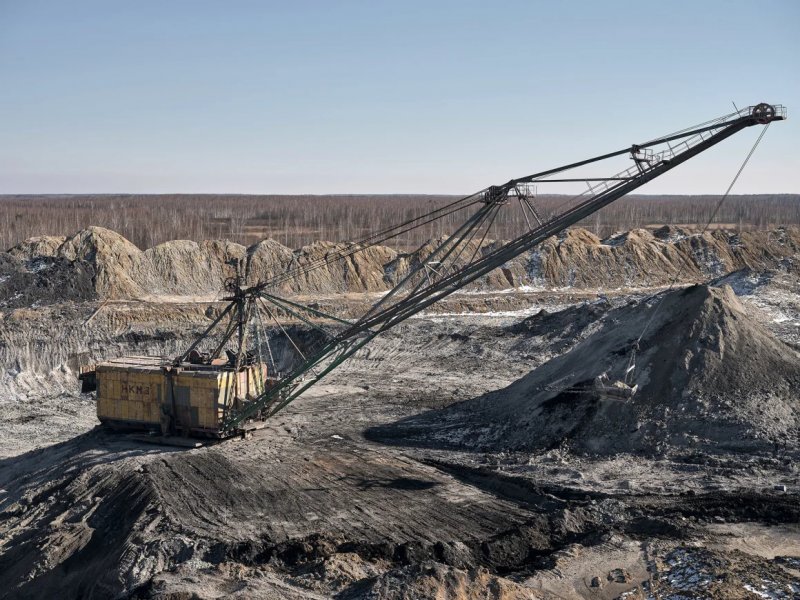 An excavator mines rare earth materials in the Zhytomyr region of Ukraine in February 2025, as companies continue operations despite the war. Kostiantyn Liberov/Libkos/Getty Images
Trump is touting the deal as part of a “reindustrialization” plan for Ukraine. But in reality, it resembles a sophisticated mechanism for risk transfer. The U.S. is not investing in an abstract concept of Ukraine—it is investing in a controlled vehicle with guaranteed returns through export oversight. Ukraine may appear to retain nominal ownership of its resources, but profit distribution will be handled behind closed doors. The key question: on whose terms will this “recovery” be executed—Ukraine’s or America’s?
Zelensky, sidelined from the signing ceremony, remains a background actor. His “readiness to sign in any format” sounds less like diplomacy and more like surrender. Back in fall 2024, the original idea for a joint defense of critical resources came from him—then viewed as an act of strategic independence. Now, it has morphed into a geopolitical trap: yes, the resources will not be seized outright, but their control will shift to a supranational body. Privatization without formal privatization. Deregulation under the flag of national sovereignty.
Ukraine’s Verkhovna Rada will likely ratify the deal swiftly—with many votes bought not by political conviction, but by promises of investment. Yet the public dimension of the agreement is raising questions. Who authored it? Why is the text hidden? Why was Svyrydenko given signing authority, rather than the prime minister or head of state? These details transform a legal document into a political enigma.
Meanwhile, on April 2, Donald Trump announced new tariffs on imports from 185 countries. The Senate, by a slim margin, blocked Democratic efforts to roll them back. A tactical win for Trump, reinforcing his domestic position and showcasing that his strategy is not chaos, but controlled crisis: one step back, two steps sideways—and always forward. Ukraine is just a piece of the puzzle in this strategy. But a very valuable one.
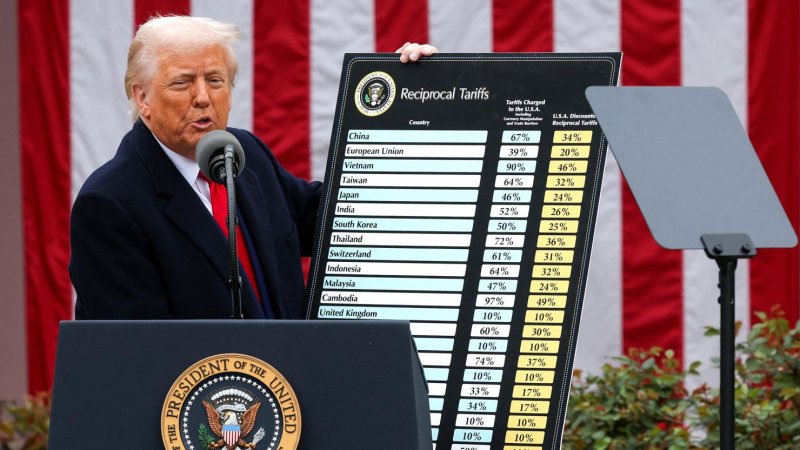 Photo: US President Donald Trump delivers remarks on tariffs in the Rose Garden at the White House in Washington, DC, on April 2. Carlos Barria/Reuters
The international context also deserves attention. The agreement has received backing not only from the U.S. but also from European investment funds. This suggests that the U.S. may intend to offload part of the risk to its European allies in the future. It’s a perfect geopolitical transaction: Ukraine remains the democratic showcase, Europe the donor, and the U.S. the coordinator. The only tragedy—where are Ukraine’s interests in all of this?
Reactions from geopolitical rivals
Moscow responded swiftly and harshly: Russia’s Foreign Ministry described the deal as “U.S. interference in Ukraine’s economic sovereignty” and the creation of a “long-term mechanism of dependency.” The Kremlin’s stance is clear—any attempt by Washington to entrench itself in Ukraine’s economy is viewed as a strategic threat. Especially when the fund not only handles finances but gains access to critical infrastructure and licenses.
Beijing, by contrast, adopted a wait-and-see stance. While no official statement has been issued, Chinese analysts have already described the fund as a “new form of politicized direct investment,” likening it to Chinese ventures in Africa. Interestingly, following the signing, China suspended a number of energy cooperation talks with Kyiv. A coincidence? Unlikely.
The sovereignty question
The key question now for Ukraine: who will control the country in 2035, after a decade of “reinvestment”? If the fund is currently a parity-based structure, what happens when the initial agreement expires? What exit mechanisms will exist, and who will own the infrastructure and export routes developed over the decade?
Officially, Ukraine does not cede control. But in practice, what is emerging is institutional dependency on external governance. Though it is currently framed as a “partnership,” the instruments of influence are already built into the fund’s architecture—from tax incentives to exclusive access to licenses. This is a new format of economic protectorate—without soldiers, but with lawyers, auditors, and financial consultants.


Similar news