Trump dismantles USAID, shifting U.S. influence strategies


By Tural Heybatov
The head of the U.S. Government Efficiency Agency (DOGE), Elon Musk, has become the leading voice pressuring Samantha Power’s office. His posts on the social network X are closely followed by those eager to see how the saga of the once-powerful and influential U.S. Agency for International Development (USAID) will end.
Musk is concise and ruthless. "We are in the process of dismantling USAID," he wrote, emphasizing that the agency will not be reinstated. "This is not a rotten apple; it’s just a pile of worms... There are no apples left, so everything must go."
Musk considers the agency a criminal organization that must be disbanded. "USAID is a criminal organization. It’s time for it to die," he posted on X. In other messages, he referred to the agency as "evil" and "a nest of radical leftist Marxists who hate America."
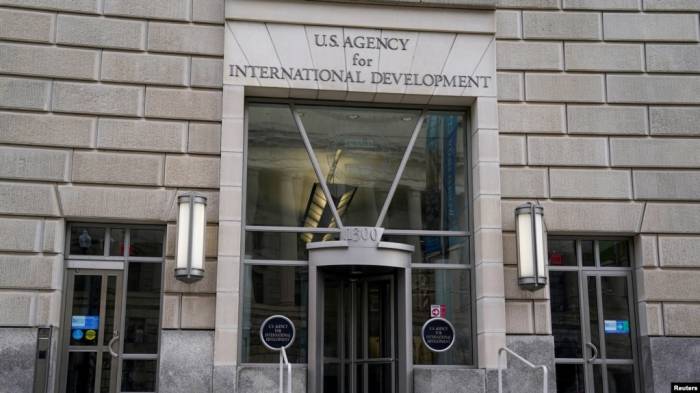
USAID ceased operations on January 25 following an order from U.S. Secretary of State Marco Rubio. At the same time, funding for nearly all American foreign aid projects was suspended for 90 days. According to media reports and social media sources, the USAID headquarters in Washington removed its signage as early as last Friday. The agency’s website has been deactivated, and its profile on X has been closed. The Department of Government Efficiency (DOGE), led by billionaire Elon Musk, has taken control of all USAID computer systems containing confidential information.
According to the U.S. Congressional Research Service, last year, the agency managed appropriations totaling approximately $40 billion of American taxpayers' money. This vast sum, analysts point out, was spent on entangling America in conflicts with other nations. This observation is difficult to dispute, yet it is surprising that the White House has only now recognized this reality, even though USAID has pursued the same activities throughout its existence. After all, the agency was originally established to extend American influence under the guise of humanitarian initiatives, fostering fifth columns, and financing anti-government groups in various countries.
No one even denies this agenda. Defending USAID, Democrat Chuck Schumer wrote on X: "Rumors suggest that he will dissolve USAID as an independent agency. It was created by Kennedy and established by law to strengthen national security and spread hope." As we can see, there was never any initial intention of humanitarian aid, famine relief, or epidemic control. These narratives emerged later. Ultimately, USAID’s activities produced the opposite effect—it turned many nations against the United States.
Trump’s supporters wholeheartedly back the decision, viewing the closure of USAID as the right move. There is no secrecy surrounding the agency’s use of funds to support color revolutions and opposition movements in various countries.
Most analysts agree that USAID, in its previous form, will no longer exist—meaning it will cease to function as an independent entity and likely be absorbed into the State Department. The agency’s supposed independence has long been in question, as has the notion that the U.S. government was unaware of its so-called humanitarian activities. USAID directly executed political orders in countries where the U.S. failed to establish control. It would be naive to think that a government agency’s funds were allocated without high-level approval.
Former Deputy Assistant Secretary of State for International Communication and Information Policy at the Bureau of Economic and Business Affairs, Mike Benz, referenced a 2014 Washington Post article in a post on X:
"Starting in October 2009, a project overseen by USAID sent young people from Venezuela, Costa Rica, and Peru to Cuba in hopes of inciting an uprising. These travelers operated undercover, often posing as tourists, and roamed the island in search of people they could recruit as political activists. In one instance, operatives organized an HIV prevention workshop, which internal memos described as 'the perfect cover' for the program’s political objectives—a gambit that could undermine America's global health initiatives."
Benz previously noted that USAID primarily served as a tool for advancing U.S. influence abroad. This statement confirms that USAID’s activities were well-known for at least a decade. Does anyone seriously believe that a coup attempt in Cuba was orchestrated without the knowledge of the U.S. administration, solely by a so-called humanitarian organization?
The patterns are clear. Take USAID’s operations in the South Caucasus. In Azerbaijan, the agency openly worked against the government, forming a fifth column. It’s worth noting that in Azerbaijan, foreign funding of media outlets and NGOs is prohibited by law, yet USAID found numerous illicit ways to finance its beneficiaries, ensuring that its activities, which began in the 1990s, continued uninterrupted. Those who received such indirect funding, primarily young people, were engaged in spreading damaging information about their country—most of which was inaccurate. The same activities were carried out in Georgia, ultimately alienating the country from the "American dream."
Interestingly, in a December interview with Russia Today, Azerbaijani President Ilham Aliyev suggested that Trump might ban USAID. His prediction turned out to be accurate.
USAID has also been accused of funding the development of biological weapons, including COVID-19. These allegations were also voiced by Musk on X. Meanwhile, it is well known that American biolaboratories established in various countries are a project of the U.S. government rather than a humanitarian agency. It is strange to hear claims that the White House was unaware of the agency’s projects—an agency that, instead of fighting hunger and promoting democracy in Africa, was allegedly paying "doctors in secret" to develop vials of death.
The closure of USAID—regardless of the administration’s motives—is the right decision. But many are now asking: What will replace it? It is clear that America is unlikely to abandon its attempts to control the world, influence nations, and keep governments on a short leash. In this regard, USAID performed its role exceptionally well. Perhaps, given today’s geopolitical realities and the catastrophic decline of international law, Washington has simply decided to change tactics. The strategic goal, however, remains the same.
Washington no longer needs to spend billions buying loyalty and allies in foreign countries. The U.S. can now achieve its objectives without unnecessary expenses. Amid today’s geopolitical chaos, America will simply take what it wants. And it is already happening.
No sooner had Donald Trump taken the oath of office than he made territorial claims against several countries, launched economic blackmail, and pressured Panama—threatening to revoke its control over the Panama Canal—to abandon its cooperation agreement with China’s Belt and Road Initiative.
The current White House administration handles matters exclusively in this manner. The U.S. Agency for International Development is no longer needed—it is a relic of the past.


Similar news