Trump–Zelensky meeting: Will there be peace in 2026?


Editor’s note: Moses Becker is a special political commentator for News.Az, holding a PhD in political science and specializing in interethnic and interreligious relations. The views expressed in this article are the author’s own and do not necessarily reflect the position of News.Az.
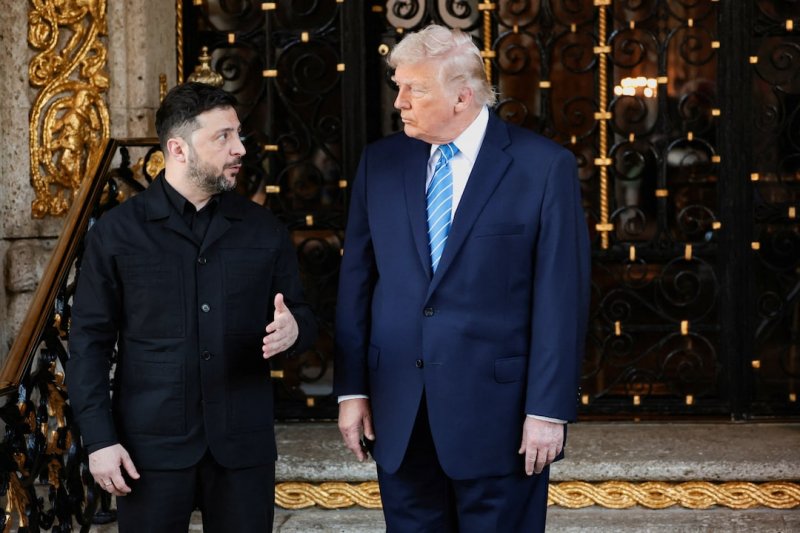
On December 28, on the eve of the New Year, Ukrainian President Volodymyr Zelensky held talks with US President Donald Trump at the Mar-a-Lago estate. The meeting lasted about two hours. Afterward, Trump and Zelensky took part in a videoconference with a number of European leaders, including French President Emmanuel Macron, UK Prime Minister Keir Starmer, German Chancellor Friedrich Merz, Italian Prime Minister Giorgia Meloni, Polish President Karol Nawrocki, Finnish President Alexander Stubb, NATO Secretary General Mark Rutte, and European Commission President Ursula von der Leyen.
Commenting on the exchange, Trump said the White House “considered it appropriate to talk to them,” adding that Europe would “take on most of the security guarantees for Ukraine.” How realistic this is remains uncertain, as the European Union, given its limited military and strategic capabilities, is widely viewed as unlikely to shoulder such a burden on its own.
Trump claimed that “the Ukraine deal is 95% agreed upon” and said he had held “an excellent phone call with President Putin.” However, the substance of these contacts remains unclear, particularly as the positions of Russian President Vladimir Putin and Zelensky on conflict resolution remain fundamentally opposed.
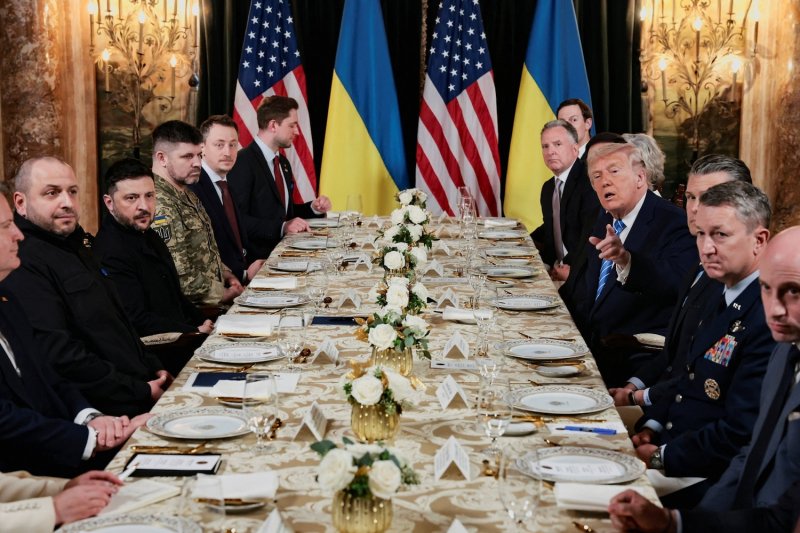 Photo: Reuters
Zelensky, for his part, said that “the 20-point peace plan is 90% agreed upon, and US security guarantees for Ukraine are 100% agreed upon.” The most contentious issue, however, continues to be territory. Putin insists on retaining Crimea, Donbas, and other occupied regions, and in light of Russia’s ongoing military offensive, these demands could expand further. Against this backdrop, Trump’s statement that “we are approaching an agreement on the territorial issue. I think it will be resolved” appears highly problematic.
Zelensky offered a more cautious assessment. “This is a very complex issue. Of course, we have different positions on this with Russia. This is the land of the nation for many generations. We can hold a referendum on any point in the peace plan if it proves too difficult for society, or we can give parliament the opportunity to vote,” he said.
In practical terms, Zelensky cannot easily agree to territorial concessions, a stance shaped by both political and historical considerations. This reportedly irritated Trump, who remarked: “You’d think they [Ukrainians] want to keep fighting. I know there was a poll showing that 91% support ending this war. They want the war to end. Russia wants it too. Everyone does. I think you’ve already lost the land you’re talking about [referring to Donbas]. You’d be better off making a deal now.” Zelensky did not respond directly and instead shifted the discussion to other topics.
The Ukrainian president reiterated that Kyiv is prepared to organize the infrastructure required for a referendum abroad, primarily in Europe. “This can’t be done overnight,” he said, noting that it would involve millions of Ukrainians, especially those currently living in Poland and Germany.
Trump’s rhetoric suggests that such delays are precisely what he wants to avoid. He is keen to bring the conflict to an end as quickly as possible, viewing it as an obstacle to addressing broader global issues where cooperation with Putin could be crucial. During the meeting, Trump stressed that “Russia will help Ukraine rebuild. Russia wants Ukraine to prosper. Putin has been very generous; he is ready to supply Ukraine with energy at very low prices.” He added that he had heard “a very interesting Putin” and said: “He wants peace to happen. He told me this very decisively. I believe him.”
At the same time, Trump made it clear that a temporary ceasefire — something Zelensky has consistently sought — will not take place. “I understand Putin’s position,” Trump said, explaining that if Russia were to agree to a ceasefire before final agreements are reached, it might later have to resume hostilities.
Under the White House plan, negotiating teams are expected to begin work in January, with Trump insisting that Ukrainians engage directly with Russian counterparts. Talks will focus on six areas outlined in the peace plan. The US negotiating team will include Secretary of State Marco Rubio, Secretary of Defense Pete Hegseth, Special Envoy Steve Witkoff, Trump’s son-in-law Jared Kushner, and Chairman of the Joint Chiefs of Staff Air Force General Dan Kaine. Trump also plans to hold a parallel meeting with Ukrainian and European delegations, although the venue has yet to be determined. He said he expects further contacts in the coming weeks and acknowledged that, given the complexity of the negotiations, they could ultimately fail.
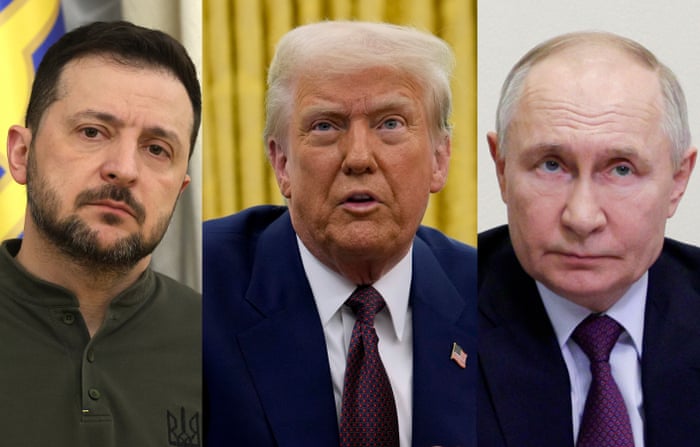 Photo: The Guardian
Security guarantees remain among the most sensitive issues. Europe has not abandoned the idea of sending peacekeeping forces to Ukraine. Another notable development came from Russian presidential aide Yuri Ushakov, who said ahead of Trump’s meeting with Zelensky that Putin and Trump had agreed to establish two working groups — one on economic issues and the other on security. These groups are expected to be formed in January, likely closer to mid-month.
In practical terms, the creation of these working groups suggests that an immediate ceasefire is unlikely. As negotiations proceed, military operations are expected to continue. If Russian forces maintain their current pace of advance, the situation on the ground could become even more complicated. Kyiv is already in an extremely difficult position, and time does not appear to be on its side.
The European stance could also shift. Without sustained support from Washington, it is unlikely to remain unchanged. EU countries are facing serious economic and political challenges of their own, and support for Ukraine is proving increasingly costly. With elections approaching in many European states, there is a growing risk that Kyiv could become increasingly isolated in its confrontation with Moscow.
Overall, the outlook remains far from optimistic. It is possible that some European leaders who currently back Zelensky’s uncompromising position will eventually push him toward limited territorial concessions. In short, the situation surrounding Ukraine is unlikely to improve in the coming year. Nevertheless, hope remains, and in international politics, however rare, miracles cannot be entirely ruled out.
(If you possess specialized knowledge and wish to contribute, please reach out to us at opinions@news.az).


Similar news